Archive for the ‘Reading’ Category
A blog post well worth reading:
My son Cade is a survivor.

Eleven years ago this week, Rebekah and I celebrated the birth of our first-born. Despite his Down syndrome diagnosis, we were overjoyed to welcome this new life into our family.
But not everyone welcomes children like Cade.
It’s no secret. People with Down syndrome have been targeted for extinction. In November, the New York Post heralded The End of Down Syndrome and profiled a new, safer test for pre-natal detection. Before this test was available, 92% of Down syndrome diagnoses (and many times false diagnoses) resulted in the mothers choosing to terminate their pregnancies. With these new tests, some experts foretell the end of Downs.
Why the rush to rid the world of people like Cade?
Certainly, it isn’t because his disability physically threatens anyone. Rather, Down syndrome children pose adifferent kind of threat to society—the in your face reminder that our aspirations for “perfection” may be flawed. People like Cade disrupt normal. Whether it’s his insistence that everyone he says “hello” to on the busy streets of Manhattan respond in-kind or his unfiltered ability to hug a lonely, wheelchair-bound, homeless man without hesitation: people like Cade bring new dimension to what normal ought to be.
I’ve been encouraged to see several pop-culture venues putting on display just how normal children like Cade—and the surviving 8%—really are.
I was surprised and delighted when I opened a Nordstrom catalog a few months back and saw a young boy with Downs syndrome posing as a model for children’s clothes. No mention or special attribution was made of it. But there he was, hanging with a few other boys, included as one of the gang. The way things ought to be.
Then again, last month, dozens of major news outlets picked up this story line when the same young model was included in the latest Target ad campaign. One father and advocate, Rick Smith, took the story viral when he posted 5 Things Target Said Without Saying Anything on his blog.
Only two weeks ago on the popular show Glee, a sixteen-year old girl with Down syndrome was portrayed beautifully. Her character showed life as a high school teenager, a member of the cheerleading squad dealing with the pressures of modern teen life. During the episode, you could hear her internal thoughts playing out as the writers took a bold step forward in portraying how it might feel to walk in her shoes.
But these public displays of inclusion are only part of how we counter the extinction of those with Down syndrome.
Why do the majority of expectant parents determine not to carry these pregnancies to full term?
Fear. [for the rest of this insightful article, connect to http://www.qideas.org/blog/to-cade-and-the-eight-percent.aspx
This is the last post of a defunct blog called “Rising to Grace” by Aditi:

Tomorrow I Plan to Make Better Mistakes
When I started this blog almost two years ago in the orange –amber days of fall, I didn’t really have an agenda – all I had was words. And I had this sense – of looking, searching – of trying to find grace. So for those of you who’ve wondered what the title is all about – this is it. Most literally, it is a biblical term that means divine love and protection… but for me it is that place where “everything’s ok.” We live in a world that is fraught with disillusionment, heartbreak, and pain, and through it all, grace knows that no matter what – it’s ok. Typically, we humans tend to fall from grace because of our stupidity and silliness, but I believe that through all our mistakes and failures – we actually find it. As we go through life and stumble and fall, we rise to grace.
“Grace is that force that infuses our lives, that keeps letting us off the hook. It is unearned and gratuitous love; the love that goes before, that greets us on the way. It’s the help you receive when you have no bright ideas left, when you are empty and desperate and have discovered that your best thinking and most charming charm have failed you; grace is the light or electricity or juice or breeze that takes you from that isolated place and puts you with others who are as startled and embarrassed and eventually grateful as you are to be there. “
These aren’t my words but something that I read in this book – Plan B… “Everything feels crazy,” writes Lamott, adding, “But on small patches of earth all over, I can see just as much messy grace as ever…’It meets us where we are but does not leave us where it found us.’”
 The thing is that in life things don’t always work out the way you plan. But there’s grace. Grace that lets us know that even if things aren’t working exactly according to plan – it will still be OK. Because if Plan A isn’t working out, there is a Plan B. And Plan B doesn’t really require that much planning – all it asks is that we just show up. That we make ourselves get up in the morning and breathe.
So that’s what I am going to do. Breathe. There’s been so much of grace in my life. I had been looking for it – only to find that I had it all along.
And that’s why I feel it’s time. And even though like the characters in my stories, I am still looking and searching – I have a feeling that we all will be ok.
Kimberly and I (and Mazie, our sweet dog) were able to spend a week at the beach between Christmas and New Year’s thanks to a very cheap hotel and a generous Christmas present from Berly’s dad. The weather was perfect and it was a wonderful time to relax. There was a delightful (and free) art museum in town, and when we visited I saw this inspiring drawing by Susan Ariel Rainbow Kennedy.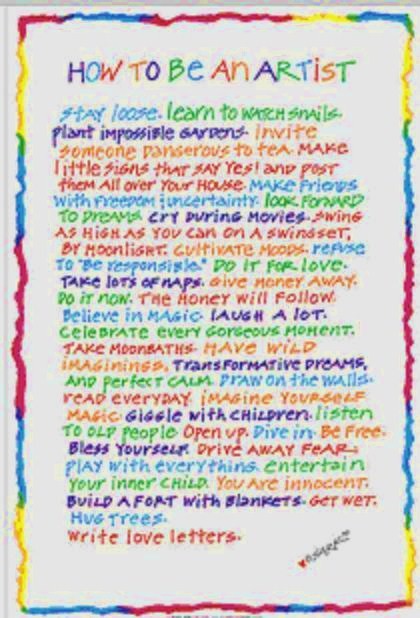

DROWNING IN EXCESS
We pray for those among us, and in the world around us, who are burdened not by too little but by too much:
Those who have so much power that they have grown indifferent to the rights and claims of others, and are fast becoming what they do not wish to be;
Those who have so much health that they cannot understand the sick or reckon adequately with their own mortality;
Those who have so much wealth that they prize possessions more than people, and worry into the night about losing what they have;
Those who have so much knowledge that they have grown proud and self-sufficient and lost the common touch;
Those who have so much virtue that they cannot see their sins or appreciate thy grace;
Those who have so much leisure that they move like driftwood on the surface of existence, lacking any cause greater than themselves.
–Ernest T Campbell
This is a letter from John Peter to Brennan Manning, one of my favorite authors on grace, a Catholic priest who was black-balled for getting married (to Roslyn).

They Tried To Make Me Go To Rehab... I said, "No, No, No!"
My wife, Lolly, and I were at a breaking point. I did not think I could continue to stay married to someone who was so self-destructive! But I wanted to consult you before moving out or calling a lawyer. When I did call you, Roslyn said that you were in route to Providence, Rhode Island, for a week of renewal at a Catholic church there. Ros also said that you had a layover in Newark to change planes. So I immediately drove to the Newark airport and, believe it or not, found you in the midst of that huge airport! I told you what was going on, and you said that I, under the circumstances, could leave Lolly—after twenty-five years of alcoholic drinking! So I drove back to our house in Manhasset, New York. When I arrived there some three hours later, I found Lolly all cleaned up and as sober as I had seen her in a long time. She announced to me that you were coming for dinner!
What had happened was some conservative Catholics at the church you went to visit in Providence found out that you were married and reported it to the bishop. The bishop then forbade that parish to have you speak there, so what did you do? You called Lolly and said you’d like to come to dinner! So I had to turn around and pick you up at LaGuardia and home we came. Lolly could not have been a more willing or welcoming hostess. She loved you, Brennan. After dinner I retired, and you and Lolly sat up and talked almost all night! She had sworn that she would never go back into treatment again, so you can imagine my surprise when, the next morning (Sunday), you told me that Lolly agreed to go back to Brunswick Hospital Rehab….
As you know, Lolly stayed sober in AA for the rest of her life—over twenty-five years! She passed away September 27, 2009. And the gift of her longtime sobriety was something that my children and I found as close to heaven as I suspect we’ll see this side of the grave.
–from All Is Grace, Mannings recent autobiography, though I would much more highly recommend The Ragamuffin Gospel or Abba’s Child if you want a taste.
This is a powerful picture by a poet/author of the struggle of depression.
It’s the other pole of life, the negation that lives beneath the yes; the fierce chilly gust of silence that lies at the core of music, the hard precision of the skull beneath the lover’s face. the cold little metallic bit of winter in the mouth. One is not complete, it seems, without a taste of that darkness; the self lacks gravity without the downward pull of the void, the barren ground, the empty field from which being springs.
But then, the problem of the depressive isn’t the absence of that gravity, it’s the inability to see–and, eventually, to feel–anything else. Each loss seems to add a kind of weight to the body, as if we wore a sort of body harness into which the exigencies of circumstance slip first one weight and then another: my mother, my lover, this house, that garden, a town as I knew it, my own fresh and hopeful aspect in the mirror, a beloved teacher, a chestnut tree in the courtyard of the Universalist Meeting House. They are not, of course, of equal weight; there are losses at home and losses that occur at some distance; their weight is not rationally apportioned.
My grandfather, whom I loathed, weighs less to me in death than does, I am embarrassed to admit, my first real garden, which was hard-won, scratched out of Vermont soil thick with chunks of granite, and a kind of initial proof of the possibility of what love could make, just what sort of blossoming the work of home-keeping might engender. Sometimes I seem to clank with my appended losses, as if I wear an ill-fitting, grievous suit of armor.
There was a time when such weight was strengthening, it kept me from being too light on my feet; carting it about and managing to function at once requred the development of muscle, of new strength. But there is a point as which the suit becomes an encumbrance, somthing that keeps one from scaling stairs or leaping to greet a friend; one becomes increasinglly conscious of the plain fact of heaviness.
And then, at some point, there is the thing, the dreadful thing, which might, in fact, be the smallest of losses: of a particular sort of hope, of the belief that one might, in some fundamental way, change. Of the belief that a new place or a new job will freshen one’s spirit; of the belief that the new work you’re doing is the best work, the most alive and true. And that loss, whatever it is, its power determined not by its particular awfulness but merely by its placement in the sequence of losses that any life is, becomes the one that makes the weighted suit untenable. It’s the final piece of the suit of armor, the plate clamped over the face, the helmet through which one can hardly see the daylight, nor catch a full breath of air….
After years and years of resisting, of reaching toward affirmation, of figuring that there must always be a findable path, a possible means of negotiating against despair, my heart failed. Or, to change the metaphor, we could say what quit was my nerve, or my pluck, or my tenacity, or my capacity for self-deception.
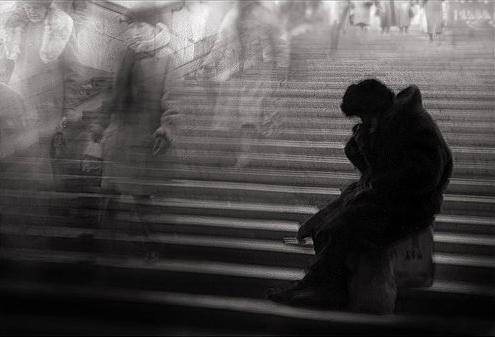
Mark’s beloved dog Arden, a lab mix, is sick with perhaps a terminal illness. One option, says the vet, is to keep an eye on him and hope for the best. Mark writes about himself and his friend Paul:
“Emily Dickinson says that hope, that thing with feathers—That perches in the soul, cannot be silenced; it never stops–at all–but because she is a great poet, in a little while she will say a completely contradictory thing. She who felt a funeral in her brain, the underlying planks of sense giving way, most certainly understood depression and despair. Perhaps even in her famous poem figuring hope as a bird, she hints at the possibility of hope’s absence, since if hope has feathers, it is most likely capable of flying away.
“Paul has a bracingly Slavic attitude toward hope. His ancestors starved in the fields outside of Bratislava, between plagues and invasions, and their notion that hoping for a better future would have been a costly act of self-delusion seems practically written into his genes. He would agree with Virgil, who says in his Georgics, “All things by nature are ready to get worse.”
“But this is ultimately something of a pose, a psychic costume for a sensibility no less vulnerable than my own. He believes that low expectations about the future will protect him—whereas I, six years older and thus a child of the sixties, can’t stop myself from thinking, perhaps magically, that our expectations shape what’s to come.
Though it’s true that I, who am more likely to hope overtly, publicly, am also more likely to crash the harder when that hope is voided.” Mark Doty in Dog Years.
Stoicism and hope can each be coping mechanisms in the face of potential disappointment. Conservative Christians tend to blame the stoics for having no faith before the disappointment and blame the hopeful for having no faith after the disappointment. That seems unfortunate to me because I believe neither perspective is inherently godly or ungodly, that belief or unbelief can be just as certainly present in both views. There are advantages and disadvantages to either outlook, differences in personality that can be embraced as each valuable in its own right. Our American society has a strong commitment to happiness as a value, even a fundamental right… it is written into the preamble of our founding document as a nation, so optimists are consistently lauded in every niche of our society (except art, where it is often seen as disingenuous).
A January 17, 2005 Time article reports a revealing psychological study “In the late 1970s… most therapists took the Freudian view that depressed people–and by extension, pessimists–were out of touch with reality. It made sense, since depression was considered an aberrant mental state… In carefully designed [seminal] experiments, psychologists Lauren Alloy and Lyn Abramson sat students in front of a panel featuring a green light and a button that they were told would activate the light when pressed. In fact, the amount of control students had over the light varied from 0% to 100%, with many points in between. When they were asked how much control they thought they had over the light, the answers surprised the psychologists. Optimistic types (who scored low on tests for depressive symptoms) consistently overestimated their influence. By a lot. On average they believed they had 60% control even in sessions in which their button pressing had purely random effects. ‘The nondepressed had an illusion of control when in fact they had none,’ says Alloy. By contrast, more pessimistic students (those who had more depressive symptoms) judged their performance more accurately. The finding that depressive types were ‘sadder but wiser,’ as the researchers put it, rocked conventional thinking in psychology.”
The article goes on to explain that optimists showed a more accurate estimate of other folks than did pessimists (who thought others were more in control than they themselves were). I expect that the presence of faith plays out in different ways in each personality type and is not simply present in the one and not the other. Hope may come from many sources other than faith and may be a coping mechanism to stifle insecurities. Stoicism, even pessimism (expecting negatives), may be the result of faith in openly acknowledging one’s insecurities (which takes a great deal of courage). May we all find ways of appreciating and benefiting from one another’s differences.
EMBRACING DIFFERENCES
 In a Christian community everything depends upon whether each individual is an indispensable link in a chain. Only when even the smallest link is securely interlocked is the chain unbreakable. A community which allows unemployed members to exist within it will perish because of them. It will be well, therefore, if every member receives a definite task to perform for the community, that he may know in hours of doubt that he, too, is not useless and unusable. Every Christian community must realize that not only do the weak need the strong, but also that the strong cannot exist without the weak. The elimination of the weak is the death of fellowship. (from Life Together p. 94)
In the current economic/political context I need to point out that “employment” is about one’s role in the body, not about earning a wage.
 “THERE is hardly a word in the religious language, both theological and popular, which is subject to more misunderstandings, distortions and questionable definitions than the word “faith.” It belongs to those terms which need healing before they can be used for the healing of men. Today the term “faith” is more productive of disease than of health. It confuses, misleads, creates alternately skepticism and fanaticism, intellectual resistance and emotional surrender, rejection of genuine religion and subjection to substitutes. Indeed, one is tempted to suggest that the word “faith” should be dropped completely; but desirable as that may be it is hardly possible. A powerful tradition protects it. And there is as yet no substitute expressing the reality to which the term “faith” points. So, for the time being, the only way of dealing with the problem is to try to reinterpret the word and remove the confusing and distorting connotations, some of which are the heritage of centuries.” — Paul Tillich
From one of my all time favorite books, written by a non-christian with deep insight: Expecting Adam by Martha Beck, a married Harvard student who discovered her fetus (Adam) had Down’s Syndrome.
With Adam, I had more fears than usual to plague me during those long, long nights. The problem was that it was impossible not to fall in love with him. It is a frightening thing to love someone you know the world rejects. It makes you so terribly vulnerable. You know you will be hurt by every slight, every prejudice, every pain that will befall your beloved throughout his life. In the wee small hours, as I rocked and nursed and sang to my wee small boy, I couldn’t help but worry. Will Rogers once said that he knew worrying was effective, because almost nothing he worried about ever happened. That’s a cute statement, and I’m glad Will’s life worked this way. But mine hasn’t–at least not where Adam is concerned. Almost everything I worried about during the nights after his birth, almost every difficult thing I feared would come my way as a result of being his mother, has actually happened.
Thank God.
…….
What my fears all boiled down to, as I sat with my tiny son in the days after his birth, was an underlying terror that he would destroy my own facade, the flawlessness and invulnerability I projected onto the big screen, the Great and Terrible Martha of Oz. You see, I knew all along that there wasn’t one label people might apply to Adam–stupid, ugly, strange, clumsy, slow, inept–that could not, at one time or another, be justifiably applied to me. I had spent my life running from this catastrophe and like so many other things, it caught up with me while I was expecting Adam.
In this regard, as in so many others, my worst fears have come to pass. But as they do I am learning that there is an even bigger secret, a secret I had been keeping from myself. It has been hard for me to grasp, but gradually, painfully, with the slow, small steps of a retarded child, I am coming to understand it. This has been the second phase of my education, the one that followed all those years of school. In it, I have had to unlearn virtually everything Harvard taught me about what is precious and what is garbage. I have discovered that many of the things I thought were priceless are as cheap as costume jewelry, and much of what I labeled worthless was, all the time, filled with the kind of beauty that directly nourishes my soul.
Now I think that the vast majority of us “normal” people spend our lives trashing our treasures and treasuring our trash. We bustle around trying to create the impression that we are hip, imperturbable, onmiscient, in perfect control, when in fact we are awkward and scared and bewildered. The irony is that we do this to be loved, all the time remaining terrified of anyone who seems to be as perfect as we wish to be. We go around like Queen Elizabeth, bless her heart, clutching our dowdy little accessories, avoiding the slightest hint of impropriety, never showing our real feelings or touching anyone else except through glove leather. But we were dazed and confused when the openly depressed, bulimic, adulterous, rejected Princess Di was the one people really adored.
Living with Adam, loving Adam, has taught me a lot about the truth. He has taught me to look at things in themselves, not the value a brutal and often senseless world assign to them. As Adam’s mother I have been able to see quite clearly that he is no less beautiful for being called ugly, no less wise for appearing dull, no less precious for being seen as worthless. And neither am I. Neither are you. Neither is any of us.





 Janathan Grace Reflections