Archive for the ‘thoughts’ Category
As Christian fads go, “30 days of thanks” seems to have some potential for good. If you’ve missed it, it’s the practice of giving thanks for something each day of November (often posted on social media). Hopefully it makes us all happier. Gratitude is seen in church as well as in our society at large as a foundation stone of mental health. On a TED talk last week the positive psychology guru Shawn Achor listed thanksgiving as his first choice to improve life’s outlook: find 3 things daily for which to be grateful. On the surface, I think this is a good idea. On the surface. But like most things, the real story is under the surface.

My first question is about motivation, which can sour so many good practices. I remember as a child being ordered to write thank-you notes for gifts I hated. It did not improve my life’s outlook! Legislating gratitude spoils it. But following cultural norms, my parents shamed my “ungrateful attitude” as a child… and it seemed to fix my attitude, but it damaged my spirit. In compliance, I trained myself to “feel” grateful, not as a natural response of delight, but as a way to avoid shame. On the surface, it’s hard to tell the difference, but natural gratitude gives life and forced gratitude suffocates life and relationships. Based on how I react to ungrateful people, I’d say I need more of the natural kind. When I choose thanksgiving as a “discipline,” my spiritual growth may only be in pride or resentment.

But even if my motivation is healthy, I can still misuse thankfulness. Both pop psychology and pop Christianity suppose we can fix hard events and feelings with positive thinking (often labeled “faith”). On the surface, that might be a good idea. On the surface. That is to say, if the bad feelings are superficial, then I can easily “shake it off” with some uplifting thoughts. But for anything deeper, positive thinking will only mask the problem, like taking ibuprofen for a ruptured appendix. The real solution for difficult feelings is to recognize and accept them in a spirit of compassion, try to understand them and find a means to truly support the needs that my soul is expressing. Using thankfulness to resolve significant pain just minimizes and belittles our true feelings and fosters false lives and relationships.
If you are lonely, for instance, not just this particular evening, but in life generally, you cannot rectify it by reminding yourself of all the people who love you and so talk yourself into being okay. If you are hurt by rejection, by loss, by trauma, you cannot find healing by “counter-balancing” it with happy thoughts or smothering it with praise music. Massages are nice, but they don’t cure ear infections. Paul tells us in Romans to “weep with those who weep,” not “cheer up those who weep.” Some of us need to learn to weep for ourselves in compassion. I never use thanksgiving to shout down my feelings. Joy is most truly experienced when I genuinely embrace my sorrows. So any takers for “30 days of pain”?

Forgiveness part 6: Grace-infused relationships
(I found my flash drive with my notes on forgiveness, so I’ll continue sharing my thoughts. So far I discussed the need for mutual understanding and self-support in relational conflicts.)
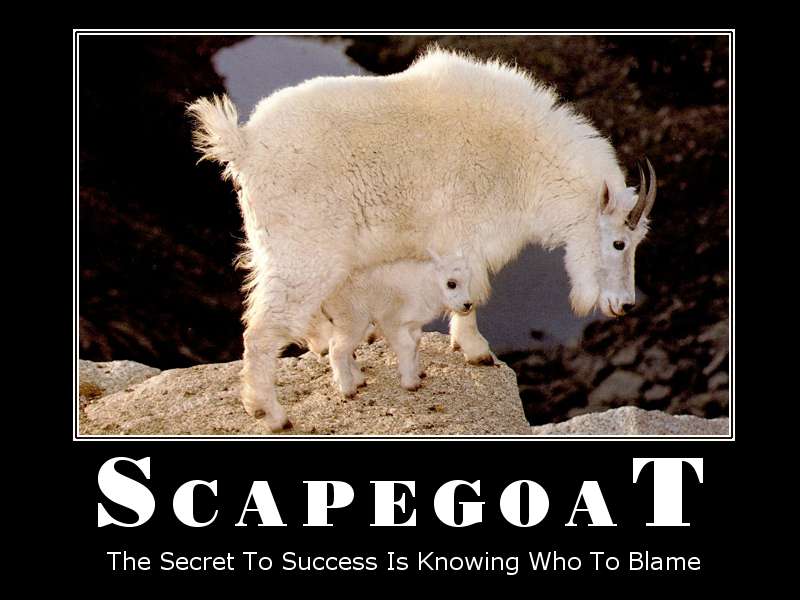
Forgiveness seems like such a wonderful resolution to any conflict… until you forgive me for a lie I did not tell or a missing wallet I did not steal. Here is the downside of forgiveness–it starts with blame. I was raised in a family that believed every conflict or pain in relationship was someone’s fault. If I feel hurt, it’s your fault or if you’re innocent, then I’m wrong to feel hurt. Someone’s always guilty. Every conflict was resolved by making the wrongdoer confess and apologize, a power struggle with a winner and loser (really no one wins, and the relationship suffers). Forced apologies are a stipend of American families: “Tell your brother you’re sorry!”

Genuine forgiveness is only one part of a whole gracious worldview with which I perceive others and relate to them. What others consider an issue of forgiveness is often simply an issue of acceptance for Kimberly and me. We offer grace to one another (patience, understanding, benefit of the doubt) without making it a question of someone being right and someone being wrong–we are both flawed and we want to create an environment where we are accepted with our shortcomings. We do this all the time in facing mild irritations—when she slams kitchen cupboards or I forget to empty the vacuum cleaner canister. But even with big issues, I have learned from Kimberly that the path of blame and forgiveness is usually a misguided diversion from sorting out our problems with grace.
Using my family’s approach, I tried in our first few years of marriage to help her see her faults and correct them (shame her into goodness), but she would have none of it–it was not her deeds but my perceptions that were faulty. She was right, we needed better understanding and acceptance, not better behavior. Love certainly inspires us to change for one another, but it is the result of acceptance, not the basis for it. She and I have unique personalities and values, fears and pleasures, histories and perspectives, so we experience the same things quite differently. This does not make one of us right and the other wrong, one better and one worse. We are learning to appreciate our differences.

JUST ‘CAUSE WE’RE DIFFER’NT DON’T MEAN WE CAN’T GET ALONG
It’s true that Kimberly doesn’t tell me lies or steal my wallet, but neither do my colleagues or neighbors usually… not even most strangers I meet. Certainly there is plenty of real wrong in the world, evil that needs to be identified, confronted, and forgiven. But to me, that is the relational ER. For most of my daily interactions I want to foster a spirit of humble and loving acceptance and understanding. Blessed are the merciful, for they shall obtain mercy, and Lord knows I need a lot of it.

 Most churches are uncomfortable with the melancholy. This has been a source of pain and confusion for Kimberly, and a spiritual stumbling block. The church’s unmitigated focus on an optimistic perspective (which it confuses with faith) seems dishonest and feels oppressive to her. This came up a few days ago and I responded, “It’s really only the churches in this country which are so upbeat. The American culture has won the church over. It is not as though Christians started reading their Bibles and said, “Oh, look at this! We are all supposed to be positive thinkers with permanent smiles.” If an American had written the Beatitudes, they would start out, “Blessed are the
 poor rich in spirit: for theirs is the kingdom of heaven. Blessed are those who mourn are cheerful: for they shall be comforted need no comfort.”
 Yes, you can mourn in church… briefly, over something big, with repeated claims of steadfast faith, but if you don’t feel better soon because of our sympathy, we take offense. How quickly does God expect you to get over your grief? The benefits from the beatitudes seem to be scheduled for the next life. After all, when do the poor “inherit the earth” and the persecuted receive a great “reward in heaven”? It appears the sorrowing find full and lasting consolation only at the resurrection. Jesus does not see the melancholy as spiritually weak or faith-less, but as blessed. Instead of a condition to avoid or get past, sadness is a door into spiritual blessing. Perhaps instead of avoiding or trying to fix the mournful, we might learn something from them, something about what it means to love a broken world.
Delayed by confusion, Anne at last flung herself from her seat just as the ski lift lurched into its ascent. The five foot drop stunned her, and so a kindly hand helped her into a small lodge to recover. Unfortunately, the kerosene stove inside increased her nausea. But as she lay there, a whiff of fresh, pine-scented air brushed her face. It trickled in through the cracked windows just enough to keep her from smothering under the acrid fumes. She called it “a thin ribbon of grace.”
Berly and I read this Lamott story weeks ago, but Sunday stumbled across her retelling it in a Youtube interview, and this time the phrase popped. When I am lost and broken and sick to my soul, I want God to fling open the windows of grace, but what I get is barely enough to keep me coherent, like a drowning man who is chucked under his chin just enough to keep his nose above this moment’s wave and then dropped again… like a malnourished child fed a few crumbs above a starvation diet. Survival grace. For those of us wishing for life to end, this frayed ribbon of grace seems less like love and more like torture. Why is God so tightfisted with His goodness as though He’s worried He’ll run short or we’ll fritter it away? What present consolation can we suck from the ending “happily ever after” if life’s story is “miserable until death.”
But Anne’s phrase whispered across my thoughts, enticing. Is it enough, this thin ribbon? I want a bank full of grace to draw on for my needs, but I am only given enough for this moment… sometimes barely enough. It’s true that I haven’t drowned yet, but every time the finger holding up my chin drops away, I’m sure the next wave will take me under. After all, I’ve been left spluttering for air many times. It’s a fact that I haven’t starved, but this is my last bowl of soup, and the cupboards are bare. Living hand-to-mouth is so precarious, so uncertain, so constricting, whether the shortage is literally financial and physical or the deficit lies deeper still, a hole in the heart.
In the desert the Israelites were completely dependent on God, and in spite of dining on a daily miracle, hunger was always just one day off, for forty years running. A thousand winters later, not much has changed for the children of God as they prove in their principal prayer: “give us this day our daily bread.” What is this addiction God has for pocket change allowances? Surely He doesn’t make us suffer needlessly. If He is truly a loving God, he must think this arrangement is a real windfall for us.
But as Berly points out, many of God’s children are jobless and friendless, homeless and hungry; some die agonizing deaths. We are not promised health or happiness or even sanity. Exactly what does it mean to claim that His grace is sufficient if it is not even sufficient to keep us breathing? From somewhere the thought drifted into my mind–His grace is sufficient for our hearts, the one thing that matters above all to us. In spite of life’s miserable suffering, we cannot deny that our hearts have not only survived, but grown. We are blossoming into the ones God created us to be. We have faced into our fears and discovered new strength, challenged shame and found love. We opened our hearts, and truth came in with insight, wisdom, and freedom.
But we are still tormented by depression. Something seems very wrong with our chosen path when we end up here. If we follow God as best we know how, should we not find peace, joy, rest, and fulfillment? Isn’t that what grace looks like? We want a life plan that works, that makes us feel good, accomplished, confident, whole, and if that’s the goal, our plan is clearly broken. But we tried other popular strategies, and they gutted our souls. Perhaps we’ve been measuring grace by the wrong scale. If our personal growth is the better gauge, then God has been truly lavish towards us, and if it comes to us through pain, we will welcome it gratefully. He sends a thin ribbon of consolation to keep our hearts from breaking, but his grace is not limited to this meager thread. His grace towards us has proven to be a river, not a ribbon, even if we cannot feel it or understand it.
Forgiveness 5: Sorting Out My Feelings
When I am insulted or slighted, abused or betrayed and the offender won’t discuss it, at least not honestly, I try to decipher her on my own so I can better shape my response. In every conflict I want to be as gracious as I’m able, starting with grace to myself so that I will have the resources to be gracious to the offender, genuinely gracious—out of freedom, not obligation. Self-acceptance, not shame or duty, is the soil from which true forgiveness springs. When I am wounded, it may take time to recover my own sense of grace (that is, to settle into God’s grace). It takes as long as it takes. It is crucial that I not sacrifice my own well-being by rushing to work through emotional issues. I do not nurse my hurt, but I should not belittle my hurt either. Neither of these is an honest and healthy approach. Doing a quick patch-up job is disrespectful of and harmful to myself as well as our relationship.
Again, my focus is on my own pain, not on blaming the other person, but since I have been hurt, I no longer feel safe with her. Until I have found some personal resolution, our relationship will also lack resolution. I may need a break from our usual level of interaction… whatever I need to stay emotionally safe long enough to work through my own stuff. I should tell her clearly that I am not punishing her, that this is about me and what I need and not an effort to manipulate her into feeling bad or changing her behavior. (And I need to be sure this is true.)
Ultimately I want to somehow get to the point that I feel no ill will towards her. Whether I reach this through exonerating her or through forgiving her is not crucial as long as I am respectful towards myself (my perspective and feelings) in the process. I may decide that this is primarily my own issue and not hers. I may determine that she is at fault, and that I will need to forgive her. I am not her final judge, so I may fault her wrongly, but forgiveness still works: it frees me from suffocating on my own anger and bile.
Forgiveness 4: Seeking Understanding

When I get whacked by the blunt end of a relationship, I first need to assess the bruising and salve it with compassion. From this haven of acceptance and support, I can draw enough grace to respond in a healthier way to the bruiser. But before forgiveness is even an option, I need to piece the story together: why did he act that way? Easy forgiveness brushes aside this opportunity of better understanding. What are his heart sores and life hurdles? How did he see and experience our social fumble? We also need a better grasp of the relationship. Every interpersonal dynamic is involved here: truth-seeking, communication, perception, relational history, roles, expectations, and a hundred other facets. Forgiveness is only part of this complex relational feng shui, so if it is my only consideration, I turn a vivid social mosaic into a black/white toggle switch of blame.


Quick forgiveness looks so gracious, and long discussion seems so dramatic. Both of us may want a quick fix, and perhaps it’s the right choice for now, but we should remember that this tables the issue, it doesn’t resolve it. The same conflict will pop up again and again until we sort it out. Deferring until later may feel better in the short run, and may be a necessary strategic move, but it does not enrich our bond. And slowly over time little resentments will build up like barnacles on a boat or relational callouses will form to deaden the pain and with it the vibrant connection.
So I begin to unfold the map of who he is. I’m not looking for evidence to accuse him. I simply want to understand him, see things from his perspective. Since resolution requires mutuality, I share with him in turn my struggles, without implying fault. Just as my own heart hides when I am gruff and suspicious with it, he cannot be honest and forthcoming about his genuine feelings and thoughts if I don’t invite him with gentleness and love. I can accept him without approving of or excusing his behavior. He is precious regardless of what he does or doesn’t do. I want to know what he feels about our scrape and why he feels this way. If he is dismissive or defensive as I probe, then he’s not at a safe place with me. He may not even feel safe with himself because of the shaming voices in his head. When he closes the gate on this part of our relationship, I must honor it—I cannot force him to share. In response, I may also need to stake down a boundary marker to protect my heart. Perhaps a better time will come if I stay open and gracious.

DO YOU SPEAK RABBIT?
If we can break through into deeper mutual insight, we will then want to reflect also on our relationship. This will spark memories of past conflicts, a rich resource to ponder if we don’t use it as ammunition but as sutures. Why do we react to one another in this way in these situations? What are we feeling and thinking? Do we respond to others in similar ways? Why or why not? What patterns does this reveal about our interactions? Since honesty and openness depend on our sense of safety, the one issue we overlook at this point is blame. It may be that neither of us is guilty or both are guilty or that the problem lies in a completely different direction. But once we are sharing, the issue of fault and forgiveness often becomes moot.

Forgiveness 3: Postponing Blame
“Why can’t we learn our spiritual lessons over a box of chocolates instead of through suffering?” a friend once asked me. Unfortunately this fallen world is thick with pain, especially relational pain, but there’s a flower in the nettles: it’s the hard stuff that grows me personally in patience and courage, and it’s the tough stuff that deepens and strengthens my friendships. When we brush up against others, our tender nerves jangle us alert to something in our interaction that needs tending.
If I feel the arrows, I snatch up my shield to defend myself, which is natural and healthy—self-protection by flight or fight—but it hurts me if I use that to dodge rather than pursue growth in myself and my relationships. My emotions yelp when some wound needs my compassionate attention, a wound that may be decades old. My friend (or enemy) may be the occasion for my pain without being the cause of it. Her soft words may strike against a sharp emotional edge in my past. On the other hand, her innocence does not invalidate my pain. My feelings are what they are regardless of her role. They carry within them their own legitimacy and don’t need outside validation. They speak the truth, not about her but about me, about the cuts and bruises on my soul.

When I am hurt in some interaction, I need to slow down and pay attention to the ache, and I need to provide enough emotional space to tend to my injury. Sometimes, at least initially, this may get messy for the relationship. I may withdraw for a time or push back, but the goal in padding my emotions is not to avoid, but to embrace this opportunity of self-discovery. So when I have cleared enough emotional room, I slowly disentangle my pain from her actions and take ownership of my pain. I do not mean that I blame myself for my pain! If I barge accusingly into my soul, it will duck for cover. The wounded need compassion, not condemnation. By taking ownership I mean identifying the agitating source inside me and not outside me (so I can take charge of the healing process). The diagnosis starts with a caring “Why?” Why do I feel bad, especially if my feelings are more intense than others would be in this situation. If I try to fix the relationship before I understand my own heart, things are apt to get more twisted.

I am slowly learning, but I still habitually jump past this necessary groundwork when I feel stung. I quickly assume blame—either he’s at fault for hurting me or I’m at fault for feeling hurt. But if I blacken the other guy in order to justify my feelings or in order to get him to take responsibility, I overlook what my wincing heart is telling me about my own wounds and need for support, compassion, and healing. I’m not suggesting that we should deny our feelings about the other person. That anger, doubt, and fear is the very emotion I must identify, feel, and discern, but I make sense of my feelings by listening to them with gentle care, not by blaming the other fellow.
When I make the other person’s behavior the focus of my attention, I undermine my own self-support, even when he is clearly at fault. He has leveraged power against me by his hurtful acts, but if I continue to focus on what he’s done, I keep myself his prisoner. Even if I induce him to apologize and make amends so that I feel better, I will be worse off for it because my good feelings are still dependent on his response, and so I am still under his power. Whenever I make someone else responsible for my feelings, I lose control of my own emotional life.
I don’t mean to suggest that I have to sort out my own stuff by myself. We often need the help of a friend who knows us well and accepts us as we are… not someone to “side” with us against the other, but someone who helps us understand ourselves better. If the issue is not a powder keg, then I may be able to talk it through with the person who upset me, but the focus should really be on discerning my own wounds and needs, not on venting or “correcting” the other person. The apology I want so much to hear may dull the sting but will not heal the lesions in my heart. My heart needs comfort, acceptance, embrace—love that is enduring, unquenchable, unconditional, inescapable, unbridled, and passionate.

Forgiveness II: Other options
My friendships are sprinkled with boredom and surprise, tinged with ambivalence and enthusiasm, stuffed with doubts and hopes, fears and triumphs. They wander through gardening and coffee and politics, with rants and laughs and confusion. Relationships are so rich and complex and rewarding. And they are painful. That’s the part we’d like to cut out like a tumor. We commonly assume that pain in friendship is a bad thing, a sign that something has gone wrong, a malignancy. It certainly feels bad, and so we naturally want to avoid it or resolve it as quickly as possible. I know I do. Berly quietly mentions my lateness or messiness and it feels like a bee sting. My emotions jump, swatting and dodging to protect the softer parts of my soul, sometimes with clenched words, sometimes in the silent safety of my mind, working out feverishly a plan to escape future critiques.

In spite of my fears and doubts, I’ve come to realize that the hard patches in our togetherness are quite often the most vital for our well-being and richest for our relationship. They uncover something important about me, about her, and about us. They open the way to deeper understanding, connection, and love, greater trust and security with one another. But this path requires the courage to face into the storm and work through the feelings together, not find ways to side-step the mess or slap up quick fixes.
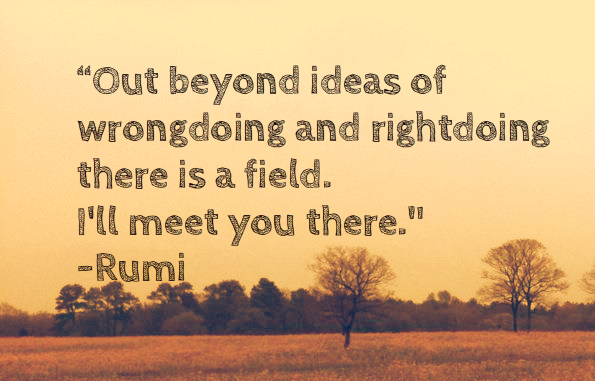
Pain in relationships can come from so many sources–differences of perspective, personality, priorities, or preferences, unavoidable circumstances and pressures, misunderstandings, bad timing, sensitivity, stupidity. Notice that none of these things are culpable offenses, not even stupidity, so forgiveness is not the answer. Close neighbors to forgiveness come into play—patience, humility, acceptance, and benefit of the doubt when the behavior is irritating or problematic or inconvenient to us. But I think forgiveness uniquely addresses the issue of wrongdoing. There is a big difference between excusing or making room for someone’s behavior and forgiving them.

Forgiveness is only relevant when someone is to blame, and such a turn must be taken with care since that exit for dealing with relational pain bypasses other options, perhaps better options. For instance, if the major problem is miscommunication, we prefer seeking clarity rather than blame, at least in our calmer moments.
When one of us feels hurt, it’s best to slow down, breathe, get some emotional space, and try to sort through the feelings, seeking mutual understanding. This is far easier if we can leave aside blame for the moment. A rush to judgment sets one against the other, obscures the truth, and slows progress personally and relationally. I know how hard it is for me to move in a healthy direction when I feel defensive. In the end, if one of us needs to choose a better course of action (repent), why not start from a place of insight and love rather than coercion and shame? In our marriage, when seeking understanding is the goal instead of deciding fault, we find that forgiveness plays a much smaller role.

Forgiveness Part I: Framework
 Forgiveness is a small portion of how I respond to others when I am hurt, and this in turn is a small part of the much bigger framework of human relationships. To understand any piece of this jigsaw puzzle requires me to know its connection to the other pieces and to have a general grasp of the whole. So let’s peek at the box top.
This is a profoundly social cosmos. A pro�foundly conversational cosmos. In a social cosmos, a talking cosmos, a muttering, whispering, singing, wooing, and order-shouting cosmos, relationships count. Things can’t exist without each other. And the ways things relate to each other can make them radically different from their fellow things. –Howard Bloom, The God Problem
Everything from the dance of electrons and protons to the gravitational pull of the Milky Way finds its place in the universe by its connection to other things. As part of this social cosmos, we humans are profoundly shaped by our relationships–our families and communities and cultures. We largely understand ourselves and our place in this world based on the input we get from others. This is both wonderful and awful, for our greatest joys come from love and belonging but our worst wounds come from separation and rejection.

We don’t really have much choice about this fundamental social reality. We can’t invent our own language and still hope for connection. We speak our mother’s tongue or stay mute. In the same way, our thoughts and actions are channeled by the perspectives of our families and cultures. Our whole world is organized and explained to us from one specific vantage point so that even to argue with it, we have to speak from that context. We can’t disagree with our English-speaking mom in Hindi. We are inextricably tied to our relational ecosystem. We may be able to switch contexts, but we always have a context, and we always crate our past along with us (ask any married couple).
 Life is a web of relationships, and so to discover who I am in distinction from others, I must understand them and how I relate to them. I soon realize that although there are individual strands in this system, they’re all interconnected. When I put my hand on any one relational dynamic all the rest vibrate. Anger is connected to shame and fear, shame impacts perspective and motivation, motivation informs decisions, focus, resources, and a hundred other elements. It is not only that I am connected to my brother, but that I am tied to him in a thousand complex ways. Each interaction sets the web twitching, and before I respond, it is best to understand myself and my brother and the relational dynamics between us. I should not have a default response, not even forgiveness. Trying to fix every problem with forgiveness is like repairing a house with just a saw.
Last night Kimberly and I watched Beyond the Gates, a movie about the Rwandan genocide when 800,000 men, women, and children were hacked to death as the world looked on and did nothing. It was terrible. It was real. It was a small window onto the depths of human depravity which ravage our world daily. If you keep your peace of mind by sweeping darker parts of reality into a seldom-used corner of your mind, perhaps you buy happiness at too great a cost. If the evil filling this earth does not burn in your heart and shape your daily decisions, you may be living in a fantasy world of your own making.
Frederick Buechner tells of his professor, James Mullenberg:
“‘Every morning when you wake up,’ he used to say, ‘before you reaffirm your faith in the majesty of a loving God, before you say I believe for another day, read the Daily News with its record of the latest crimes and tragedies of mankind and then see if you can honestly say it again.’
He was a fool in the sense that he didn’t or wouldn’t or couldn’t resolve, intellectualize, evade, the tensions of his faith but lived those tensions out, torn almost in two by them at times. His faith was not a seamless garment but a ragged garment with the seams showing, the tears showing, a garment that he clutched about him like a man in a storm.
To love a hurting world is to suffer with it. Do you see this world as God sees it? There is a reason the prophets of old, the seers, were mostly melancholy men and why the Messiah was called the Man of Sorrows. Some of us by nature are more touched by the shadows. It is not only the deep fissures in the ghettos and war-crushed countries, but the cracks in my own heart that torment me. My own little hatreds and conspiracies, defensive moves and fear-driven words awake in me an understanding of and identification with history’s villains.
If only there were evil people somewhere insidiously committing evil deeds, and it were necessary only to separate them from the rest of us and destroy them. But the line dividing good and evil cuts through the heart of every human being.― Aleksandr Solzhenitsyn
But I realized something today. I am not big enough to absorb all that pain. I can’t handle that much truth… I have to shut some of it out so that it does not capsize my little boat. I want the brokenness of the world to inform my outlook, but not to cripple it. I instinctively have known this all along and have protected myself from those things that have pulled me too far down, especially when my emotional reserves are low, but I felt cowardly. When I dropped Facebook friends because their posts or comments were too disturbing or I avoided confrontation with family, my love seemed limited and weak. Well, since I am not God, my love certainly is limited and weak, and I cannot demand of it more than I am able to give. I must live within my means not only financially, but emotionally, because if I have too many overdrafts, I will crash. My heart will always be touched more profoundly by the tragedies around me–it is how I was designed–so I need to soak my bruised soul more deeply, more often in the pools of grace away from the harsher sides of reality.











 Janathan Grace Reflections