
ME: YOU GOT A PROBLEM? I GOT A SOLUTION!
I could share many troubles that jumped Kimberly and me because of conflicting needs. One of the most painful and intractable is based on her focus on acceptance and my focus on improvement. Because of our families, personalities, and experiences, we have each fine tuned our coping strategies to survive threats to our emotional well-being: she is a people pleaser and I am a people fixer.

BERLY: I AM HERE FOR YOU
In relationships, she provides emotional support and I provide practical solutions. I am pretty good at empathizing, but that is not my goal. My goal is to help folks find a way forward. Kimberly is encouraged to see folks move forward, but that is incidental since her goal is to “be there” for others. I seek change, she seeks stability; I want action, she wants presence; I need hope, she needs patience.
Naturally, when our coping mechanisms do not “work,” do not protect us, we each feel deeply threatened at our core. You can see where this is going. I feel loved when someone understands my struggle and adjusts to my needs; I feel rejected if my friend does not change. Kimberly feels loved when she is accepted as she is; she feels rejected when her friend asks her to change (i.e. is not okay with her as she is).  The message she regularly heard from me was “You are not enough” and the message I regularly heard from her was “I don’t care about your needs.” Each of us, by trying to defend our needs in relationship to each other, simply hurt the other one more.
If I were to write my real thoughts about these particular differences while dating, I would say, “I want to change for the better, she does not; I seek improvement, she seeks stagnation; I am an optimist, she is a pessimist.” In my younger years I would have pointed out the many Bible verses that support my perspective and shamed the other person into compliance. I am quick to blame, Kimberly is quick to accept, so she probably did not have these thoughts, but she would be justified in thinking, “I accept others, he rejects others; I am patient, he is impatient; I see people as individuals, he sees people as projects.” Thankfully, Kimberly and I respect one another and highly value honesty, understanding and acceptance. I see real benefits in her perspective and see how I fall short in those areas. She sees real good in my strengths and is grateful for it.
However, this does not change decades of reinforced feelings. When these dynamics popped up, it was very painful for both of us. For a long time, her perspective made no sense to me and my perspective made no sense to her. When our needs were not in conflict, we freely expressed our love and acceptance, and so over time we became more trusting of each other. That gave us the emotional space to slowly learn each others’ languages. Most of this happened before marriage, and though our feelings still smarted a great deal, we understood our issues and were committed to working through them. In fact we realized that in an amazing way, even our conflicting emotions were a great benefit to us and our relationship… but more on that later.

Pain Opens the Door to Love
 When I last shared about Kimberly and me, I left an important point untouched. Are there not certain responsibilities that are moral in nature? Is my wife not required to be monogamous? Is it ever right for me to hit her? For the relationship to work (any relationship), do we not need some moral standards on which we can insist, a moral code of conduct?
Let me begin by saying that I believe all intentional acts are moral. Everything we do and how we do it is affected by our faith, love, humility, and the like. Even things we do with no apparent moral content are choices to do this and not something “better.” So perhaps the question is rather: are some moral choices “beyond the pale,” so significant that the relationship cannot simply absorb the behavior and continue on more or less as it was but must be addressed and worked through. To reorient the question in this way, however, moves it from a legal question of right and wrong and rather asks what will hurt or benefit our relationship. Relationship becomes central, and law becomes its servant (as Jesus said).  Instead of saying, “You must stop this because it is against the law,” or even, “You must stop this because it hurts me,” we simply say, “When you do this it hurts me,” because if we force or manipulate them to change, it will undermine the genuineness of our connection. For important relationships, this step is just the beginning of an ongoing discussion and a doorway into deeper mutual and self understanding, acceptance, and trust. That is not to suggest I have no recourse if I am being hurt, but if relationship is primary, the solution does not lie in controlling the other person.
I am ultimately not accountable for their choices, but for my own. I am responsible to see that my own needs are met in a healthy way, whether my friend supports me or not. My needs determine where I draw the boundary line in our relationship, and my friend’s needs determine where he draws the line. If he cannot respect my boundaries, then I will take measures to protect my boundaries because I must respect myself and my needs whether he does or not. This is not a judgment of my friend’s inadequacies or of my inadequacies (as though he doesn’t care enough or I am too needy). We may both be doing the best we can, but not have the capacity to make the relationship work.
 This was the huge distinction between my (former) perspective and Kimberly’s. I thought the only legitimate basis for boundaries was the law. If you lie to me, you are wrong; you must stop it, end of story. If you cheat me, you are wrong and must stop it. If you hurt me, you must stop it. I would use my relationship to blackmail their compliance, communicating with my behavior, “If you want to feel good with me again, you must change.” With this approach, determining who was at fault was fundamental to resolving relational conflict.
Basing such boundaries on my own personal needs was just selfishness. But when Kimberly did, I could very clearly see she was not selfish. She cared very much for my needs, whether she could accomodate them or not, and this confused me. Every selfish person I know subtly or blatantly shows disregard for my needs. Kimberly was saying in essence, “I do not have the emotional resources to care for all my own needs and all yours as well. If any of your needs go unmet, it is very unfortunate, and we will try to find the resources of support you need, but I can only give from what I have. You cannot ask me to go into debt in order to pay off your debt. I cannot ultimately take responsibility for your unmet needs.”
Of course, this was not one straightforward, simple talk we had. We both agonized over the emotional turmoil that sprang from our conflicting needs. Let me give an example that plagued us for years… in the next post.
 “THERE is hardly a word in the religious language, both theological and popular, which is subject to more misunderstandings, distortions and questionable definitions than the word “faith.” It belongs to those terms which need healing before they can be used for the healing of men. Today the term “faith” is more productive of disease than of health. It confuses, misleads, creates alternately skepticism and fanaticism, intellectual resistance and emotional surrender, rejection of genuine religion and subjection to substitutes. Indeed, one is tempted to suggest that the word “faith” should be dropped completely; but desirable as that may be it is hardly possible. A powerful tradition protects it. And there is as yet no substitute expressing the reality to which the term “faith” points. So, for the time being, the only way of dealing with the problem is to try to reinterpret the word and remove the confusing and distorting connotations, some of which are the heritage of centuries.” — Paul Tillich
This interaction occurred several days ago on Facebook with a friend who got a brief response from me after she posted a quote. You can see she is very gracious and open. I have changed the names for privacy’s sake. Our FB interaction is followed by a personal message I wrote to her.
Jennifer: “You either pass on your fears or your faith” to think about…
Janathan: sometimes how I express my faith stirs up your fears and my fears expressed calm your fears. to think about.
Jennifer: good point Kent, still reflecting on your comment. My initial thoughts on the area of fears … sometimes expressing or admitting our fears ‘demystifies’ them, & I can see value in that,.. also hearing others admit their own fears helps me realize i’m not the only one… I think what I appreciate about the above quote is the thought of being able to ‘transform’ a paralyzing fear into a faith action. Rather than being immobilized by fear, moving towards trusting God with it. Fear does not come from Him… whatcha think??

FAITH CAN MAKE YOU SMILE!
Janathan:I think I’m wary of what seems over-simplification to me, assuming solutions when I haven’t taken sufficient time to fully understand the emotional dynamics at work (a definition of “pat” answers). We might say ‘love’ and ‘faith’ are simple, clear, easy to identify… until we start realizing how common misconceptions are, confusing love with lust, possessiveness, admiration, etc. I think we have to agree that all emotions were created by God and of high worth. God created fear in us, and the Bible regularly commands us to fear. My biggest fears tell me something really important about my own woundedness, and if I try to simply control this fear with ‘faith” and not understand my deeper heart issues, I think it causes real personal and relational problems. What is your perspective?
Janathan: On the other hand, one can be equally disrespectful of one’s own feelings by exacerbating them rather than listening to them (though I think conservative Christians tend to err on the former side… as one well-known writer titled a book “Emotions, the Believer’s Greatest Enemy.”
Jennifer: hmmm i don’t like simplistic answers either.. and will often ‘chew’ on a thought for a long time (including your quote 🙂 but at the same time, I’ve had to face some of my biggest fears,… and in the midst of those fears have often found myself unable to do anything else with but transfer them to God. “perfect love casts out all fear” is a concept i don’t fully understand yet it seems to involve trusting the Source of Love to such an extent that we have nothing that’s too big for us to face. The kind of ‘fear’ you refer to,.. i would associate with a respectful fear.. and not an immobilizing fear. appreciate your thoughts..
HIDDEN UNDERGROUND
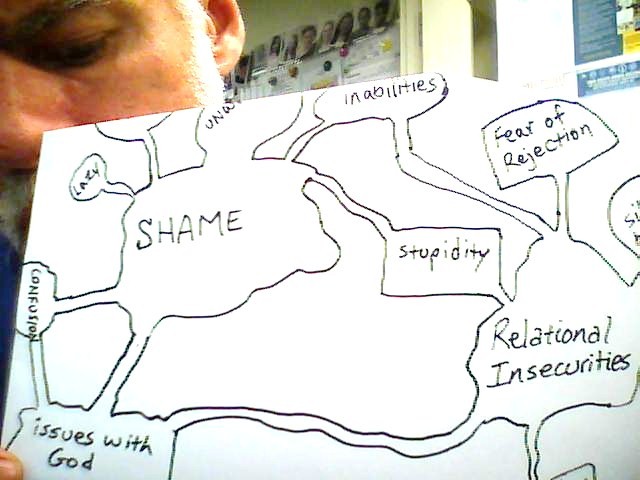
Janathan: I agree, Jennifer, sometimes fears are so intense we have to find a means of calming them before we can begin to understand them. I think there are many ways of doing this, such as adding a safety net or sharing our fears with someone who is safe for us (this is an act of faith as well). I know I have had numerous misconceptions of faith in my past, misconceptions I still struggle with. One of the biggest ones was to use “faith” to shame my feelings, in which case my feelings went underground, seeming to be conquered, but simply adding another layer of distance between myself and my heart.
Jennifer: hmmm good points. I’ve had to work through ‘fear of admitting fears’…. because as I looked back on my life i realized that the fears i ‘verbalized’ (admitted out loud) were exactly the ones that i ended up having to face in reality. 😦 Still working thru that one, but I think one of the lessons I’ve come away with, was that God wanted me to experience His peace even in the midst of my biggest fears (and I did,… for the most part! 🙂 From what I can tell, fear doesn’t GO AWAY.. we just learn to manage it. I’ve prayed endlessly for God to take away my fear of flying.. but it’s still there. What I had to face was my fear of dying instead.. With cancer, I had to face my fear that His plans weren’t good ones (from my perspective),.. but as I look back,.. so much GOOD came from having it.
Beth: Such thought-provoking comments. You’ve both alluded to the idea that fears have a variety of sources. Yes, fear can be emotionally based, but it can also be based on objective facts and truth. Jesus said “… I am the truth…”. Truth is his very essence and thus he also knows all. I’ve learned that I can trust my God more than I can trust myself. We can all be easily manipulated (emotionally) and we can also manipulate others and we can even manipulate ourselves. But God can not be manipulated. Thus I choose to put my trust in Him who is truth, and pray that he gives me the wisdom to discern the source of my fears and take control of all my thoughts. (2 Cor 10:5 “…destroy arguments and every lofty opinion raised against the knowledge of God, and take every thought captive to obey Christ.”)
Jennifer: thanks for your input Beth… i like the verse about ‘taking your thoughts captive’ … i think it fits the discussion. Though I have to admit.. i’m a very practical person… and as much as I understand the ‘exercise’ of doing that,.. i still don’t understand what are the practical, tangible results.? In other words,.. what actually changes in relationship to our fears?
Beth: Making our thoughts “captive and obedient” to Christ is definitely practical, with tangible & transformational results. Emotionally based fears are often reinforced by our thought life. “For God has not given us a spirit of fear, but of power and of love and of a sound mind” (2 Tim 1:7). It seems that fear and faith can not co-exist. Paul repeatedly tells his readers we have real power to control our thought-life, leading to transformational living. “Do not be conformed to this world, but be transformed by the renewal of your mind, that by testing you may discern what is the will of God, what is good and acceptable and perfect.” (Rom 12:2). As we renew/change our thinking, our emotions and behaviour will realign accordingly. When our focus is Christ and his attributes, it will result in our minds being filled with his presence and peace (Phil 4:8-9). Faith and fear do not co-exist.
Kent McQuilkin: Ah, Beth, what a very different view you and I have on emotions and faith!
Jennifer: Will need to reflect on your thoughts Beth… Sometimes it just takes time for a truth/principle to move from my head to my heart,.. and then into action. 🙂 Curious about your view on emotions and faith, Kent. 🙂
Wow, Jennifer, where do I even begin? I understand Beth’s view, I was raised with that view. There are good and bad emotions and we must choose the good and refuse the bad. The good emotions are telling us the truth about the world and God, and the bad emotions are telling us lies. We encourage the good emotions and discourage the bad emotions by thinking the right thoughts about each, often using Scripture as the basis. We talk ourselves out of the bad emotions and into the good ones. This is how faith works to free us from bad emotions–I keep telling myself the truth until I believe it (and truth comes from propositions, not from feelings, which can’t be trusted), and as I slowly believe more, my bad emotions dissolve.
 In a sense I believe and follow this approach for superficial matters. As everyone knows, emotions can be very changeable and fleeting (which makes us reluctant to trust them). If Kimberly does something that slightly irritates me, I throw some “truth” at my feelings (“she also has to forgive me for my irritating behavior” or “she’s just tired”) and let it go. I can do this because I am secure in our relationship—I know she cares deeply for me and respects me and my feelings. It is just an emotional hiccough I feel. However, if the feeling persists, I know it is telling me something I need to hear.
To suppose that emotions are fickle and unreliable because they constantly fluctuate is a serious misunderstanding I think. What I see with my eyes constantly changes—I see a chair, then a table, then you, then my book… does this mean my visual perception is unreliable? On the other hand, if I kept staring at the chair and it turned into a cat and then into a pecan pie, I would have major doubts about my visual perception. Just like my eyes, my emotions are “reading” constantly changing situations, so that to be consistent, they must constantly fluctuate, but when that situation returns, that emotion returns. Emotions are remarkably consistent and reliable measures of how our situations are impacting us. We realize this when we use all our reasoning powers to change our feelings about someone, and one look from them brings those feelings flooding back. In other words, our emotions are telling us something profoundly true and accurate, stubbornly so, though we may misinterpret them easily if we have been raised in a culture that teaches us to doubt them.
I think that is where we get thrown off the track. We assume that our emotions are measuring the facts about the current situation, and this consistently proves false. But that is like blaming the gas gauge for giving the wrong mileage. Our emotions can tell us things about the current situation that our minds cannot (we call it intuition), just like our gas gauge can help us estimate how many miles we have driven. But that is not their purpose. Emotions primarily tell us about our own hearts, not about external situations. This was very hard for me to grasp at first. I thought my anger against a friend measured his guilt. It doesn’t. It simply says something is going on in my heart that I need to figure out. Whether he is guilty or not is a very different issue, related but different.
If my emotions are given to me by God, they are all good and valuable when treated as they were designed. But if I suppose some are bad, then I will refuse to listen to them, perhaps quite effectively drowning out their voice, the voice of truth. I may credit Biblical thinking and faith for this result, but I feel strongly that such an approach ultimately hurts rather than helps me. If anything, I have discovered that faith can do the opposite—it can give me the safety and courage to identify and listen to my unwanted emotions instead of pushing them away. I think that blaming and fixing my emotions is much like using my finger to push the gas gauge needle to “full”.
 It is true that I want to be free of those feelings of fear, anger, sadness (and even joy and peace) that are harmful for me and my relationships, but after failing in a life long effort at using the typical “biblical” approach I described above, I learned that listening to my emotions with compassion and understanding was the only way to discover my true brokenness and needs and take the long term, deep approach for transformation. I put “biblical” in quotes since I find myself now with quite different understandings of verses like “take every thought captive” (ones that do not involve pitting my reasoning against my emotions—wouldn’t it be wonderful if our emotions and intellect could work as partners instead of competitors?)
I’d be interested to hear your thoughts.
Janathan
 At last we come to this. Kimberly and I have needs that conflict–satisfying her need exacerbates mine and vice versa. I could fill a book with examples, literally. Promptness is a high value of mine and we are going to be late, so I am driving fast, but safety is a high value for Kimberly. Whose need gets trumped? She needs to talk and I need to think. She needs a clean car and I need a functional one. She needs us to be more tactful with folks and I need us to be more straightforward. She needs to spend more money and I need to spend less (in certain categories). She may need more together time and I may need more alone time. She’s freezing and I’m burning up.
I was raised to 1) evaluate if this is a true need or just a want 2) if it is just a want (and almost everything was), then sacrifice your desires for the other person 3) if this is not adequately reciprocated and I feel resentment for the “unfairness,” then I hint with my eyes, tone of voice, sighs, coolness, a “joke,” etc. 4) if this does not fix the injustice, then we “talk” about it (which means I tell you in so many words that you are wrong, you apologize and change). This was my understanding of fairness and compromise–in my family we manipulated each other to get the other to meet our needs–and it generally worked, at least for us younger siblings. We made demands of one another, taking responsibility for each others needs instead of taking responsibility for our own. In this environment, personal boundaries were significantly infringed, but the incursions were roughly equivalent, so it was workable. Of course, this only functions in a context where the expectations are set, determined by an authority (our parents). Someone has to settle what is fair if fairness is to be the default standard for behavior. Pushing or choosing for one’s own wants and needs was generally seen as selfish.
I quickly discovered this approach did not work with Kimberly. My system was reciprocation and her system was freely giving with no expectations. She insisted that my expectations did not determine her obligation. If I had a need, it did not mean she had to meet it, because she also had needs and she did not insist that I meet them. She explained the value of healthy boundaries in relationship. She would listen and empathize with my need if I cared to talk about it; she would offer suggestions for how my needs could be met; but if I then pushed her with an “ought,” it would stifle her free love, it would not only wound her, but hurt our relationship, setting it on legalistic grounds rather than on grace. I have needs, my needs are legitimate, she loves me and cares about my needs, but caring about my needs is quite different from caring for my needs. I cannot demand that she neglect herself to serve me (even if I neglected my needs to serve her). My resentment towards her “unfairness” suggested that I was not giving out of love and grace (which expects no reciprocity), but out of a fair-trade agreement.
 She told me to only give to her (or compromise) freely, and if my gift had strings attached, I was not ready to give. In that case, she would look out for her own needs. If I say, “I don’t care where we eat,” “You choose where to dine,” “I’ll go where you want,” and this eventually leads to, “Why don’t we ever eat where I want to go?” then I am being dishonest with her and with myself. We should tell one another plainly what we want, and then look for some solution that provides for both our needs (or at least does not block either of us from meeting our own needs). I have learned to trust Kimberly to give me what she can in a healthy way, and whatever is still lacking I take responsibility for instead of placing on her. She trusts me in the same way.
This set things on a very different footing for me. I always assumed my expectations were justified, were self-evident and obvious. If so, then she should change to meet them. Why did Kimberly disagree? I began questioning whether my expectations were self-evident. I always assumed I “needed” to be on time… the what was given and I only had to resolve the how, how can I get her on my schedule. But suppose punctuality is not a necessity or even of high value. Instead of asking what should be done, I started asking why do I feel this way. Why did I have such a high level of anxiety about lateness? I thought I did this out of care for the other person’s time, but in fact I was operating from a fear of what others would think of me. My value depended on others seeing me as dependable, and punctuality was a big part of that evaluation. I tried to control others’ views of me (and thereby my true worth) by being prompt. My feelings cried out that I needed to be on time, but my true need was rather to feel worthy, and I could only satisfy this need by grounding it in something more firm than others’ opinions. I had to learn to be okay with being sometimes tardy, it is human, and part of finding this path into freedom was allowing myself to actually be late. Kimberly’s need for me to drive slower was an invitation to reconsider my own true need.
This was not a smooth, quick, or comfortable transition, and I still tend to drive with narrower safety margins than makes her comfortable. I am a work in progress (as is she), and what matters to her most is not slower driving, but acceptance and support of her feelings (instead of poking fun at her caution or otherwise suggesting there is something wrong with her view). Amazingly, once I was able to segregate my real needs from my false needs, I realized that my greatest need was what Kimberly was so great at giving–empathy and acceptance of my feelings rather than help avoiding my feelings by “fixing” the situation. If simple compromise works because neither of us feels very strongly about the matter, then we simply adjust for one another because we care. But if either of us feels an ongoing discomfort with this solution, we bring it up for discussion, not to figure out a better solution (and so avoid the true issue), but to uncover the real unmet need that is agitating our feelings.
BTW, Kimberly is a punctual person, she just is not driven to it as I am.

HOLY PEOPLE WANT LESS!
By suggesting an alternative to wants-versus-needs thinking, which seems to pit rationality against emotions, I am not suggesting that no difference exists between needs. Surely some needs are more important than others. I want to challenge the notion that there is some simple objective way of determining my needs, and that, being objective, it’s evaluation requires no input from emotions. (As a side note, we seem to have this odd notion that our emotions were badly damaged in the Fall, but that our intellect came through nearly unscathed, so that we can trust the latter more than the former). There are things I clearly need, some for my body (food, water, shelter) and some for my soul (love, interaction, forgiveness). Those things I need for my soul should never be forfeited for the sake of another, because I am foremost responsible for my own soul, and I never do well by another when I forfeit myself. God is responsible for their needs.
I don’t mean that we never forgo some food for the soul as a benefit to another… just like skipping a meal, such choices are good for us if they are in the context of a steady, nutritional diet. The key I think is my own health, for which I am responsible. One can be spiritually glutinous or spiritually anorexic… in the first, the intake regularly exceeds the output and in the second the output regularly exceeds the intake. Both are bad for the soul. The first is characteristic of those we would call “selfish,” but is also characteristic of those who are starving (or feel as though they are starving). The selfish individual has the emotional resources to do more for others, but chooses not to, while the starving has no such resources. None of us knows another’s heart well enough to make this determination about them.

I Know What I Need!
My effort to bring false and true needs into the discussion fits here. I believe the problem with those who are “selfish,” is not usually that they imbibe too much or more than their share, but that they fill up on Twinkies and Pringles, and since this does not meet their true need and they remain hungry, they continue to stuff more in to fill that gnawing hunger. No one turns to alcohol to satisfy a need for alcohol. They do it to reduce the pain from true needs that are languishing. It is easy to make folks feel better by satisfying their false needs (it makes the giver feel better as well, so we are inclined to do it without thinking), and sometimes it is the best approach for many reasons, but I think it is good for us to realize we are not providing a remedy for their genuine needs. Their unsatiated need will remain, stimulating their desire for another bag of popcorn.
Another Piece?
I could give a hundred examples in my own life of misunderstanding my needs and trying to satisfy my hunger with plastic pizzas and wooden fruit–the hungrier you are the harder you chew. It has a profoundly disrupting spiritual effect in one’s life. I have had a desparate need for acceptance all my life. I felt unworthy as I was and thought I could not be loved unless I “got my act together.” I could not trust any acceptance that came from someone who tried to overlook my faults, because such acceptance was undeserved. My felt need was for holiness… greater and purer and more constant than I had so that I could be worthy, but no matter how much higher I climbed, my thirst for acceptance remained, driving me deeper into the desert. My growth in “holiness” (as I undertsood it), instead of fulfilling me, was actually dragging me away from realizing and satisfying my real need, which was to discover and embrace God’s grace. I’m glad my search was a cul-de-sac or I would still be climbing that mountain.
From one of my all time favorite books, written by a non-christian with deep insight: Expecting Adam by Martha Beck, a married Harvard student who discovered her fetus (Adam) had Down’s Syndrome.
With Adam, I had more fears than usual to plague me during those long, long nights. The problem was that it was impossible not to fall in love with him. It is a frightening thing to love someone you know the world rejects. It makes you so terribly vulnerable. You know you will be hurt by every slight, every prejudice, every pain that will befall your beloved throughout his life. In the wee small hours, as I rocked and nursed and sang to my wee small boy, I couldn’t help but worry. Will Rogers once said that he knew worrying was effective, because almost nothing he worried about ever happened. That’s a cute statement, and I’m glad Will’s life worked this way. But mine hasn’t–at least not where Adam is concerned. Almost everything I worried about during the nights after his birth, almost every difficult thing I feared would come my way as a result of being his mother, has actually happened.
Thank God.
…….
What my fears all boiled down to, as I sat with my tiny son in the days after his birth, was an underlying terror that he would destroy my own facade, the flawlessness and invulnerability I projected onto the big screen, the Great and Terrible Martha of Oz. You see, I knew all along that there wasn’t one label people might apply to Adam–stupid, ugly, strange, clumsy, slow, inept–that could not, at one time or another, be justifiably applied to me. I had spent my life running from this catastrophe and like so many other things, it caught up with me while I was expecting Adam.
In this regard, as in so many others, my worst fears have come to pass. But as they do I am learning that there is an even bigger secret, a secret I had been keeping from myself. It has been hard for me to grasp, but gradually, painfully, with the slow, small steps of a retarded child, I am coming to understand it. This has been the second phase of my education, the one that followed all those years of school. In it, I have had to unlearn virtually everything Harvard taught me about what is precious and what is garbage. I have discovered that many of the things I thought were priceless are as cheap as costume jewelry, and much of what I labeled worthless was, all the time, filled with the kind of beauty that directly nourishes my soul.
Now I think that the vast majority of us “normal” people spend our lives trashing our treasures and treasuring our trash. We bustle around trying to create the impression that we are hip, imperturbable, onmiscient, in perfect control, when in fact we are awkward and scared and bewildered. The irony is that we do this to be loved, all the time remaining terrified of anyone who seems to be as perfect as we wish to be. We go around like Queen Elizabeth, bless her heart, clutching our dowdy little accessories, avoiding the slightest hint of impropriety, never showing our real feelings or touching anyone else except through glove leather. But we were dazed and confused when the openly depressed, bulimic, adulterous, rejected Princess Di was the one people really adored.
Living with Adam, loving Adam, has taught me a lot about the truth. He has taught me to look at things in themselves, not the value a brutal and often senseless world assign to them. As Adam’s mother I have been able to see quite clearly that he is no less beautiful for being called ugly, no less wise for appearing dull, no less precious for being seen as worthless. And neither am I. Neither are you. Neither is any of us.

FEED ME SEYMOUR!
All of us are concerned that when we give others enough freedom, they will take advantage of us. They will think only of themselves, and we will get left with too few resources–whether money, time, attention, benefits, or what have you. It is a realistic concern–watch any playground with children (… or adults), but our desire for boundaries against the incursions of others seems to smack against the command to love, to be unselfish. We have often tried to sort through this tension by making a distinction between “need” and “want.” What we need is legitimate to fight for, but what we want should often go unfulfilled for the sake of another.
I think our distinction between need and want slowly worked itself into a spectrum represented at one end by absolute necessity (what we need to survive) and at the other end by mild wishes. We tend to assign “needs” an objective value (actual need) and “wants” a subjective value (just a feeling) and to downplay our desires. No matter how intense your feelings, I will judge them as only a “want” if they do not pass the objective test for “needs.” My attitude will be “get a grip!”
With this approach I determine how much to give or support someone by making an objective comparison between their need and my own need. When someone asks for money, I immediately consider whether they “need” this or just “want” it. I compare their level of need to my own, and if their need is greater, I feel obligated to help out. If I don’t give, I feel under a great deal of pressure to justify my decision (they don’t deserve it, they are not my responsibility, it would be bad for them, etc.). But this rarely works to fully relieve my conscience, so I feel guilty of selfishness. I tend to assume the equation: their (genuine) need + my ability = my obligation.

THIS IS NOT A NEED!
Given this perspective, I must constantly evaluate whether my desire is a “need” or a “want.” But I find that nearly impossible to determine except for the extremes (physical survival and slight desire). When I take this route, I find myself using “objective” evaluation of my need to constantly critique my subjective feelings, my wants. The more it is tied to my feelings, the more likely I am to be dismissive so that my self-care is constantly under attack. The more conscientious I am, the more I tend to minimize my own desires, downgrading them from needs to wants, interpreting self-care as selfishness (a lack of adequate concern for others). But shushing our feelings is a pretty sure way of losing touch with our true heart. God gave us emotions for a reason, so it seems to me ignoring them is going to get us into trouble (I know it has done a great deal of damage to me personally).
I think the “objective” distinction between needs and wants as I presented it here can be a dangerous interpretation of selfishness. Leaving aside superficial desires that cost me little to miss, I’d like to propose an alternative distinction: true wants/needs versus false ones. The stronger my desire, the more likely it is to have its roots in an important need, and it is vital for myself and my relationships–for health and growth–to satisfy that need. Regardless of how trivial my desire looks from an “objective” view, my emotions are cluing me in to an important need.
 The major problem I find with this perspective is that I often misconstrue my true needs. I mistake applause for love, success for worth. I mistake conformity for community, popularity for acceptance… and the list goes on. My main problem is not selfishness that results in satisfying my desires, but confusion that results in “satisfying” my false desires and neglecting my true ones. If I am hungry for applause, it is a genuine and important hunger that is calling out, but the true need is not approval, so no amount of praise will satisfy my hunger (as no amount of dry leaves will satisfy my empty belly). I may think the solution is to “humble” myself and stop seeking applause (to basically deny that I have a need). I tried that all my life and my genuine hunger remained. What finally worked for me was identifying my true need (that was tricky) and finding a means to satisfy it with God’s help.
I would like to suggest that it is never a good moral decision to sacrifice my true needs/desires. I am ultimately responsible for my own health and growth, to receive the grace of God for my needs. God, not I, is responsible to provide the grace for everyone’s individual needs. I may or may not be a channel of his grace to others, but it would be morally wrong for me to choose to forgo meeting my own true needs so as to meet another’s needs. That is not selflessness, it is self abuse, and it confounds God’s role with mine. I suggested earlier that physical survival was an obvious case of objective need, but is it truly? I believe I can sacrifice my life for another without injuring myself, but I may never choose to sacrifice my soul. I believe we are best alerted to our deepest objective needs by our emotions rather than our logic, and through reflection in the context of true community we discover their true nature.

HAPPY HAPPY, JOY JOY!!
I suppose an illustration at this point might help clarify our marital dance. I have many to choose from! Like most American women, Kimberly has a higher standard of cleanliness (or lower comfort level with dirt) than her husband. So how do we determine what is “fair”? Do we decide that her standard is “right,” and that I should do 50% of this? Do we decide that my standard is right, and that if she wants it to be cleaner, the rest is up to her? Or do we settle on something in between so that both of us are doing more than we feel is fair? There are many other considerations–who has more time or energy, which tasks do each of us prefer or hate, how much emotional cost is involved, is resentment building up because either of us feels the other does not care enough about our feelings to do more?
We try to talk… or rather I try to negotiate and Kimberly tries to share (I’m a fixer, she’s a relater). It seems to me completely useless to clean underneath or behind the sofa. No one sees it, not even us! But she feels it! It bothers her. Now here comes the rub. When she tells me about her emotional needs, she is simply sharing. She just wants me to understand, listen, empathize. She’s not indirectly asking me to change, but that is what I hear: her expectations, what she thinks I should do. That’s what “sharing needs” always meant in my family of origin if the person we were telling could actually do what we wanted. So I argue against her unreasonable demands (as I see it), but she is not coming from a place of expectations, so my resistance to her sounds like I am rejecting her feelings, telling her that she should not be bothered by the dog hair under the loveseat.
She completely separates sharing about her needs from my obligations regarding her needs, but I instinctively unite them, so the only way I have of protecting myself from demands that seem unreasonable is to talk down her feelings (which are loaded with expectations as I suppose). If I could separate empathy from obligation as she does, I could listen compassionately without feeling threatened that my needs are being shoved aside. But my feelings are so deeply ingrained around this relational dynamic, that even after I intellectually grasp where she is coming from, even after believing she really is not imposing expectations (both of which took years for me), I still struggle with my deeply ingrained emotional reactions.
However, the more we talk, the more our mutual understanding and acceptance grows. Since I am released from a sense of obligation, I have much more emotional space to empathize, and my love for her responds easily and gladly in this context of freedom, vulnerability, and trust. Now I can choose to clean under the sofa and actually feel good about it, because I am motivated by love rather than obligation. Still, we give each other the right to take care of our own needs, so if I feel burdened by the thought of vacuuming, I let it go, and Kimberly, because she genuinely has no expectations, is glad for me to do so. This does not mean I love her less, I simply have a need just now that it would hurt me to neglect. We have learned that if we do not honor our own needs, we not only suffer personally, but ultimately hurt our relationship as well.
Cleaning under the sofa might be a trite issue for many, and if the feelings it raises are slight, then resolution is easy. It doesn’t really matter who cleans, and the issue of “fairness” is rather meaningless since nobody is asking the question. The real conflict for us was not over a five minute cleaning job. That was simply a porthole into the deep waters, the very fundamental question of every human heart, “Do you care? Am I loved? Do my needs matter to you?” Emotions are surprisingly consistent and accurate in telling us what really does matter to us, though the “why” is often hard to interpret and is often best teased out in a supportive, accepting relationship. I am so incredibly blessed to have such a relationship.

SORRY! IT'S ALL MY FAULT!
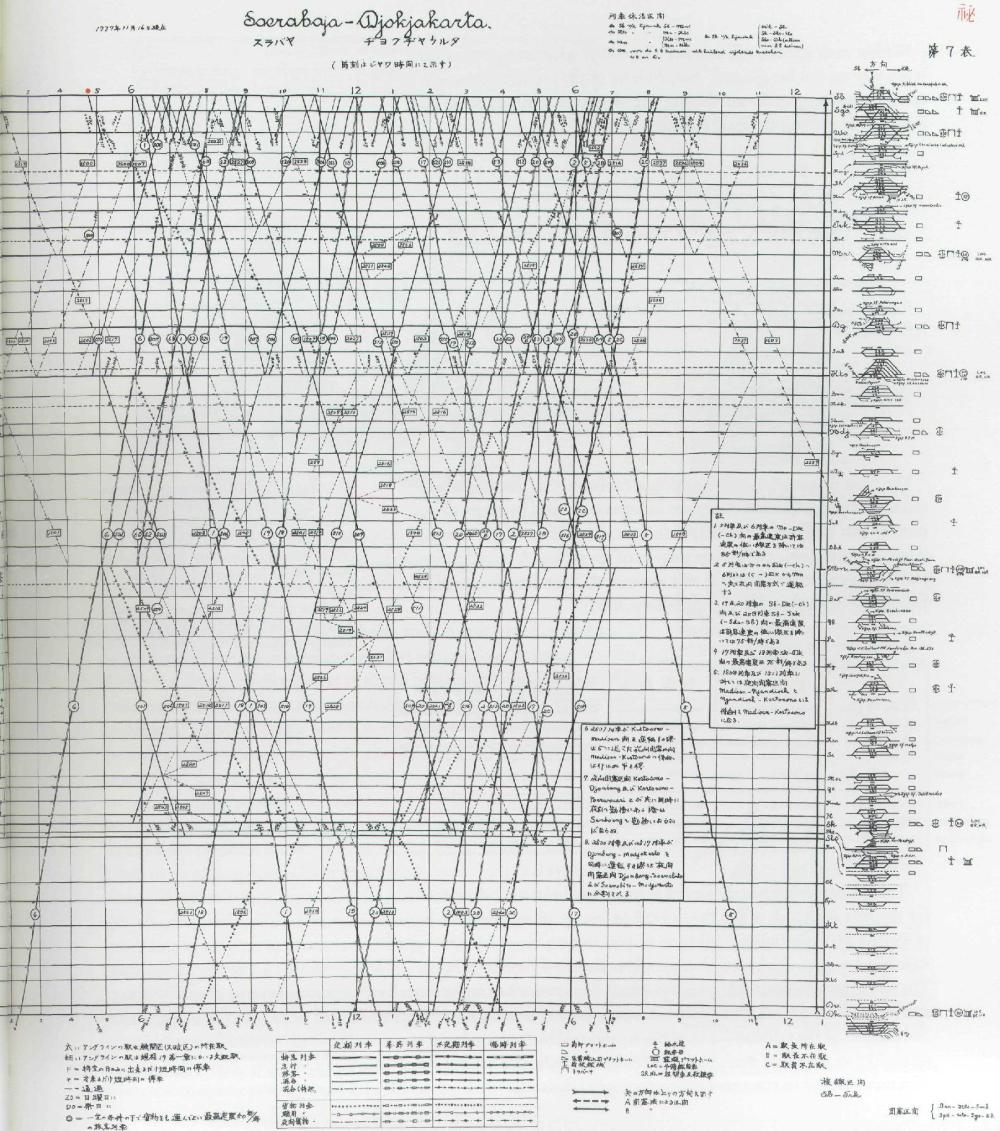
Oh, the bumpy ride out of the marriage gate! Kimberly and I both came from families that saw the world divided into right and wrong, but I bought into it and she didn’t. She valued understanding and accepting each other as is. I valued changing to meet one another’s expectations: decide what is right and do it. But how would we decide what is “right”? The only guideline that made sense to me was to let fairness determine basic expectations, and then each of us could feel free to be “more” than fair as an exercise of grace. How could I even understand grace if I did not start with fair expectations? If we agree that we both should do 50% of the dishes, then my doing 75% is an extra 25% of grace, but if fairness (all things considered) expects me to do 75%, then I have only done my duty and nothing more. Have any of you married folks tried to decide what is fair? What I thought was straightforward proved to be indecipherable.
A PRECISE CHART OF FAIRNESS
Consider our budget. Take something as simple as grocery shopping. How much should I buy of what I like and how much of what Kimberly likes? 50-50? But being a good bit bigger than Berly and having a faster metabolism, I eat more than she does. Should we factor in how much we each love, tolerate, or hate a certain item? How do food allergies or dietary necessities weigh into the mix? If one of us does the shopping and/or cooking, do they get an extra slice? If one of us brings in more income, do they get more of a say in the spending (or is it based more on hours worked… only occupational time or household chores….)? If 9 brownies are in the frig, how much can either of us eat before the other one feels cheated? (Yes, this has been an issue.) Even I could see that my views of fairness smacked of legalism.
You may find all of this a bit silly, even childish. Shouldn’t each of us simply choose for the sake of the other person? This is the way I was raised, but you can imagine how poorly it works when I believe we are each responsible for the other’s needs and Kimberly believes we are each responsible for our own needs. From my perspective, the only way to resolve unmet expectations is to “encourage” Kimberly to meet them (or live at a deficit). But from Kimberly’s perspective that is imposing my wishes on her and making her take up what she feels is my responsibility. From my viewpoint, we should focus on expectations, what ought to be done for the other. From Berly’s viewpoint, we should focus on what each of us needs to do for ourselves. For her, self-care must precede other-care just as a mother must put on her airplane oxygen mask before she puts one on her child. I said, “I have expectations. They are reasonable. If you don’t meet them, my needs will go unmet. I will feel you don’t love me. I will become hurt and resentful.” She said, “I have no expectations for you to meet my needs. I take full responsibility for my own needs, and I do not want you to neglect your own needs so that you can satisfy mine. I want you to take care of yourself, to take care of your emotional needs as you do your physical ones. I wish you would do the same towards me. Your need does not establish my responsibility, nor mine yours.”

IT JUST LOOKS VERY DIFFERENT FROM MY ANGLE
I think my trouble has always been connecting expectations, reasonable expectations, with responsibility. If my expectations are legitimate in a given relationship (clean up your own messes, repair what you break, do your fair share of the work) and you don’t meet those expectations, then you are simply wrong, and need correcting. What else could it mean to be my brother’s keeper if not identifying the problem and urging the right path to take? Only… the real reason I am pushing this is not for your sake, but for mine. I feel inconvenienced, disrespected, hurt, unheard, overburdened, and it is because of your negligence. I need you to change so I can feel better and our relationship can smooth out.
Clearly for relationships to work at all there must be some standardized expectations. If my friend may respond to a dinner invitation by punching me or turning in circles three times or offering a breath mint, then I am at a loss to know how to relate. His behavior does not make sense to me. If he reacts in an unexpected way, I think him odd or worse (based on whether he seems to know or not know what is expected of him), and this starts us right off in the wrong direction since I believe he is the one who needs changing. What we really need is mutual understanding, talking through our differences, but if either one of us assumes our own “rightness,” things are likely to go awry, and we may part ways with less clarity and an extra helping of acrimony. I have understood him, and what I understand is that he is mistaken. So I will do the “loving” thing and “forgive” him, which means I still think he is to blame for the tensions in our relationship.


 The message she regularly heard from me was “You are not enough” and the message I regularly heard from her was “I don’t care about your needs.” Each of us, by trying to defend our needs in relationship to each other, simply hurt the other one more.








 Janathan Grace Reflections