Kimberly supported her dear friend Lisa as they visited Ground Zero 3 months after the attacks. Lisa’s father was a fireman who died in the inferno. This is her recounting of that visit.
“Sixth and Houston,”
…said my friend, Lisa, as we slid into the back seat of the New York taxicab, shaking the snow from our scarves. “There’s a fire house there.”
The driver pulled away from the curb, and the sights and sounds of the city night flooded our senses. It had been a long journey already—driving to New York from Virginia, and taking the train into the heart of Manhattan–but we knew it was only the beginning. I silently asked God to calm my nerves so that I could be a support to my friend through this night.
Handing the cab driver the fare as we stood once again on the snowy pavement, and turning toward the brick building that housed the FDNY 2nd Battalion, we were faced head-on with our mission. There, among 8 or 9 others on the glass window in front, was the striking portrait of Richard Prunty. It was the same smiling face that stood framed in the curio cabinet of his widowed wife’s living room, next to the honors and medals he had received during his career as a fire fighter.
Upon entering the building, we were greeted by several gregarious uniformed men. We shook their hands, and Lisa introduced herself.
“Hello, I’m Lisa—Richard Prunty’s daughter.”
We were taken through the station house to the kitchen to wait for our “escort.” We walked past brick and steel walls covered with cards, letters, pictures, and posters scrawled with children’s disarrayed letters: “T-H-A-N-K Y-O-U F-O-R H-E-L-P-I-N-G U-S.” and red, white, and blue hearts, angels, and crosses adorning them.
As I passed the racks of helmets and huge burn-proof jackets with the familiar reflective yellow stripe across the middle, I kept reminding myself that I was not on a movie or television set. This was real. I had seen the “Third Watch” special episodes in September…and I kept expecting to see cameras and TV stars waiting for the next “take.”
Then, I felt like I was drifting somewhere above the floor…and I couldn’t feel my body. Was I real? Was this a dream? Why was I here? What was I thinking? Who did I think I was, this naïve, insignificant girl from the Mid-West… Suddenly, I needed a bathroom. I was directed to a dirty, tiled room with a urinal and toilet, and I closed the door slowly, so as not to alarm Lisa. Then I bent over and allowed my stomach to empty itself into the toilet. Immediately I felt connected with my body again. I prayed that God would help me …for Lisa’s sake.
I joined Lisa in the kitchen where we sipped coffee for a few moments until a tall, sandy-haired man in his thirties came in. “I’m Mike Simon,” he said as he warmly shook our hands. “Please come with me.” He fit every ‘New Yorker’ stereotype I could imagine: the thick accents, the dark-skinned ruggedness, and the loud, matter-of-fact way of speakin g.
g.
We headed back out into the blustery night, and stepped into the big van marked with a yellow and blue “Fire Squad” insignia. Lisa and I piled into the bench seat behind the driver, who greeted us with a warm smile, and Mike Simon settled into the passenger seat up front. Then, we were navigating the slush-covered streets once again—our final leg of the journey into this night. We drove further on, passing a point marked, “Only WTC Vehicles and Deliveries Beyond This Point.” The police guard waved at the van as we moved on past, and we drove toward what is known to rescue workers simply as “the pit.”
The snow seemed to pick up as we exited the Fire Squad van and followed Mike through a series of scaffoldings with spray-painted instructions and warnings. Then we entered the Command Post—an actual old firehouse that was now the nearest intact building to our journey’s end…Ground Zero itself.
Finally, we began to ascend the stairs that would take us to the 4-story rooftop for our closer-than-bird’s-eye-view of the disaster site. This was the place where Lisa’s father had spent his last moments, and the taking of family members to this place was hoped to bring some kind of closure to the ongoing grief…perhaps some reality into the hundreds of images running through the minds of loved ones.
From our four-story vantage point, my eyes took in a scene that would forever be etched in my mind. A large area on the ground level was clear of debris, and roads and ramps had been constructed in what looked like a whole separate world. A four-by-six square block area of the city had been transformed into a world of steel and concrete piles. Hundreds of orange-vested workers scanned and roamed on foot, while scores of construction cranes, dump trucks, and other machinery moved along the dirt roads, picking up mountains of steel and moving it to smaller piles to be sifted through.
At the heart of this newly created world was a downward sloping dirt ramp. It began at the ground level, where three demolished buildings (there were seven destroyed in all, with others missing tops and floors) had been completely cleared so trucks could drive easily around the sorted piles. The ramp then spiraled down. Trucks drove slowly downward to where the city streets were now high above them. The cranes there were still tearing at walls that towered over them. These were the walls that were once hundreds of feet above the city streets.
The fireman explained that every foot of debris at that level comprised approximately one floor of each World Trade Tower. Each floor was still on top of the others as they should be…only compacted down to a mere foot of rubble. Mike pointed to a landmark on a building across the way and told us that was how high the rubble originally stood.
“When the debris was that high,” I asked, “…how did you begin clearing it? I mean, I see the cranes now picking up the piles, but what did you use when the piles were higher than any piece of equipment could reach?”

A SECOND IWO JIMA
He turned to stand directly in front of me, feet shoulder width apart, and stretched out his hands, palm up. That had a deep impact on me, and I only stared at him. “Equipment and tools were worthless then.” he explained to me. “People just went right up to it and started tearing at it with their hands.”
I looked at Lisa, her eyelashes covered with snowflakes as she drew her scarf closely under her chin to shield her from the wind. As my arm went around Lisa’s shoulders, I asked, “What do you need, Lisa? Is there anything you are going to wish you had done when we leave?”
Mike seemed to be inspired by that question, because his face softened, and then became serious as he looked Lisa straight in the eye. “I worked with your dad a lot. He was an amazing man.” He paused briefly, as if to get the courage to say what he was thinking. “He was in the lobby that day, Lisa. He had heard the call to evacuate. He was calling his men back down the stairs. He knew he was in danger…but he would not leave his men there. He was not that kind of chief. He wouldn’t leave them.”
Then, there was nothing more to say. Mike looked at the face of his chief’s daughter…standing in the dark night overlooking that fateful site…and had nothing left to say. “Could you give us a few moments alone?” I asked him softly, and he nodded thankfully. “Sure,” he told me. “Take as much time as you need.”
I knew I could offer my stoic friend no words of comfort now. This was way beyond words, and because of that, I hesitated to do the next thing I did. But I also knew that the Presence of God is deeper than words, and calling upon Him now was what we needed. “Lisa,” I said softly as she stared straight ahead. Her face glistened in the lights from the wetness of the snowflakes. “Can I pray now?”
She nodded without changing her expression. Then, my eyes moved from her face back to The Pit. I had no idea what to say, but I threw self-consciousness to the wind. Neither of us would remember any words spoken now. I simply wanted God in the experience of this night.
When my eyes turned back toward the piles of debris below, suddenly there was an unmistakable impression upon me. My view was transformed. I had been staring at a pit of destruction a few minutes before, my mind clouded with questions and sorrow. But now I could not see any of the things I had just looked upon.
My eyes fixated on the lights. Large, football-stadium lights had been erected all around The Pit, shining down into it, a light that was brighter than day. The light snowfall emphasized the path of light as it came down from the sky and shone over the work below.
What had been mountains of rubble and trash months earlier…the tomb of thousands, with chaos and fear…overwhelming images of destruction…had been transformed, as I had said earlier…into a whole new world. What I now saw below was human resiliency. I saw order. I saw people volunteering their time to sift through piles piece by piece, to drive trucks to and fro, clearing the chaos. I saw the pieces being picked up, and life moving along.
And the glaring image I was receiving into my senses now was that it was only possible to do this around the clock because of the light from above. A power source greater than these mere people was surrounding the entire area, making forward movement possible in darkness.
Lisa and I stood in silence for a moment, watching the beams of light cut through the dark, snowy night. The ground was covered with a fresh blanket of white, not slowing down the workers, but giving onlookers a sense of freshness. Pure white now covered the place that was once blood red.
Only one word was fit to be spoken, then. “I can see,” I whispered reverently into the night air, “Redemption.”

LIGHT IN THE DARKNESS
I am very thankful that some of our core values as a culture still have much of their life from the deep roots of Christianity. We have a long history of befriending and helping those who have fought against us. I’m impressed that as a whole we remain so accepting of Islam. Many have commented how 9/11 was a “game-changer,” and it is true since that day I have an easily triggered anxiety about large scale terrorist attacks, almost expecting it to happen. I remember watching on TV as the towers collapsed and the wave of disbelief that washed over me with a new sense of vulnerability. It may have changed us in some significant operational ways, but it did not change our values. 
We were not sucked into intolerance and hatred of Islam or Middle-easterners. As any individual who is attacked by another, we naturally became suspicious and cautious, but as a whole we worked conscientiously and hard at maintaining our value of equality and acceptance. I know I personally worked at learning empathy for the the terrorists and those behind them, to try to see things from their perspective. As a country we have a history of reconciling with our enemies–Germany, Japan, Russia. I love this ability our society has owned of leaving bygones behind instead of teaching every future generation to hate. Of course, we have usually been in the position of winners, which makes such a position so much easier, but we have done so in the case of the Viet Cong as well. In some ways it is a value that is easy and costs little for the powerful and privileged, but it is still an attribute for which I am grateful.
I can also understand the hugely insecure and vulnerable perspective of those without power and the anger springing up from feeling deprived of what they would choose for themselves if they had more control. Like individuals who have little power in a relationship, the only recourse to stand up for themselves is not direct confrontation, but guerrilla warfare. From one angle, perhaps 9/11 did what was intended by the terrorists and was for our ultimate good, an opportunity to see how our positions in power are hurtful to others. Some have suggested that Muslim youth are starting to take a new approach which does not embrace terrorist acts. I hope for all concerned that that is the case, that somehow a new mutual respect, understanding, acceptance, and even support however limited, might characterize our futures.
 Sometimes I wish my brain didn’t complicate everything, or that I could at least relate my thoughts in a simpler way to others. Everything seems interconnected to me, so I find it very difficult to share anything without sharing everything… I know that because of what I leave out, what I leave in will be distorted. In my effort to include all that needs to be said for clear communication and still keep my comments short, I seem to pack thoughts in too tightly (so my wife says) and this creates a different distortion. And what is clear to me may be totally misunderstood by others. So I’d really appreciate anyone posing questions, offering different perspectives… basically interacting with the thoughts I offer. Whether or not we agree, it helps to clarify what is being said. My warm thanks to those who do interact with my words on FB or my blog.

CAN I PLEASE JUST HAVE THE BONE?
It seems to me that if we do not find in God the ultimate answer to our needs, we become dangerously dependent on others. If I think my wife is the sole channel of God’s grace for any substantial need and she fails me, then my only recourse is to force her compliance. I might cajole, argue, bargain, threaten… there are a hundred ways to get her to “fall in line,” but this manipulation undermines her sincere love.
Genuine love must grow in an atmosphere of freedom, not control. That is frightening because freedom allows my friend to choose to be unloving and uncaring, refusing to help with my needs. If I make no demands, but offer unconditional love, he may take advantage of me, take all I have to offer and give little in return. And if my needs go unmet, I cannot survive. So when I sense a disparity between how much I give and how much I get, I react to protect myself. If I protect myself by giving less, I feel bad for my selfishness, for my lack of generosity, and I feel a distance growing in my heart towards him. So instead I subtly (or plainly) push him to give more.
This approach did not go over well with Kimberly. She felt the pressure of my expectations and recognized the conditionality of my love. When she chose not to do as I wished, I felt unloved and became resentful, critical, and demanding. This in turn made her feel unloved. I tried to pressure her to comply, to prove her care by meeting my expectations. She insisted on a more honest path to resolving our conflict, one that made room for both of our needs and for genuine rather than forced expressions of love.
I thought love was proved by what it gave—if folks didn’t give, they didn’t care—and this was intolerable to me because it inflated my fears of unworthiness. I gave to others with the expectation that they would reciprocate and so prove my lovability. My mind tightly bound together loving motivation and helping behavior, and I desperately needed Kimberly to prove my worth by setting aside her feelings to meet my needs. Through long conversations and consistent responses, Berly expressed her care for my needs without yielding to my pressure to change her behavior (and so abandon her own needs in favor of mine). It took years for me to believe she loved me in spite of not coming to my rescue. I slowly realized that someone can love without helping and help without loving, that sometimes the truest and hardest love is one that does not give when giving would beguile the loved one into a false security.
I wanted to stop feeling my insecurity and Kimberly wanted me to embrace it, understand it, work through it. If she helped me to avoid those feelings, it would undermine our relationship. For her part, she was afraid of my resentment, and wanted to act in a way that would hold it at bay, but she knew living out of that fear would keep her from sharing herself honestly and vulnerably with me. Things might go smoothly between us, but we would be sacrificing substance for façade. Slowly we both stepped into our fears and broke through to a deeper understanding of ourselves and one another, a deeper trust, and a deeper freedom to accept who we are. We encourage and help each other to find a way to meet our needs, but do not take the responsibility for this on ourselves. Of course, sometimes our needs conflict, but that is another story altogether.
 I lived the first 40 years of my life with the assumption that if someone had a need I could meet, I was obligated to meet that need. No matter how much I gave, I was still being selfish if I had any resources left for myself. Such a view leads to spiritual and physical self-destruction. In grad school I knew that 12,000 people a day starve to death (no doubt that figure is higher today), so how could I spend any more than the absolute minimum on my own needs? If I used resources for myself that would cause one more person to starve, was I not killing them? Was I less responsible because they were half-way around the world instead of on my doorstep?
With this thought I calculated the cheapest possible way to survive so as to give more money to relief agencies. Since tea or coffee had no nutritional value, I thought drinking it was simply a sin… so was jelly on toast (although it was so dry I used margarine sparingly, or rather a cheaper margarine substitute, and felt guilty for it). I must eat nutritionally, for which my mother gave me the simplest advice as I left for grad school , “Eat one green and one red or orange vegetable a day.” I knew I also needed protein, starch and fruit. The cheapest fruit was to drink orange juice each morning with a piece of toast (starch).
I prepared my dinner one month at a time. The cheapest protein was a chicken whole fryer (39 cents a pound), and the cheapest green and orange vegetables were beans and carrots. At the beginning of the month I would cook one whole fryer, one bag of string beans and one bag of carrots. I then mixed a bit of each into golf ball size clumps, twisted six into a row inside my used bread bags, and froze them, making a month’s supply. I would warm one of these up to put on rice each evening when I came home from school.
I saw time as another resource to share, limiting my sleep to a bare minimum. I lived in Chicago for six years and never visited the famous sites, which seemed an unconscionable waste of time. But I could not strip myself of every resource, so I lived with a pervasive undertone of guilt for not living on less and giving more. That person’s need constituted my responsibility, and the needs of the whole world lay before me to meet at whatever cost to myself. 
Something was deeply wrong with this picture. Whose needs am I responsible to meet? If I shave it down to the bare minimum, I would say I am responsible to meet my spouse’s needs… but is even this true? Doesn’t my wife have many needs that I cannot fulfill? After all, no individual has all the spiritual gifts for meeting another’s needs. The problem lies here–whether I took on the needs of the world or of only one other person, I was still trying to play the role of God, and it was crushing me.
Over time I came to the conclusion that if someone has a need, it is God’s responsibility to meet that need, and he may or may not use me to do it. He is not dependent on my help. It is not the other person’s need which constitutes my responsibility, but the invitation of God to become involved (and he does invite, he doesn’t force). If I choose to live by grace rather than law, then someone else’s need is a potential opportunity rather than an obligation. But whether or not I get involved (and to what extent), it remains completely God’s responsibility to meet that person’s need.
My own wife must ultimately look to God and depend on him to meet her needs. If she makes me the final point of responsibility for her needs, then her needs are going to regularly go unmet and she has no recourse. She is trapped in a life that is unworkable and has no means of escape because she is dependent on me, and I am a flawed creature. She and I must receive the grace of God for ourselves, either directly or through whatever channel he uses. We cannot restrict his grace for us to one channel, not even our spouse. No human relationship was designed to bear such a burden.
Over a long time, I was able to shift the weight of the world (and every individual in it) onto God’s shoulders and off my own. I still struggle to let the burden go, and tend to blame myself if another person’s needs go unmet, but I now know that to carry such a weight will break me. I discovered that I can care without taking responsibility, that mourning the loss of another does not require me to jump in and “save” them. In fact, when I am always in “fix-it” mode, I tend to be distracted from loving and caring, especially if I am pushing myself with obligation rather than letting my involvement flow from a deep settled nest of God’s grace.
Given the India diversion in blog postings, I will need to recap the story of my re-education that I was sharing.
1) I thought people and circumstances outside of myself were the reason for my feelings in a direct cause and effect dynamic. In order for me to feel better, I needed them to change. In other words, I was trying to “fix” my feelings instead of learning from them, and I was doing this by pressuring the other person to change.
2) I divided feelings into good and bad, legitimate and illegitimate. If the person “causing” my feelings were at fault, then my negative feelings were justified, and they should stop doing what they were doing so as to relieve my bad feelings. If the person “causing” my feelings were not at fault, then my feelings were illegitimate (wrong), and I had to talk myself out of those feelings.

NO WORRIES, I'M HERE TO FIX YOU!
3) If I can manage okay with the other person’s irritating behavior, then I should say nothing and just endure. If I could not handle it, I should tell them how their behavior was affecting me and ask them to stop. Again, my feelings were being controlled by the other person, which put me in bondage to them emotionally, and required them to change to maintain a good relationship with me.
4) Kimberly insisted that I had a right to my feelings, all my feelings, and that all my feelings were legitimate and true… not a true reflection of the guilt of others, but a true reflection of my own perspective and experience of life. My “bad” emotions were telling me something valuable about myself, not about the other person. If I listened to this emotional message empathically instead of with shame (accepting rather than rejecting the feeling), I could discover important things about my own woundedness.
5) Kimberly encouraged me not to hide my unhappy feelings from those I love, because sharing them is an avenue into deeper relationship. But if I shared my feelings as a means of getting her to change, it would push us farther apart and ground our relationship more on legalism, encouraging her to believe that my love is conditionally based on how she behaves.
6) I thought genuine care always led to accommodating behavior. If the other person cared about me, they would change what they were doing. If they didn’t change, it proved they didn’t care. Since these two were inextricably connected in my mind, when the person did not change, it proved they didn’t care. I didn’t realize my real need was for her to care about my feelings, not for her to take responsibility for my feelings by changing. As I thought, “My need + your love = your accommodation (and vice versa). How could you possibly say you care if you make no effort to ‘improve’?”
Each step of learning came with a great deal of pain for both Kimberly and me. Kimberly kept insisting that she was not responsible for my feelings, that regardless of how I felt towards her, this was not an indication of her guilt or responsibility. She felt deeply hurt when I blamed and shamed her, even if it were simply a sideways glance, pause, or lifted eyebrow to suggest that she was failing to meet my expectations. I kept believing that if she did not change, she did not care, and that hurt me deeply. This whole perspective of hers blasted my mind with questions. Are all expectations in a relationship unhealthy? Is accommodation or compromise a bad idea? Can a person truly care and still not change something that is hurtful to another? Are my emotions really completely independent of your behavior towards me? It still did not make sense.

THE MORE I THINK, THE MORE CONFUSED I GET.
I have many Indians that are dear friends to me and whom I love, so I was sad to go to Kolkata (Calcutta) for only 5 days and under such tensions. It would be wonderful to spend a month or two there. Of course, when I speak of my own sense of failure in India, my friends there should remember that “success” and “failure” are relative terms, and in my youthful idealism I had highly unreasonable expectations, so I was setting myself up for inevitable “failure.”
In the end, my impossible expectations and sense of failure turned to a blessing for me, because it forced me to see that my sense of worth was tied to success, and healing could only come by freeing myself from that crippling deceit. Folks reassured me that I was indeed successful, but when they tried so hard to prove my successfulness, it only made me think that success must be a crucial support to my worth. For my own well-being I could not listen to such words, because I had to establish my worth apart from what I did or did not accomplish.
On this trip my renovated perspective on grace had largely freed me from this emotional success trap, so I was able to take pleasure in the good things God had done through me in India. Whether or not this passed the bar of “success” really did not matter to me any more. As I walked the streets again and all the old feelings flooded back in, I realized that, however misguided I had been, I was also very sincere and genuine while living there, and I saw evidence that this had been used by God in the lives of many.

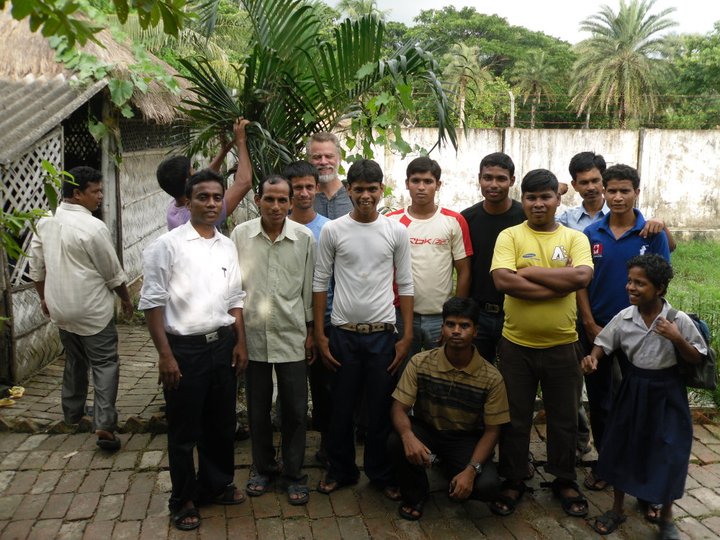
Some children from the new branch school
Friday was a very special day for me because I went to visit the school which David Nallathambi, Hemlota Das and I had started together in Taldi. I believe they have some 350 indigent students who would otherwise be uneducated and trapped in the generational cycle of poverty. This year they started a branch school in a nearby village to facilitate the education of 5 and 6 year old children who were walking 2 miles through the mud to come to school. Young men in Taldi held a special program for me of singing and sharing, each one rising to relate how dramatically our presence in Taldi had transformed their lives. It was a huge blessing for me.

Young Taldi boys
Thanks to all of you who have supported this work through the years.
Much of my life’s darkness metastasized from this one seed thought: I felt inadequate because I accomplished so little for God and I feared his disappointment. If I just did a little more, I could please him at last. And so I drove myself to extreme lengths–choosing celibacy, relocating to a city of misery, sleeping little, fasting and praying weeks at a time. But I could never do enough to feel secure in his love, because I used my fruitfulness or effectiveness to measure his blessing and pleasure, and the results did not speak well of me. I subconsciously assumed that God’s love for me was based on my usefulness to him. In this way, my success was fundamental to my well-being.
 I lived 40 years out of that false assumption, building up a whole network, a fully functioning system based on that foundation. It required a long process to break free. For the last ten years I have applied the salve of grace to my deep wound of worthlessness. Given time, grace works effectively for me when I can identify my specific need and saturate it with mercy. So for a decade I worked on delinking God’s love from my success, even from my behavior or choices. I was determined to rewire my thinking, conscious and unconscious, to ground all my well-being in the unconditional love of God. Though I did not focus on my heartbreak in India, I did focus on those underlying issues, so when it came to opening myself to that shrouded past, I found the weight had largely lifted.
It was not fully lifted because there are always new aspects of that one great confusion of grace which I need to identify and work through. As I planned for the trip, my wife warned me against a determination for good results, but rather to do my best and leave the outcome as it came. She knows me well, and it was good counsel. Still I felt dragged down too much by a sense of responsibility to succeed.
I have a long way to go, but I am moving in the right direction. I always thought I was responsible and therefore in control of my own success. As each string tying me to that assumption snaps, I find growing relief and peace. Results matter, matter profoundly, but I am not responsible for results, only for motives and actions. My heart is slowly embracing the unconditional love of God… even, amazingly, when my motives and actions are faulty. God is always packed tight with grace bursting to be free.
Well, I finally have a minute to sit down and share about my week in India, having returned last Sunday afternoon and started work Monday morning with 7 hours at Lynchburg College library and 4 hours of mowing grass. It’s been a long two weeks and I’m grateful to finally be able to catch my breath today. As many of you know, I served among the poor of India for 10 years and left behind a school and clinic for the poor. I returned to the U.S. because I had been suffering deep depression for four years, which finally started dragging down my spiritual life.
I felt like a great failure. Because of this blackness that surrounded my time in Kolkata, I spent the next decade avoiding any thoughts about those years. Even with my wife, I shared only a brief synopsis. It was this spirit-crushing sense of failure and the accompanying shame that drove me to a crisis discovery about myself and God, a lesson about grace that I have been sorting through since 2000.
In the last few years the administrative tensions between the Indian director and board had reached an impasse, and they asked me (as the founder) to come try to sort things out. I realized that this would open once again the floodgate of feelings that I had dammed up all these years. When I agreed to go I started thinking once again about India. My greatest suffering there sprang from my shattered sense of worth based on my perceived failures, and as I processed with Kimberly I realized those cracks in my soul had been largely healed as I applied grace to the wound. The timing, therefore, was providential. I was ready to open up to that chapter of my life, to work at integrating those experiences into myself.
My week there was difficult as I got little sleep and was weighed down with a task that seemed unsolvable: the director had legal ownership of the land on which the school was built, and the board had all the money for running the school and paying the staff (including the director). It was a power struggle waiting to happen, and for various reasons was largely my fault for setting things up as they were. I did the best I could at the time, so I don’t feel culpable. Perhaps I should rather say it was largely my responsibility. I went 14 days ago with a plan that I thought would work, and it didn’t work. I started to fast and pray as I had done so often before in India. On the last day, at the last moment, we had a breakthrough, a resolution that seems likely to work. I will continue to interact with the two parties to finalize the details, and if necessary, will return to India in December to complete the process.
Many thanks to your supporting thoughts, words, and prayers.
Like most men, I want a fix. When I am agitated or discouraged, I want help to escape, and I expect this to come not from empathy but from fixing the problem that is causing those feelings. If I am afraid of losing money, help me protect my money, and my fear disappears. If someone is irritating me, get them to stop, and my irritation will fall away. I didn’t wait to ask myself with compassion, “Why am I afraid, what is going on in my heart?” That was obvious… the situation was causing my bad feelings.
When my wife shared her feelings with me, I offered solutions instead of empathy, just like I wanted for myself. But in trying to offer solutions, I was making her feel worse. When I said, “There is no reason to be afraid because_______” I was trying to relieve her fear, but she heard me say that her feelings were illegitimate. It took me forever to change my approach, and I still struggle with it. It seems to me that if I empathize with her feelings, I am giving her more reasons to feel sad or fearful or bad, and I want to rescue her from those feelings. But as I tried to understand her perspective more, I gradually realized that I too needed empathy for my feelings rather than solutions to “fix” them. I needed it as much as she did, because empathy invites me to be compassionate to myself, and with this active self-support, I discover the wound that underlies my feelings. But I didn’t want discovery, I wanted relief.

DIDN'T I SAY I COULD FIX IT?
I am a very good fixer, and when I fix situations so that my unhappy feelings are lifted, I feel better, but I learn nothing about myself through those negative emotions. As a result they came back just as strongly when the situation returns. Instead of emotional renovation, I was constantly working on repairs… the same fixes over and over.
Here was the sticking point for me in receiving Kimberly’s compassion. I could not imagine genuine care that did not result in her help or accommodation. If she truly empathized with my situation, she would surely act–help with the dishes, refill the gas tank, spend more time with me. If she didn’t give tangible assistance as able, she was simply uncaring no matter what her words said. If she did not help meet my needs, it proved she didn’t really care. And her lack of care stoked my fear that I was not worthy of care. My only option was to pressure her into acting to resolve my feelings and renew my sense of worth, and I usually did this by shaming her for not doing more. Kimberly reacted to this, as you might expect.
Over a great deal of time sharing and thinking I slowly realized that what I really wanted and needed was her love and genuine concern, and I was closing her down to that by blaming her and demanding that she change. When folks pushed in front of me or cut me off in traffic or ignored me, I thought I needed them to change, but my real underlying need was simply to have someone care about my feelings. That made all the difference. If my wife bangs the cupboards because she slips or thinks I’m downstairs or finds the door sticking, I feel no agitation. Knowing the whole context makes me realize that her behavior does not result from a lack of consideration for me. I may be irritated at the situation, but not at the person.
But what if the person knowingly kept doing those things that troubled me? I simply refused to believe they cared if they didn’t change. My need + your love = your accommodation (and vice versa). How could you possibly say you care if you make no effort to “improve”? I felt bad and it was their fault, they were responsible for my feelings. But if others control my feelings, I’m in trouble because I am then their emotional slave (or we are mutual slaves, which is the essence of co-dependence). Kimberly finally broke through this block in my thinking, but the process was very painful for both of us.

 g.
g.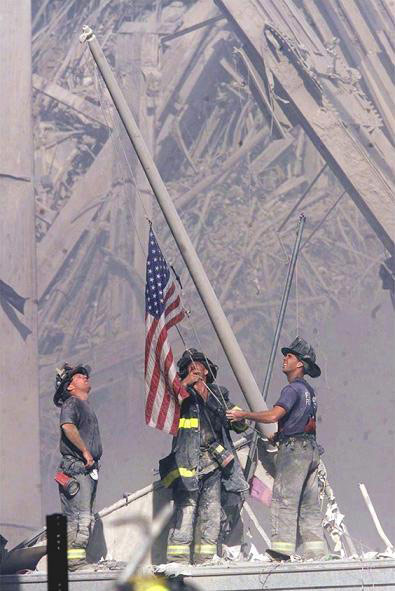







 Janathan Grace Reflections