Elisabeth speaks for many of us when she worries that making room for someone’s quirks could encourage the attitude, “God made me this way so just accept it even though it is inconveniencing or hurting you.” That is one of the guiding principles that shaped the way I related to others most of my life, and it still pulls strongly on my emotions. This will take two posts to discuss even briefly because I want to start with my own experience and perspective and then offer the comparative view of my wife.
I grew up believing very strongly that I was responsible for others’ responses to me. If someone felt hurt or inconvenienced by my actions, I should change my behavior. Either I had done something wrong and should apologize and change myself to prevent this in the future, or they were mistaken and I should explain to them how they had misunderstood my intentions (or a combination of the two). Their negative feelings indicted me, and I was responsible to relieve them and to then live in such a way that I caused them no more inconvenience or hurt.
I think this entanglement of responsibilities is common among children who respond to parental displeasure by being compliant and who determine their own lovability based on the feedback they receive for their behavior. If my mom or dad is angry, it is my fault, and I must fix it. I think our parents’ generation generally believed this, and those of us raised in religious homes believed this was also a true reflection of God’s attitude towards us. One of the downsides of this perspective is that I hold others responsible for my feelings as well. You take care of my feelings and I take care of yours. You take care of my needs and I take care of yours.

Relational Balancing Act
It sounds very considerate, and I suppose it may be, but in my case, instead of a free and loving choice, it was grounded in fear and relational obligation. I could not survive in forgoing my own needs for the sake of others’ needs if they did not reciprocate, so if there was no parity, I had to pressure others to meet my needs. If I were inconveniencing or hurting someone, I was under moral obligation to change, and if I did not like what they were doing, they had to change.
Of course, the entire system broke down if others did not meet my needs. When I eat out with a friend, the payment shuffle at the end is a bit embarrassing. Supposing my friend will reciprocate the next time, I decide to pick up the tab. But he doesn’t return the favor. I decide to do it again as a good example that shows him clearly how he is falling behind in the balance of hospitality. By the third unreciprocated meal, I start feeling resentment and make mild side comments or light jokes to bring his attention to the situation. If he simply does not work by this system of fair trade, then our relationship is in trouble. I will feel that he is selfish and uncaring.
When I decide what to wear, what to say, where to go, how to behave, I automatically assume others’ needs are preeminent. This does not primarily come from a place of health or freedom or generosity, but from a fear that they will justifiably think badly of me or resent me if I do not care about them. I find it very hard to think well of myself if others think badly of me (in this case because I am being “uncaring”). On the other hand, if others seem to ignore my needs, I feel that my needs don’t really count, I am not worthy of receiving their care. So I am trapped in this world of reciprocation based on fear of losing my worth as a person.
My fear of others “taking advantage of me,” requiring me to do more lifting in the relationship than they do, is not simply that I will run out of energy and resources. It is a much more basic fear—that my very worth as a person is seriously at risk. Of course, I never think it out so clearly and objectively as this, but simply react from deep-seated emotions, often jumping right past the fear (which makes me feel vulnerable) into the reactive and manipulative anger of self-defense, “Don’t you care about me?!”
Some say that compromise is at the root of any good marriage, but what if either or both partners feel an arrangement is unfair, unbalanced. Picture the impact on the relationship if this imbalance is not simply an inconvenience, but a threat to the spouse’s very worth as a person. That is a picture of Kimberly and me as we stepped into a committed relationship.
I agree with Elisabeth that “where I am weak is when I get to see God at work,” though I think it might be good to consider what this may or may not mean. How does God work with or in spite of our weaknesses? He can certainly override or bypass or compensate for our inbuilt weaknesses when he chooses, but I expect, like any other miracle, it is the exception rather than the rule for him to work contrary to the traits with which he uniquely designed each of us (and the circumstances by which he shaped us). Not only the abilities, but the limitations he gives us are integral to our design, a key part of who we are. A car is great for driving, but it is pretty bad at sailing. If we make a car to also sail, those adaptations will hinder its ability to drive well, which is its true design. 
Allow me to get personal. I was raised by a mother who was not time conscious and a father who was very time conscious. This was the source of much contention, especially Sunday morning, and both my mom and dad agreed that the “right” way to be was prompt, which of course meant my mom was inadequate and my dad was adequate. Dad was organized and Mom was disorganized; Dad planned out everything well in advance and Mom flew by the seat of the pants; Dad was very analytical and Mom was not. We were taught by both parents that we should emulate our father in all these things, because this was godliness, and thus avoid the weaknesses of our mom.
Most of my life I fully believed this to be true. My dad even taught a college ethics course that included a section on the moral necessity of being good stewards of our time. The good ol’ American values of productivity and efficiency were apparently a fundamental part of God himself, handed down to us in his word. The verses in the Bible about being punctual are fairly meager, so he used arguments such as the injury we did others by being late (“keeping them waiting”), which was both selfish and unthoughtful. It is more the emphasis than the idea which became a real problem for me. One could argue that good stewardship of the body requires daily bathing with soap for good health and so make showers a moral issue, but I don’t think I would go there with it.
It was decades later that I started to question this thinking. I found that examples of godliness in Scripture seemed to have a very different perspective of time, one that did not include minute hands on sundials. Jesus himself seemed to be much more God conscious and people conscious than time conscious, and he regularly chose to live by the former values at the expense of the last.
I don’t mean to suggest that punctuality is of no worth, but I wonder if it does not fall farther down the scale of true values than most white, middle class Americans would like to think. I wonder if it is a constant source of judgment towards other cultures and people who value it much less. Might our insistence on timeliness do more injury to individuals and relationships than our being more flexible with our schedules? In fact, is too much of a need for promptness a weakness of another kind and is flexibility perhaps a strength? Do we unnecessarily devalue the traits of some folks instead of appreciating their uniqueness and important contribution to perspectives, relationships and plans?
I find myself valuing strengths in others that I do not have. But instead of simply being grateful for and blessed by their contribution to my life, I compare myself to them and challenge myself to be like them… and then judge myself for falling short. I tell myself that I must be as organized, as gentle, as confident, as humble as they are. These are all good things to work on, but things that do not come naturally to me as they do to others, and in fact, they usually have their own downside. People who are temperamentally gentle often have a very hard time confronting others; Those who are typically confident tend to be less open to the perspectives of others.*
If I use a lot of energy trying to “fix” these weaknesses I attribute to myself, I not only make no room for others’ contributions to my life, but I end up undermining my own unique gifts. Others become competitors to me instead of partners, and relationships suffer. The differences between us that were meant to teach us, unite us and make us interdependent become the very things that drive wedges between us because I expect others to be like me and shame myself for not being like them.
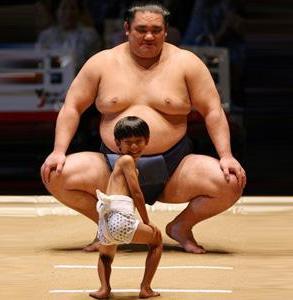
Let's Work Together!
___________________________________________________________________________________________
*Of course, we usually think of humility and gentleness as virtues (moral attributes which are acquired) and organization and confidence as character traits (nonmoral attributes which are given). So for the purposes of this discussion, let us leave aside the “virtues” and think simply of “traits.”
This blog site is a little over a month old, and I would really value your feedback. Are posts too long or too short? Do I post too often? Should I publicize each post on Facebook or just some (and if so which kind)? Any remarks on the content? Any other suggestions? Thanks a million!
Gregory Boyle, a priest who works in gang territories of L.A., tells this poignant story:
I knew an inmate, Lefty, at Folsom State Prison, whose father would, when Lefty was a child, get drunk and beat his mom. One Saturday night Lefty’s father beat his mother so badly that the next day she had to be led around by his sisters, as if she were blind. Both eyes were swollen shut.
On Sunday, Lefty’s father and brothers are sitting on the couch, watching a football game. Lefty calmly goes into his parents’ bedroom, retrieves a gun from his father’s bedstand, and walks out to the living room. Lefty places himself in front of the television. His father and brothers push themselves as far back into the couch as possible, horrified. Lefty points the gun at his father and says, “You are my father, and I love you. If you ever hit my mother again… I… will… kill you.”
Lefty was nine years old. He didn’t kill his father, then (or ever). And yet, part of the spirit dies a little each time it’s asked to carry more than its weight in terror, violence, and betrayal. (From “Tattoos on the Heart”)
That last sentence is so achingly true. Every child is forced to handle situations that exceed his or her capabilities, and each such experience incites fear or shame or distress. I have discovered in my own life that my greatest emotional reactions to situations as an adult invariably spring from the wounds of my boyhood. Have others found this to be true?
 Elisabeth’s comment raises at least four additional issues in my mind. The most apparent one, I think, is the distinction between enabling (as AA uses the term) and supporting. When people take too little responsibility for themselves, offering blanket assistance may not be the most helpful thing to do for them. We need to take this into consideration so that we do not inadvertently hurt or weaken others by our aid (such as parents do when they over-protect their children).
When folks are in need, love calls us to discern how best to serve them. It seems to me, the better we know someone, the better we can identify his or her true needs (so perhaps the best way to serve them is to get to know them). The difficulty lies in determining whether the crutch I offer will aid or hinder healing, and I have many potential problems in sorting out this quandary.
I tend to expect of others what I expect of myself, but this is a dangerous measure. Each of us has unique struggles and strengths, clarity and confusion, emotional surplus and shortage, speed of growth in different areas. If I don’t even know my own heart well, how can I presume to know another’s? I tend to expect too much of folks (and others’ tend to expect too little of them). Without realizing it, I tend to help or deny help to others for the wrong reasons (because it feels good to be needed, because I am proud of my abilities, because I feel obligated, because I resent the inconvenience, because I am suspicious of their motives). I rarely if ever respond out of pure love.
How can I tell when folks are being negligent, failing to do what they can easily do, or whether they are in genuine need of a hand up? Without even deciding that question, I know of a number of vital ways we can support others. We can accept them for who they are, we can feel and express empathy for their sense of need, we can listen and ask questions, we can offer encouragement and insight from our own similar experiences, we can be honest about our hopes and concerns regarding them and the strengths and weaknesses we bring to the table. I have discovered in relationship to my wife that what I need more than anything else is someone to understand and accept me as I am. It is far more important than the help they do or do not give me.

The Comfort of Caring Hands
Elisabeth offered some insightful questions on Facebook in response to my post “I Am Handicapped” She was responding to my comment “We all have handicaps, and we do well to recognize them. God not only gave us all strengths, but he deliberately created us with weaknesses as well. I think this was his way of making us interdependent, of tying us together in community. Our weaknesses are not “bad” things, they are just part of who we are and who we will always be. I may be able to improve or compensate for my weaknesses, but if I try to quash them or force them into conformity, I am being false to the way God created me.”
Elisabeth wrote, “I have been trying to think what it is that has been niggling at the back of my mind … Anyway, it is a feeling like the “That is just the way I am” statement if received with love and grace seems to be more like “That is out of my comfort zone” “God made me this way so just accept it even though it is inconveniencing or hurting you” … If the other person’s strength meshes with your weakness then that is great… although where I am weak is when I get to see God at work … “That’s just not me” is not off limits to God’s work and purpose. When both people say “That’s not the way I am made” then what happens. A friend told me that when your eyes are “going” (which mine are and I increasingly need reading glasses…smile) that as much as is possible to not use glasses so the eyes will continue to work…If you use the glasses all the time then your eyes just adjust to that. So if someone else “lovingly” steps in and is compensating for my weakness then I adjust to that and don’t trust Jesus to work on it. I am probably not making sense…I am just mulling things through so these are just thoughts on a journey not destination thoughts…”
Wow, she raises so many issues! Thank you, Elisabeth, I want this site to be interactive. It seems to me it would be so much more beneficial to all of us if it is a dialogue. I think this will take several posts to touch on so many things (just to barely touch on them!). I would like to share my personal journey regarding weaknesses, but the story is so long, I will put that on a separate page for those who have more time or patience or interest. Suffice it to say here that most of my life I faced personal weaknesses as obstacles that needed to be “gotten over,” to be overcome and replaced with strengths. I would compare my weaknesses with others’ strengths, setting that as my goal and mentally flagellating myself for falling short. This belief had multiple downsides within myself and my relationships.
A few of my many weaknesses include forgetfulness, accident proneness, disorganization, and procrastination. I do my best to compensate for these. For instance, I am more organized in my work than most folks, but it does not come naturally to me. Instead of being inherent and well-grounded, it is an entirely jerry-rigged contraption, like a fort built with scrap material by a little boy instead of one made from a manufactured kit by a skilled carpenter. I have developed multiple props of lists, systems, calendars and the like, but it goes very much against the grain for me to operate this way, so I have to drive myself to it with shame and fear.
Inevitably, in spite of all my efforts, my disorganization glares through, and I fail to do what I am “supposed” to do. Because my self expectations do not take into consideration my weaknesses, I feel ashamed for not meeting my own standards. In short, I can only be an acceptable, worthy person by changing into someone I was not designed to be. I don’t consider what method of work (and what choice of work) may be most fruitful for someone with my characteristics, but assuming that efficiency and productivity are the ultimate goals, I force myself into the system that will best meet these criteria, like David mistakenly trying to get into Saul’s armor to fight Goliath.
Weaknesses are often the alter-ego of our strengths. In contrast to organization and task orientation, I am more naturally spontaneous, creative, relationally oriented. By putting all my energy into becoming more organized around projects at work, I tend to stifle my strengths (which limit efficiency and organization). Of course, efficiency and organization can be quite important, but if I make these my primary, default objectives, I have to ignore and override my natural tendencies which are valuable in their own right and are my particular gift to offer the world. In contrast, I could use efficiency and organization as supports to my strengths (as needed) instead of a competition with them. Allowing me to be myself in this way will require those who are more organizationally minded to either be patient with the speed, neatness, and method with which things are done or step in to add their gift of organization (not to insist that this be the paramount value, but just another part of the mix). In this way we can learn to respect and value one another’s contributions.

Our Needs and Gifts Are Designed to Fit
Some of you may have balked at my last post. Putting myself first sounds downright unchristian. Yet for whose life do you have the greatest responsibility before God? Should you let your own spirituality slip because you are busy helping others with their spiritual journey? Whose physical health are you most responsible to maintain… are you more accountable for your children’s unhealthy food choices than your own? Is there someone more responsible for your mental health than you? Self care is about keeping oneself healthy in every way. I do not mean that I would never choose someone else’s benefit over my own in a given instance, but as a way of life, I believe I am most responsible for myself, and that the more healthy I am, the more a blessing I can be to others. I’d love to hear your responses!
I say that tongue in cheek… sort of. Many of us have so confused self-care with selfishness, that we think it is holy to mistreat ourselves in ways we would never think to treat another. I am one of those who feel I must neglect myself in order to help others, but at least for me, I am surprised by the opposite happening. As I found myself able to be kind to myself on my drive to D. C. yesterday, I spontaneously began feeling kind towards those around me.
A woman tailgated me for a while and then cut in front of me. Instead of thinking, “You jerk!” I thought, “I’ve been in big hurries before. I know how that feels. I hope you make it in time.” I had empathetic, even appreciative thoughts for slow drivers, confused drivers, and wacky pedestrians. I even had an open heart to the one person in Arlington that made my life miserable when I was pastoring there.
Who would have thought that taking care of myself, even putting my own needs first, would have such a positive impact on my outlook and behavior towards others? It seems I may help others most by taking care of myself first.
I am in the D.C. metropolis right now (Arlington, actually) to get a passport and visa to India. As you may have read in an earlier post, India was my spiritual Titanic, and preparing to return there has opened up some very deep gashes that I have tried hard to ignore for the last decade. I was already scheduled for an appointment at the DC office a month ago because I thought my passport was over 15 years old. The morning I was to leave for Washington, I discovered a newer passport in my “legal id” folder and cancelled my appointment, only to realize some time later that my unmarried name was in my current passport and had to be updated.
While I was still trying to deal with the stormy emotions rising out of my impending trip to Calcutta, I banged up our car and was handed a warrant of arrest for hit-and-run. For the last two weeks I’ve been trying to settle my quaking mind and heart. It really was a huge hit to my sense of vulnerability to a completely unpredictable world.
I left at 6:10 a.m. this morning to come here to the District for my noon appointment at the passport agency. I’ve barely left enough time to get the passport, Indian visa, and plane ticket and complete the trip to Kolkata before my library work starts in late August. As I drove this morning I thought about my stupidity in not realizing I had to change my name on the passport. I was tempted to berate myself for waiting so long to take the necessary steps in preparing. I know it will be hard for my Indian brothers if I can’t go until the winter school break. I was stupid, I was late, it was my fault, others might suffer… it was a prime circumstance for shaming myself, something that would, in the past, have consumed my whole trip to D.C. That practice of self-shaming often made me more careful and conscientious in the future, but in the process damaged my soul, pushing me away from grace into legalism.

freephoto.com
But this time I discovered with some pleasure and relief that I was not castigating myself for my stupidity and lateness, I was purposely seeing myself with as much compassion as I would feel for another in that situation. Yes, I am more scatterbrained than most. I easily miss or forget or misconstrue some pretty obvious things that most others would probably notice. That is who I am. I take steps to compensate, but when I fail anyway, it is not from malice or negligence. Being “stupid” in that way is one of my weaknesses, and it is going to trip me up more often than it will most others. My friends will need to exercise more patience towards me in this regard as I must exercise more patience for them in other regards.
Allowing myself the human right to work through my high-decibel emotions over the criminal charge was an important healthy direction for me. In the past I would have denied my own needs in favor of others, told my emotions to shut up, and marched forward with grit and determination. In my experience, peace and good do not spring from such a mindset. I gave myself the time I needed to settle down before facing another emotionally charged task here in D.C. My coming late here was a very positive step in my learning to rest in God’s grace for my weaknesses. Instead of shame, it is a joy to see myself moving further into the ocean of grace, and I trust God to care for what outcomes may follow.

Mardi self portrait
Understanding and accepting that success has no actual value in itself, causes one to abandon the pursuit of success in achieving goals and instead to look for what other purpose God might intend for the activities and choices with which we fill our life. And I can come up with just one answer: Love. The only thing God wants us to spend our time, our effort, our knowledge on is love. Love is not concerned with results. If we are disappointed that our love is not returned then it is merely affection or goodwill, not love. Affection and goodwill are admirable pastimes. But love is not interested in results. Love is about abandonment of all interest in personal gain of any sort and has become enchanted with only one thought, the pleasure of the beloved
We cannot think that our own actions, efforts or knowledge actually achieve particular results. In any given instance, with any given project, goal or ambition, the results are not a product of our actions, efforts or knowledge. Results are given by God as a gift. Success in anything we attempt to do is not ours to achieve. It is not a result of anything we can do or know. It is not connected in any way to our abilities. It is a gift just as the rain is a gift and the sun is a gift and the families into which we are born (and to which we give birth) are a gift.
So if our efforts are not about getting results what are they about? Well they are gifts too, gifts to amuse us, to keep us busy, to exercise our minds. And if our purpose is not to achieve the goals we set then what is our purpose? Perhaps it is just to love. Perhaps the question we need to ask at each step is not “which choice will best work to help me reach this goal?” but rather “which choice is, in this moment, the one that expresses love, participates in love, opens the possibility of love flowing?” We become detached from trying to imagine and control the future results of our actions (which we cannot do anyway) and become invested instead in the present moment where God eternally exists in infinite love.
You notice that my theory has shifted from dealing with whole lives to consideration of individual events. It is concerned with success as the results of any goal we set and not merely as a general evaluation of life as a whole. Of course I still feel that each individual life is given a success ratio that is designed to teach each person unique and special lessons. But beyond that we can each look at every event in our life for which we are trying to manipulate a successful outcome and realize that success is not going to be a result of our actions and knowledge but will be a gift from God. It changes our perspective on what we do, how we do it and why we do it.
These assumptions have even permeated our religion and theology causing us to think and speak of our relationship with God in terms of cause and effect. We have developed the Protestant work ethic as if it were actually God’s plan for the world. We explain scripture as if it were a handbook of instructions for achieving the goal of union with God.
The problem is that both of these premises (the use of cause and effect to interpret life, and the belief that results are achieved through effort and knowledge) are based on incompletely understood material-based models and are incorrect and inadequate to the observed patterns of life. In fact the truth is that we cannot control even the smallest elements of our life. In life, as opposed to the material world, effects do not proceed from knowable causes. The correlation is only apparent and not actual. We keep trying to figure out how to make it work because we are terrified of the alternative option – recognizing and admitting that we are not in control of anything, nor can we ever get in control of anything. We are, in fact, totally, completely, helpless and dependent entirely on the grace, mercy and benevolence of God. Even people who purportedly love and trust God find this realization frightening. And people who don’t believe in God would be left with no hope at all.
Success in anything we attempt to do is not ours to achieve. It is not a result of anything we can do or know. It is not connected in any way to our abilities. It is a gift just as the rain is a gift and the sun is a gift and the families into which we are born (and to which we give birth) is a gift. We are responsible for doing our best with what we are given. But the results are not connected to what we can or cannot do. The results are given by God for his own inscrutable purposes. We can neither know nor understand his ways of granting his gifts. We cannot change or affect his choices and decisions. We can only accept everything that comes to us – as a gift.
And while our lives are all wrapped up in trying to achieve a success we will never attain, God is not in the least concerned or interested in success. For him success and non-success are equally unimportant. The only true purpose in life is love, not success. What he wants from us is our love. And he knows that all we really want is love in return. And for that we do not need to achieve anything.

Mardi: horse & baby








 Janathan Grace Reflections