Archive for the ‘blame’ Tag
On my way to work tonight I turned from our winding, unlit street onto Hawkins Mill Rd, and an oncoming car flashed its brights. I looked down, saw the blue square on my dash, and flicked off my high-beams while responding with a surprised, “Oh, thanks!” to no one in particular. My mind flipped back two nights to our drive home from a school play. The guy behind me had on his brights, too intense even for the night-time position of my rear-view mirror, so I shoved it up against the roof and leaned right to avoid the glare in my side mirror. In less than a mile I was so irritated I wanted to pull off, get behind him, and power up my highs… just to teach him a lesson. I didn’t mention this to Kimberly.


My grace period for dumb driving is short. If the nuisance behind me had dropped his floods within a few blocks, I would have been grateful; within a quarter-mile, my “thank you” would have been sarcastic; after that, the dumb stamp would stick fast. Notice that I am even-handed. If I had kept my highs on tonight for another 15 seconds or a second flicker-reminder, I would have said, “Oh, sorry!” instead of “Oh, thanks!” And if I accidentally went a mile as a high-beam tailgater, I would have slapped my forehead with an idiot label. My good Christian conscience insists that I treat everyone equal before the law. It’s the golden rule in reverse: I only disparage others to the extent I disparage myself. Perhaps we could call it the iron rule.
Kimberly likes to keep things fair too, but her scales are those of grace rather than justice. She sees mistakes as a daily, inevitable occurrence and wants us all to live in acceptance of one another’s shortcomings. Wow, I think, no societal norms, no expectations, no standards? Ignore the stop signs and traffic lights; it’s every man for himself. I’m going to need an SUV. No, she says, just lowered expectations… sometimes people are late for meetings or forget to return a phone call or leave their high beams on, and that is okay. No one shoots 100% of their free-throws (she didn’t actually use the b-ball analogy). I agree with her. So how do I reach this new high standard of grace? After all, a 50-year rut is not overcome quickly, even by a perfectionist… especially by a perfectionist… or maybe ever by a perfectionist. Now that I think about it, perfectionism seems to have a Teflon grip on grace–the harder I squeeze, the quicker it squirts away. Grace falls into the open hand of acceptance It’s a gift, not a conquest.
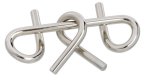 Such wise sounding words, but what do they mean? Like those twisted metal puzzles I got as a kid–it looks simple, but I don’t see how to solve it. I can either work at being more gracious or not work at being gracious. So I set goals and standards and work hard to be nice and patient and accepting. Now I have a new standard by which to judge myself and others–instead of criticizing the late and forgetful, I criticize the impatient and demanding. Wait, something went wrong. So I stop working at it and just keep living as I’ve always lived, as a curmudgeon… hmm. Why can’t my spiritual journey be as uncomplicated as everyone else’s seems to be? I’ve sorted out this grace puzzle before, but it seems I have to re-learn it every time I stumble on another facet of my deep-seated legalism. So here we go again.
This is where my story gets hard and healing, frightening and amazing. First the mess. My needs displayed themselves in a hundred ways that were threatening to Kimberly and her needs. For instance,  I have often used anger and blame to protect myself from looming danger, but Kimberly was raised by a mother who screamed and shouted, so when I honestly expressed my feelings, her alarm tripped.
Early in our dating we sat for lunch in a restaurant booth in Arlington, Virginia where I was living. The man in the booth behind us, apparently a construction foreman, was carrying on a loud conversation on his two-way radio. I muttered to Kimberly how rude this was, which she feared he could overhear, and then I swiveled around and gave him a “dirty look” hoping to shame him quiet. When I turned back around, she was visibly shaken and said she did not know whether she could stay in relationship with someone with anger issues. So began the saga of conflicting needs in the area of self-defense, specifically anger.
The machinations of the mind are complicated, so unless this is your experience, you may not understand the root of my anger. Anger is the result of feeling disrespected, having my boundaries crossed. As I grew up, my sense of worth grew dependent on the value others placed on me. If they seemed to devalue me, I was threatened at my core. There are many ways folks can protect themselves from this, and one of mine was anger and blame. When the crew chief raised his voice, I felt disrespected, and in my insecurity, I reacted to protect myself against this threat.

Is This Going to Work?
From childhood, Kimberly has taken the opposite approach of protecting herself by accommodating every one so that she is liked. When threatened, I bared my teeth and Kimberly wagged her tail. She was quite successful in acting in such a way that no one would ever get angry with her. Underneath was her terror of rage and denial of her own anger. Both of us were living out of fears that we did not recognize, incompatible anxieties, each person’s defense mechanism triggering the other’s fear. I thought I needed a mate who would be okay with my anger and Kimberly thought she needed a mate that never got angry. This did not look like a match made in heaven!
But what we wanted was not what we needed. Let me put it plainly–we each wanted to marry someone who would help us escape our deepest fears. Our coping mechanisms were not “working” (protecting us from pain), so we wanted a spouse that would reinforce our defenses, not so we could face our underlying issues, but so we could avoid them successfully. We were both blessed to have a very supportive and accepting relationship… except when it wasn’t. She was not trying to expose my denial (the anger that hid my fear), but in simply being herself with me, and I with her, the truth was forced to come out, and it was very painful. After all, there were quite good reasons why we developed these protective patterns early in life. Let me relate a very common interchange
 Me: “That jerk just cut me off and then slowed down to turn into Sheetz. That’s really considerate!” My insecurity is shouting at me that I have been disrespected. I don’t realize that I feel threatened and fearful because my anger jumps in so quickly to protect me and blame the other driver. I think my aggravation is his fault.
Kimberly: “Maybe he was running low on gas and saw the gas station at the last minute.” Kimberly feels her fear rising at my heat, and she jumps in to protect the person I am attacking. I feel unsupported and shamed.
Me: “He could have easily slowed down and pulled in behind me.” My coping mechanism is being threatened. If you take away my anger, I have no protection from being devalued. I still don’t realize that my true, underlying feeling that needs addressing is fear.
Kimberly: “Maybe he didn’t have time to think of that.” I feel the legitimacy of her argument. I really should not be mad. I begin to feel shame for my temper instead of sympathy, which would give me the safety to look deeper into the roots of my fear. I shame my anger away, closing the one door to my true heart’s need, and I no longer feel safe sharing my feelings with Kimberly.
Me: “Whatever!” an irritated dismissal. Kimberly senses my disapproval of her responses. She is deeply hurt by my unspoken criticism that she is not supportive and caring, that she is not enough. I am challenging her one shelter against shame, her remarkable ability to be supportive and empathic. Her solution for the world’s problems is “Life is so hard, let’s all just get along.” To feel safe, she needs me to be nice to everyone, especially her.
This dynamic played out scores of times. We were committed to honesty in sharing our feelings and in accepting one another “as is,” and this characterized our relationship, so we grew more trusting and secure with each other. The problems came when our needs conflicted, when supporting her meant denying my own needs. But our commitment to love and understanding in the other parts of our lives slowly began to soften these areas of conflict. Kimberly moved from “your anger is bad” to “your anger is hard for me” to “your anger is understandable” to “I see how your anger is a vital protection.” I moved from “you are not enough” to “I feel hurt by you” to “I see why anger is a problem for you” to “wow, you have every reason to fight anger.” This was only possible by understanding ourselves and one another better. We had to face into our fears and trust one another to listen, understand, and accept us. We often failed. It was messy.

OKAY, LET'S TAKE THIS SLOW
Given the India diversion in blog postings, I will need to recap the story of my re-education that I was sharing.
1) I thought people and circumstances outside of myself were the reason for my feelings in a direct cause and effect dynamic. In order for me to feel better, I needed them to change. In other words, I was trying to “fix” my feelings instead of learning from them, and I was doing this by pressuring the other person to change.
2) I divided feelings into good and bad, legitimate and illegitimate. If the person “causing” my feelings were at fault, then my negative feelings were justified, and they should stop doing what they were doing so as to relieve my bad feelings. If the person “causing” my feelings were not at fault, then my feelings were illegitimate (wrong), and I had to talk myself out of those feelings.

NO WORRIES, I'M HERE TO FIX YOU!
3) If I can manage okay with the other person’s irritating behavior, then I should say nothing and just endure. If I could not handle it, I should tell them how their behavior was affecting me and ask them to stop. Again, my feelings were being controlled by the other person, which put me in bondage to them emotionally, and required them to change to maintain a good relationship with me.
4) Kimberly insisted that I had a right to my feelings, all my feelings, and that all my feelings were legitimate and true… not a true reflection of the guilt of others, but a true reflection of my own perspective and experience of life. My “bad” emotions were telling me something valuable about myself, not about the other person. If I listened to this emotional message empathically instead of with shame (accepting rather than rejecting the feeling), I could discover important things about my own woundedness.
5) Kimberly encouraged me not to hide my unhappy feelings from those I love, because sharing them is an avenue into deeper relationship. But if I shared my feelings as a means of getting her to change, it would push us farther apart and ground our relationship more on legalism, encouraging her to believe that my love is conditionally based on how she behaves.
6) I thought genuine care always led to accommodating behavior. If the other person cared about me, they would change what they were doing. If they didn’t change, it proved they didn’t care. Since these two were inextricably connected in my mind, when the person did not change, it proved they didn’t care. I didn’t realize my real need was for her to care about my feelings, not for her to take responsibility for my feelings by changing. As I thought, “My need + your love = your accommodation (and vice versa). How could you possibly say you care if you make no effort to ‘improve’?”
Each step of learning came with a great deal of pain for both Kimberly and me. Kimberly kept insisting that she was not responsible for my feelings, that regardless of how I felt towards her, this was not an indication of her guilt or responsibility. She felt deeply hurt when I blamed and shamed her, even if it were simply a sideways glance, pause, or lifted eyebrow to suggest that she was failing to meet my expectations. I kept believing that if she did not change, she did not care, and that hurt me deeply. This whole perspective of hers blasted my mind with questions. Are all expectations in a relationship unhealthy? Is accommodation or compromise a bad idea? Can a person truly care and still not change something that is hurtful to another? Are my emotions really completely independent of your behavior towards me? It still did not make sense.

THE MORE I THINK, THE MORE CONFUSED I GET.
These reflections are just my thoughts, things that have helped me. Please forgive me if I sound dogmatic. I don’t mean to be. If these thoughts don’t help you, then by all means dismiss them; or if you disagree, argue with me in a comment (though remember my tale is not done).
It seems we all try to control others in various ways, and we are usually blind to what we are doing. We think, and even say, that we only want the best for them, not realizing that if they are pressured or forced to make better choices, those new behaviors will not nourish their heart, but shrivel it, because they are not freely choosing out of a loving relationship with God and others.
Sometimes, especially with children, control is necessary for their own safety and health, so that they can live long enough without significant damage to grow into understanding. But if this is the default teaching method, the greatest life lessons the child will learn are that her feelings don’t matter, that she must live from obligation (another word for bondage or lack of freedom), that what she does is more important than who she is.
Let me give a simple and common illustration from my own upbringing. My mom and dad naturally wanted to keep in close touch with their children when they “left the nest.” I was the youngest and last to leave, so their feelings were especially acute towards me. I was on my own for the first time and enjoying my freedom, and I didn’t keep in touch as much as they would like with letters and phone calls. Not only did they miss me, but I expect it made each wonder subconsciously, “Does he really love me?”

I Need You to Change!
Under the force of these emotions, they believed I was remiss in connecting with them. I was to blame for their bad feelings, feelings which I could so easily allay. It would cost me very little (so they thought) to keep in touch, and they pressured me in this direction. When I phoned them, their first statement was usually, “Well, we haven’t heard from you in a long time,” by which they intended to push me to show my love by calling more often. To the extent I bowed to this expectation, I was reacting from a “should” and not from compassion. In fact, the more pressure I felt, the less I was able to respond from genuine love. To my parents it felt like love when I deferred to their wishes and called more often, but somewhere deep inside they must have known that “loving” acts resulting from pressure do not mainly spring from love.
If they had shared their genuine feelings without making me responsible to fix them, it would have drawn out a natural love… I would have wanted to phone them instead of “having” to phone them. If they said, “We really miss you and miss hearing from you,” and genuinely did not hold me responsible for their feelings, but were only sharing their feelings, it would have made a world of difference. Of course, then they could not trust that the outcome would be to their liking since they granted full and genuine freedom.
Sharing your feelings with me without the assumption that I should fix them is a huge invitation into your heart and opens me up to welcome you and share my heart. But telling me about your feelings in order to get me to conform will make me resistant and closed. I will hear the message that I am bad unless I change and I will react to protect myself. If I do yield because of the pressure, because I believe I am responsible for your feelings, it will damage us both, and hurt the relationship. It may feel good, but it will encourage a legalistic view that love is conditional, dependent on my behavior.
I learned from an attractive friend of mine that insecurity does not only come to the daughter who is shamed for her looks, but also to the daughter who is praised for her looks in a way that makes her think her worth depends on it—she may seem proud, but is really filled with fear. The issue is not whether someone is valued, but why they are valued, and if they are primarily valued for conforming to our expectations (being a “good” child), they will always fear “misbehaving” lest they lose their parent’s love which appears to them very conditional and therefore precarious. The same is true in friendships and marriages.
If I am loving towards my wife when she does as I wish, and withhold love (act cool, snipe, act the martyr) when she does not, she will respond out of fear of losing my love. As long as she conforms, she will feel good about our relationship, but it instills a deeper insecurity. That isn’t to say I should never get frustrated or irritated or discouraged. That isn’t to say I should never express those feelings to her. Feeling all my feelings and expressing my feelings are key to good relationships.
But when I share my feelings as a means of getting her to do what I want or need, she feels unsafe with me, and she closes up her heart to protect herself. From my family’s perspective, why would I share an aggravation or disappointment unless it was to get her to change? If I didn’t need her to change, I would say nothing and just deal with it in my own heart and mind, I would silently accommodate. It is when I felt I needed her to change that I would share my displeasure, in order to get her to change and so free me from my unhappy feelings. It was her turn to accommodate. Let us just say it was a very bumpy ride for several years.
After dozens of conversations I started to understand that Kimberly believed feelings are neither good nor bad, they just are. “Excuse me, but haven’t you read in the Scriptures all the evil that comes from anger?” I respond.
“Well,” she says, “if God himself gets angry, it can’t be all bad.”
“Ah, yes, but everyone knows there is ‘righteous’ anger and ‘unrighteous’ anger. If you start feeling the bad kind, you are sinning, and must stop feeling that way. You can get angry for the wrong reasons or for the right reasons, and you should not get angry for the wrong reasons, so if you do, you have to repent.” She clearly did not believe the childhood morality I was taught.
“So,” she responded, “if emotions can be immoral, it means you choose them or refuse them. Is that how your emotions work? Because my feelings come without thinking, often without warning.”
“No,” I reply, “you can’t control your initial emotional reactions, but you can choose to hold onto them or to let them go.”
“And how do you let them go?”
“You tell yourself they are wrong and think of all the reasons why you shouldn’t feel that way, and you can talk yourself out of those feelings.”
“So, Jani, basically you should all over your feelings… you beat down your emotions with the law?”
Long pause as I think about this. I decided long ago that motivating myself with shame is a bad idea. Is that what I was doing? Wasn’t I just listening to my conscience, examining myself, and repenting? Should I not feel guilty for wrong feelings and stop myself from having them? I knew I didn’t have total control over my emotions, but I had enough control to force out the bad ones. I had done it many times.
“I guess I agree with you that my motivation should not be legalistic. So maybe I should work from the motivation of wanting good relationships, and everyone knows anger pushes people apart.”
She responded, “In my family, politeness was a much greater threat to true connection than anger. I have often seen anger bring people closer together because it forces honest communication and each person ends up telling the other person how they really feel. What do you think makes anger bad?”
“Well, you don’t like me getting angry at you!”
“It is not your anger that is a problem for me, but your blaming me.” Okay this REALLY does not make sense. If she was not to blame, why would I get angry? Getting angry over an innocent behavior is just wrong. How can you possibly separate anger from blame? If there is anger, someone is to blame! How could she say that all feelings are legitimate?
“So you think there is nothing wrong with being angry as hell at an innocent person?” I ask.
“Well, what do you mean by ‘wrong’?” she responds. “If you mean ‘are some emotions immoral,’ then I would say no. If you mean ‘are my emotions accurate or correct,’ I would say it depends on what you are measuring. Feelings are unreliable interpreters of someone else’s behavior (your rage does not prove that I’ve done something wrong). But feelings are great interpreters of your heart if you listen to them carefully. Emotions always tell you something about yourself rather than about the other person.”
Wow, that’s really a revelation to me. She is delinking my negative feelings from her culpability, a bond I thought inseparable. I could only imagine my anger being justified if she were truly at fault, but she is insisting that my feelings of anger are legitimate in themselves, even if she has done nothing wrong, nothing “deserving” of anger. They are legitimate for the very reason that they do not measure her misconduct… they simply alert me to what is going on in my heart, and do so quite accurately. If I merely shove my anger away or talk it down without considering what it is telling me, I can gain nothing from it.
After mulling this over for awhile I ask, “Okay, so maybe emotions are not evil in themselves and are just a gauge of my heart, but aren’t some of them a gauge of my bad heart? Doesn’t my anger or sadness or fear point to something that should not be in my heart, something for which I am guilty? And isn’t it possible to hold on to or nurse these negative feelings and so keep myself under their power? And doesn’t it matter how I express my feelings?” I was determined to prove my “negative” feelings were bad in some way!
When Kimberly said, “You are responsible for your own feelings,” I could only think, “If I am responsible, then I have control over my own feelings, and I should not be irritated. I lack self-control, I am not ‘walking in the Spirit,’ I am bad.” You can imagine that the continuing conversation did not go well as I tried to defend myself from the accusation that if I were aggravated, it was my own fault.
Mind you, that was not what she was saying. In fact, she might have used the words, “You need to take ownership of your own feelings,” but that sounded the same to me. She rightly perceived that I was angry and blaming her and expecting her to quit. No one likes to be blamed or manipulated with angry tones of voice, so she reacted in self defense, but a very gentle self defense. She was not returning blame for blame, but that is what I heard.
“Look, I was not irritated in the least until you started slamming the cabinet doors. You started slamming, I got irritated. If you had made less noise, there would have been no irritation. Cause and effect. If you don’t want me irritated at you, don’t bang the doors.” It simply made no sense to me to see it any other way. I had reasonable expectations, and if they were reasonable, she should meet them.
“I’m not telling you that you can’t get irritated, you have every right to get irritated. I’m just not responsible for your irritation.” A long silence on my part as my brain cells tried to break the code: “I only have the right to get irritated if she is doing something obviously irritating, and if she is, she should quit. How on earth can you separate the two… if I am right in getting irate, then it is her responsibility to change. If I am wrong in getting irate, then it is my responsibility to change by repenting of my frustration.”
In my perspective, if there were tension in a relationship not caused by miscommunication, then someone was right and someone was wrong (or both were partly wrong). The way to resolve the tension was to determine who was at fault for what, have them apologize, and the other would forgive them. Over and done. That was always the way it worked in my family. Frustration is either legitimate or illegitimate, if legitimate, the offender repents, if illegitimate the frustrated one repents (“I’m sorry I snapped, I was tired… it was a hard day… I have a headache”).
My wife’s approach made no sense at all—first she irritated me, and then she blamed me for being irritated (as I thought). You can imagine how many rounds of conversation we went through as I tried to figure out what she meant, desperately avoiding her conclusions because they would only squeeze into my paradigm through the slot of shame—whenever I have unhappy emotional reactions, I am at fault and must stop feeling as I do. But she kept insisting I had the right to feel my feelings. Does she mean I can feel these things, but should not express my feelings? She wanted me to express my feelings to her… just not blame her. But if she had done nothing wrong, then wasn’t it my fault for feeling frustrated? I was lost, driving in a loop with no exit ramps.
My wife speaks Chinese to me… at least that’s how it seems when I know the vocabulary she uses but cannot make sense of the message. I love her and so I repeatedly, intently try to follow what she is saying. When someone’s presuppositions are entirely different from mine, they make statements and assert conclusions that are meaningless to me, like: “A subjective cucumber chairs England with pneumonia.” Where do you even begin to ask the questions? And if it is completely coherent to Kimberly, she doesn’t know what needs explaining.
Me: “Do you mean a green cucumber that you eat?”
Kimberly: “Of course, what other kind is there? Now do you understand?”
It has often taken me months and even years through scores or even hundreds of conversations to slowly grasp her meaning about relational things far more complex than cucumbers. Over my head is not a light bulb popping on, but a fluorescent “tube light,” shadowed on both ends from overuse: blink… dark… blink blink-blink… dark… dark. Presuppositions are stubborn things and lie hidden behind blind spots.
The issue I raised at the end of Response #4 actually has several entangled, powerful, and unnoticed assumptions. I mentioned the first—that I felt responsible for others’ feelings. If someone does not like what I am doing, then I should stop doing it unless I have an overriding reason to continue. I am responsible for their feelings. Your irritation is because of my behavior—direct cause and effect—and I am responsible to change my behavior so you can stop being irritated. Your irritation is very reasonable; anyone would be irritated over this; only a saint would not be affected. Your irritation is controlled by my behavior.
This is a society-wide assumption, so that if anyone says, “Stop doing that! You are irritating me!” the only proper response is to say, “Sorry, I didn’t realize it was bothering you,” and to stop. We have no sense of distinction between the statements “I am irritated,” and “you are irritating me” or “you are making me irritated.” When we say the first, we really mean the last two; we are not taking responsibility for our own feelings of irritation, but are putting the responsibility squarely on the shoulders of the “misbehaving” person. Of course, we distinguish between reasonable and unreasonable irritation, usually based on our own perception of social norms, but that must wait for another discussion.
I, for one, completely operated by this principle—my behavior caused your irritation. It was so obvious and clear and universal a concept, and I never heard it refuted. When Kimberly said, “I am not causing your irritation,” it made no sense to me at all. “What do you mean you are not causing my irritation?! When you bang the kitchen cupboards, it irritates me. My irritation comes from the banging cupboards… where else would it come from?” Can you understand my confusion?
July 4th Kimberly and I visited her Aunt Pam on the lake. It had been a nice day, but started to rain an hour before we left. As we drove home on a two lane road, I came around a curve and spotted a car stopped in front of me with a car passing it in the oncoming lane. Because of the rain, I knew I could never brake in time, but there was no shoulder. I swerved onto the sloped wet grass and the tires slid uncontrollably down the embankment into a row of spaced wooden pylons at the bottom. Bump! …Bump! …Bump! …Bump!
Thankfully, the window-high logs were not buried or cemented in the ground, so each one went down successively and did what my brakes could not. We ended up just short of a side street, gently enough that the airbags did not deploy. It was a close call. The plastic front bumper was torn badly and we had a big dent in the fender, but after I strapped up the broken bumper with 3 bungee cords, we managed to drive home okay, though we were both shaken up.
When anything bad happens, especially with a potential repeat, the “if” question starts flashing like a warning light. If I had been more alert, I may have been able to stop in time… if my tire treads were better… if I had been driving slower… if Kimberly had been driving. Identifying the crucial “if” and finding its answer seems to be our voucher to a safe future, especially for us fix-it types.
For those of us who are also shame sponges, our very worth seems to ride on these answers. The “if” must not point to me. I must prove that I could not have foreseen or planned or reacted any better than I did, even when it means, sadly, that I find someone else to blame. When I’m unarguably at fault, then a second defense to my worth is to fix the results, make sure there is no cost to anyone but myself. When this also is beyond my reach, then a weak third defense is to settle on a solution that will prevent this incident ever recurring.
Unfortunately, these three steps of unhealthy self-protection can look very spiritually mature, even to myself. I can pass it off as self-examination, restitution, and repentance. I think I am fleeing from shame into rectitude, but I am actually running from true forgiveness and grace into the apparent safety of legalism. I cannot believe that there is complete forgiveness and reconciliation without some payment from my side… a payment of promises, of sorrow and groveling, or of corrective action. The smaller my failure footprint, the easier it is to forgive me… at least that is what I picked up from interacting with fellow humans.
Once thoroughly trained in this relational dynamic, it is very hard for me to change the way I see God. Unlike us, he never finds it hard to forgive me and isn’t suspicious that my confession is contrived. He never lets the injury I have done him constrict his compassion for me or his desire to relate to me. I should not have said “never lets” as though his forgiveness was an act of his will to override his natural inclinations to retaliate. His love for me is always on full, regardless of what I have done.



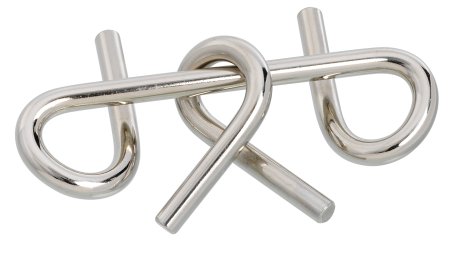 Such wise sounding words, but what do they mean? Like those twisted metal puzzles I got as a kid–it looks simple, but I don’t see how to solve it. I can either work at being more gracious or not work at being gracious. So I set goals and standards and work hard to be nice and patient and accepting. Now I have a new standard by which to judge myself and others–instead of criticizing the late and forgetful, I criticize the impatient and demanding. Wait, something went wrong. So I stop working at it and just keep living as I’ve always lived, as a curmudgeon… hmm. Why can’t my spiritual journey be as uncomplicated as everyone else’s seems to be? I’ve sorted out this grace puzzle before, but it seems I have to re-learn it every time I stumble on another facet of my deep-seated legalism. So here we go again.





 Janathan Grace Reflections