Archive for the ‘Faith’ Tag
 I have been soul-sick for several months now. But today I feel okay. Both the pain and the relief are inexplicable. I accept mystery… as long as it stays theoretical. But I find practical mysteries at best annoying: where are my glasses, which street do I take, why is the car making that noise? When not knowing is costing me money or making me late or (more profoundly) hurting my relationships or my heart, I become agitated. For me, ignorance is not bliss, it is often agony. My method for coping with a scary, unpredictable world is to figure it out, experiment till I get it working, find new configurations for the parts lying on the floor. As long as I have untried options, I can keep hope alive.

TRY THIS IN THE DARK
But I seem to have run out of options. I don’t know why I am depressed and I can do nothing to change it. It is a mystery of the worst kind. Mystery is just a highfalutin word for confusion, and being lost and blind does not make me happy, especially when I bash my shins every other step. Kimberly is struggling in the same way, and it has driven us to our new year’s resolution or annual theme of life: be okay with not being okay. It is our stumbling way of embracing faith. It doesn’t light our path or clear away the rubble, but it is our way of handing back the situation to God: “We’ve tried everything, and it doesn’t work, so we’ll try to adjust ourselves to whatever might come.”
I commented to Kimberly in our prayer time two nights ago that I’m stuck with God. If I thought I could find more peace with the devil, I’d look up his address, but I know leaving God would make me even more miserable. I can make no sense of what God does, but I trust who He is, and for now that has to be enough.
We think of traditions as ancient, honored customs… but they had to begin somewhere, sometime. After all, the first Christmas was in a pile of barnyard hay with a few dirty sheep-herders gawking nearby (the natty, gift-bearing VIPs showed up later). Jesus was not born in a room full of colored lights and snow-flake medallions. Even the angels singing out in the muddy fields didn’t show up for his party as far as we know. So Kimberly and I decided to start from scratch in creating our own unique holiday traditions. We planned to emphasize a different aspect of the season each week of advent… only it isn’t playing out as we had expected.

CHARLIE BROWN
ALL GROWN UP
We both like Christmas conifers, and the use of evergreens in winter speaks to us of life outwitting death, of stubborn hope in the midst of barrenness. So we decked our banisters and brought in a scrub tree from the yard. My idea was to decorate in stages, emphasizing each particular advent week focus, but our scraggly, homegrown tree looked more like a sign of want than of hope. It started life as a weed in our flowerbed, and not having the heart to toss it out, I dug it up and planted it in the back yard. It has been growing there for four years, completely neglected, and is now 6 feet of meager, sickly green thistles. Those barbs were painful enough to scrape against, but since the branches were so weak, we had to shove decorations deep inside. We should have worn long sleeves and gloves. That pathetic see-through shrub had all its defenses up… a tree thick with issues… how appropriate for our home. It was truly a symbol of life… life as we know it.

NOT MUCH ROOM TO MOVE
BUT WHAT A VIEW!
To put a positive spin on our impecunious Christmas, our first week spoke of simplicity. No lights, tinsel, streamers, or presents under the tree. Even if we had a star, the top of the tree was too flimsy to hold it. Kimberly and I live out of a shortage of resources. I didn’t have the energy to find and care for a nice pine or fir, or even the initiative to plan that far in advance. I had a little energy, and with it I transplanted a sprout, and now we have a tree, spindly as it is. Having fewer resources makes for a tight circle of possibilities, and that may feel like a bare prison stripped of goodness or a narrow shelf above a sheer cliff. We have felt that at times. But a simple lifestyle may also be seen as freedom from the clutter of excess and from the need for a wider cleft in the rock. We have fewer choices and less to protect, and that helps us focus on what is truly important, helps us enjoy the simple things more richly, gives us access to one another’s hearts more openly and easily. The only difference between a simple lifestyle and an impoverished one is faith, and that difference is profound.
Matthew 1:5 Salmon was the father of Boaz by Rahab.
 In America, our job defines us. It is the first, most important identifier when we’re introduced, “Good to meet you. So what do you do?” Sometimes it’s even tacked on like a surname: Joe the Plumber or Bob the Accountant. With one word we label, categorize, and define someone from the moment we meet them. Just imagine if your meaning as a person was distilled into the name Karen the Harlot. You are suddenly no longer a person, but a commodity, and the worst sort of commodity, associated with all that is unclean, cheap, and dark. When someone hears “prostitute,” they do not think of giggling children, fresh-squeezed orange juice, and butterfly kisses. Rahab was part of a cursed race of uncircumcised philistines and she was known as Rahab the Harlot. Then God came.
In the gospels, Jesus was a trash-magnet. The discards of society were drawn to him like the starving to a feast of love. They found in him the acceptance and respect and embrace they never knew. Like father, like son they say, and the God of Israel was the Father of all widows and orphans, the poor and lost. He saw in Rahab what no one else saw, and said of her “I want her in the royal line as mother to my Son.” The beauty in all of us originates always with God, and it is our faith, not our goodness, that opens the door to his glory. Those least able to “make a name for themselves” are the ones most welcoming of grace. “Blessed are the poor in spirit, for theirs is the kingdom heaven.”

RECYCLED RAGS
2,000 years after her first appearance, we find Rahab again. Her past has not been air-brushed away–she is still “Rahab the Harlot”–because grace does not re-write our past; it transforms that twisted frame into an instrument of glory. She is now immortalized in the Hebrews 11 Hall of Faith as a model for us all to follow. God embraces a pagan prostitute simply because she opened her arms to him by faith. God does not ask us to patch together the shredded pieces that make up our lives, but asks us to trust him with those tattered remnants. He makes all things beautiful, all things placed in his hands.
This 3 minute video is a remarkable parable of grace
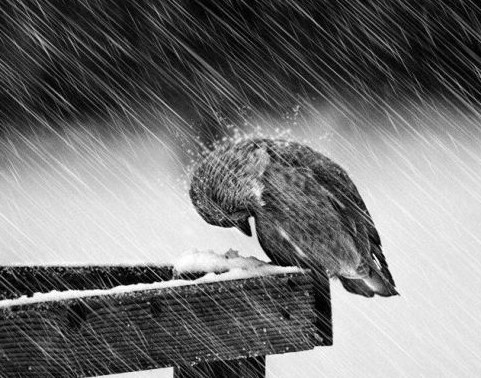
For the last few days things have been looking up, I have felt more positive than negative, more times of calm than of anxiety. I would even say I have been happy. But I have been reluctant to share for fear that folks will suppose me “back on my feet.” We all give a break to those who are going through a hard time–we give them more patience, gentleness and concern, and a lighter load. But once they have “recovered,” we suppose their strength has returned and put them back in the harness. My personal experience is very different from this picture of energy simply lost and regained.
I once had armor so thick nothing could touch my soul, including real and deep love. Those defenses by which I kept the world at bay I laid aside to seek my true self and connect vulnerably with others. And once I stepped into the wind of my fears, the wounds that had been festering for decades were exposed. I have been attending to them now for ten years, but they are forty years deep and my soul is still quiveringly sensitive to any scrape against them.
Kimberly and I talk about our personal and marital “bubble.” When I am in my own bubble, untouched by the storms of life, I can eventually come to a place of peace as I have in the last few days. When Berly and I are on the same page, which is most of the time, we share a bubble and reinforce that sense of security. I can nestle into God’s love. But the bubble is easily burst as the wind and sleet dash against our nest–a phone call or email, a memory, a bill, a frown… even a sunny day (like yesterday) can depress me, reminding me how dependent we are on lawn mowing jobs that I have no energy to hunt down.
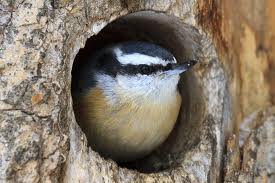

FROM THE NEST LOOKING OUT
I can be content and even happy inside our bubble, but it is a very fragile peace, constantly threatened and often breached. Without some refuge from the world’s criticisms, disparagements, impatience, and harshness, I am simply battered relentlessly. And my spirit can find no air to breathe, no space to move, no pause to rest. I am reduced to emotional survival. So I withdraw to my nest to build up strength to face the next nor’easter. This, to my mind, is the biblical “fight of faith.” Unfortunately, the storm can reach inside my little knothole, and often does. Sometimes all my energy is used to keep it out. It is always threatening to strike, and the closer it gets, the more difficult it is to find a place of peace, a gentle space in which to rest and heal.
But in the last few days, I sense a change. an ability to keep the storm outside and God and me inside the bubble of faith that keeps the shame and doubts at bay, a potential to respond in healthy ways to shame-driven tasks of the past. I am able to see God as on my side regardless of my weaknesses, blunders, myopia, and erratic progress. Perhaps I am finding a new way through the hurricane, though it is a strange direction to take as I will soon share.
I have so often misconstrued Scripture, oblivious to the grace that created each thought, that I found I could not read the Bible without feeling condemned. My legalistic filter poisoned the Bible for me. I studied it so diligently and thoroughly from this skewed perspective, that every re-reading of its pages undermined my hold on grace. I have gone several years now without any regular reading of Scripture. It has been just me and God (with Kimberly’s help) working to free me from this darkness. I think I have gotten enough grounding in grace that I can return to the Word to discover freshly its life-giving power. I’d like to share with others the grace I discover in these pages.
Matthew 1:1 This is the genealogy of Jesus the Messiah the son of David, the son of Abraham:

Matthew’s genealogy was written for the Jews, and so we assume he wrote it as he did (beginning with Abraham instead of Adam, for instance) to tap into the Jewish sense of identity and even pride in their ancestry. I was beguiled by Jewish veneration of David and Abraham into forgetting their great failures, which the Bible intimately describes. When Matthew highlights the marred women in Jesus’ ancestry, I see a wink from God, as though he took as much pleasure with the seedy side of his Son’s family line as the royal side. Israeli ancestry was passed down through the father, so Matthew carefully traces Jesus genealogy from Abraham through David straight down to Joseph… but at the last moment seems to dismiss its relevance by remarking that Joseph was not Jesus’ father anyway (biologically speaking). Even the greatest heroes, anointed prophets and kings, passed on nothing of their character, authority, power, or greatness through their bloodlines to Jesus. Rather all flowed the other way, from Christ to them. Jesus is not presented here as the greatest of a long line of great men. He is juxtaposed against all others—all others are sinners and he the only Savior; all others receive grace, he alone is the source of grace.

So when Matthew begins by calling Jesus the Son of David and of Abraham, he does not only want us to call to mind their greatness, but also their failures. THEY TOO needed a Savior. The story of God’s grace is so profound in both these men’s lives. Abraham, as Paul repeatedly reminds us, was declared righteous not by his goodness, but by faith. This justification and life he received was not the reward of faith, as though faith is such a wonderful thing that it calls for the reward of eternal life. Faith was merely the access point for grace, like a receiver for radio signals or a solar panel to absorb the sunrays, or an open hand to accept a gift offered. Abraham did not earn anything by some virtue of faith, for faith itself is a gift. In his natural self he was rather characterized by unbelief, not only regarding Ishmael, but even Isaac’s birth.
David was also deeply flawed, a murderer and adulterer (both capital crimes). The Psalms pour out his acknowledgment of his sinfulness and need for God’s grace. I have seen David as a hero to emulate, a man responsible for his own goodness and greatness, as though his title, “man after God’s own heart,” was about David replicating God’s virtues rather than God’s own heart being infused into David. Abraham and David were two of our greatest, but both knew they needed a Savior–that is what I want to emulate: a conviction of my neediness. I am on spiritual par with the holiest and greatest saints in history: the ground is all level at the foot of the cross, and we not only start our spiritual journey there but end it there as well. We all come from the gutter and end up in the palace, crowned as royalty, and the only bridge from that beginning to that ending is grace.

God built the bridge; we walk over it.
Mark’s beloved dog Arden, a lab mix, is sick with perhaps a terminal illness. One option, says the vet, is to keep an eye on him and hope for the best. Mark writes about himself and his friend Paul:
“Emily Dickinson says that hope, that thing with feathers—That perches in the soul, cannot be silenced; it never stops–at all–but because she is a great poet, in a little while she will say a completely contradictory thing. She who felt a funeral in her brain, the underlying planks of sense giving way, most certainly understood depression and despair. Perhaps even in her famous poem figuring hope as a bird, she hints at the possibility of hope’s absence, since if hope has feathers, it is most likely capable of flying away.
“Paul has a bracingly Slavic attitude toward hope. His ancestors starved in the fields outside of Bratislava, between plagues and invasions, and their notion that hoping for a better future would have been a costly act of self-delusion seems practically written into his genes. He would agree with Virgil, who says in his Georgics, “All things by nature are ready to get worse.”
“But this is ultimately something of a pose, a psychic costume for a sensibility no less vulnerable than my own. He believes that low expectations about the future will protect him—whereas I, six years older and thus a child of the sixties, can’t stop myself from thinking, perhaps magically, that our expectations shape what’s to come.
Though it’s true that I, who am more likely to hope overtly, publicly, am also more likely to crash the harder when that hope is voided.” Mark Doty in Dog Years.
Stoicism and hope can each be coping mechanisms in the face of potential disappointment. Conservative Christians tend to blame the stoics for having no faith before the disappointment and blame the hopeful for having no faith after the disappointment. That seems unfortunate to me because I believe neither perspective is inherently godly or ungodly, that belief or unbelief can be just as certainly present in both views. There are advantages and disadvantages to either outlook, differences in personality that can be embraced as each valuable in its own right. Our American society has a strong commitment to happiness as a value, even a fundamental right… it is written into the preamble of our founding document as a nation, so optimists are consistently lauded in every niche of our society (except art, where it is often seen as disingenuous).
A January 17, 2005 Time article reports a revealing psychological study “In the late 1970s… most therapists took the Freudian view that depressed people–and by extension, pessimists–were out of touch with reality. It made sense, since depression was considered an aberrant mental state… In carefully designed [seminal] experiments, psychologists Lauren Alloy and Lyn Abramson sat students in front of a panel featuring a green light and a button that they were told would activate the light when pressed. In fact, the amount of control students had over the light varied from 0% to 100%, with many points in between. When they were asked how much control they thought they had over the light, the answers surprised the psychologists. Optimistic types (who scored low on tests for depressive symptoms) consistently overestimated their influence. By a lot. On average they believed they had 60% control even in sessions in which their button pressing had purely random effects. ‘The nondepressed had an illusion of control when in fact they had none,’ says Alloy. By contrast, more pessimistic students (those who had more depressive symptoms) judged their performance more accurately. The finding that depressive types were ‘sadder but wiser,’ as the researchers put it, rocked conventional thinking in psychology.”
The article goes on to explain that optimists showed a more accurate estimate of other folks than did pessimists (who thought others were more in control than they themselves were). I expect that the presence of faith plays out in different ways in each personality type and is not simply present in the one and not the other. Hope may come from many sources other than faith and may be a coping mechanism to stifle insecurities. Stoicism, even pessimism (expecting negatives), may be the result of faith in openly acknowledging one’s insecurities (which takes a great deal of courage). May we all find ways of appreciating and benefiting from one another’s differences.
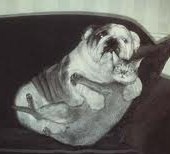
EMBRACING DIFFERENCES
 “THERE is hardly a word in the religious language, both theological and popular, which is subject to more misunderstandings, distortions and questionable definitions than the word “faith.” It belongs to those terms which need healing before they can be used for the healing of men. Today the term “faith” is more productive of disease than of health. It confuses, misleads, creates alternately skepticism and fanaticism, intellectual resistance and emotional surrender, rejection of genuine religion and subjection to substitutes. Indeed, one is tempted to suggest that the word “faith” should be dropped completely; but desirable as that may be it is hardly possible. A powerful tradition protects it. And there is as yet no substitute expressing the reality to which the term “faith” points. So, for the time being, the only way of dealing with the problem is to try to reinterpret the word and remove the confusing and distorting connotations, some of which are the heritage of centuries.” — Paul Tillich

 I have been soul-sick for several months now. But today I feel okay. Both the pain and the relief are inexplicable. I accept mystery… as long as it stays theoretical. But I find practical mysteries at best annoying: where are my glasses, which street do I take, why is the car making that noise? When not knowing is costing me money or making me late or (more profoundly) hurting my relationships or my heart, I become agitated. For me, ignorance is not bliss, it is often agony. My method for coping with a scary, unpredictable world is to figure it out, experiment till I get it working, find new configurations for the parts lying on the floor. As long as I have untried options, I can keep hope alive.



 Janathan Grace Reflections