Recently our beloved dog Mazie refused to eat for two days. Kimberly needed to talk about arrangements for her death because Mazie is old and has health issues. I tried to feed Mazie breakfast, and when she turned away again, I started crying heavily. She has been a precious part of our life our whole marriage. This is the third time we thought we were losing her, though she pulled through once again. How will I bear it when she is gone? The next day I wrote the following reflection.

Death came knocking yesterday.
He did not stay.
just tapped twice and peered inside,
because he is concerned for me
and does not want to shock me
when he comes for his appointment.
He wanted to get acquainted,
to let me know he is in the neighborhood.
He is much more gentle than I feared
and more understanding.
He does not want to shove me suddenly
into the dark river unexpectedly
but hopes I will hear his reassurance
that I will not drown,
and that life itself is richer and fuller
when I remember that all blossoms die,
and in their passing leave behind
their rich fragrance
while making room for new life to spring up.
Living awake to certain loss
widens my heart, breaks it free
of its defensive, guarded posture,
helps me breathe in deeply
the goodness of today so its fragrance
in its passing lingers full in my heart,
blessing it and opening it
to the hope of good to come.
I later rewrote the poem in metered rhyme, but I like the rawness of the original. Here is the edit

Stark death came knocking yesterday.
He just tapped twice and did not stay
But gently smiled in real concern
That coming suddenly would turn
My heart to ash and crush all good.
So being in the neighborhood
He wished to get acquainted now,
Prepare me for his scheduled blow,
As not to double pain with shock
And slash before I’d taken stock.
He’s much more gentle than I feared,
And moved with understanding cared
That I not unexpectedly
Be swept away so tragically.
He hoped I’d see his real intent
To help me be more confident
That life itself is richer by
Remembering that all blossoms die,
And in their passing leave behind
Their fullest fragrance in my mind
while furrowing new life to bring,
from torn up soil fresh buds will spring.
If I can live awake to loss,
Expand my heart, and breaking toss
away its guarded, armored stance,
It helps me breathe in deep and long
The good today before its gone.
The fragrance as it slips away
Fills up my heart, opens its way
To hope for all the good to come.
The good that’s passed is always home.
Before you know what kindness really is you must lose things, feel the future dissolve in a moment like salt in a weakened broth. What you held in your hand, what you counted and carefully saved, all this must go so you know how desolate the landscape can be between the regions of kindness. How you ride and ride thinking the bus will never stop, the passengers eating maize and chicken will stare out the window forever.
Before you learn the tender gravity of kindness you must travel where the Indian in a white poncho lies dead by the side of the road. You must see how this could be you, how he too was someone who journeyed through the night with plans and the simple breath that kept him alive.
Before you know kindness as the deepest thing inside, you must know sorrow as the other deepest thing. You must wake up with sorrow. You must speak to it till your voice catches the thread of all sorrows and you see the size of the cloth. Then it is only kindness that makes sense anymore, only kindness that ties your shoes and sends you out into the day to gaze at bread, only kindness that raises its head from the crowd of the world to say It is I you have been looking for, and then goes with you everywhere like a shadow or a friend.
“I wrote [this poem] down, but I honestly felt as if it were a female voice speaking in the air across a plaza in Popayán, Colombia. And my husband and I were on our honeymoon. We had just gotten married one week before, here in Texas, and we had this plan to travel in South America for three months. And at the end of our first week, we were robbed of everything. And someone else who was on the bus with us was killed. And he’s the Indian in the poem. And it was quite a shake-up of an experience.
“And what do you do now? We didn’t have passports. We didn’t have money. We didn’t have anything. What should we do first? Where do we go? Who do we talk to? And a man came up to us on the street and was simply kind and just looked at us; I guess could see our disarray in our faces and just asked us in Spanish, “What happened to you?” And we tried to tell him, and he listened to us, and he looked so sad. And he said, “I’m very sorry. I’m very, very sorry that happened,” in Spanish. And he went on, and then we went to this little plaza, and I sat down, and all I had was the notebook in my back pocket, and pencil. And my husband was going to hitchhike off to Cali, a larger city, to see about getting traveler’s checks reinstated.”
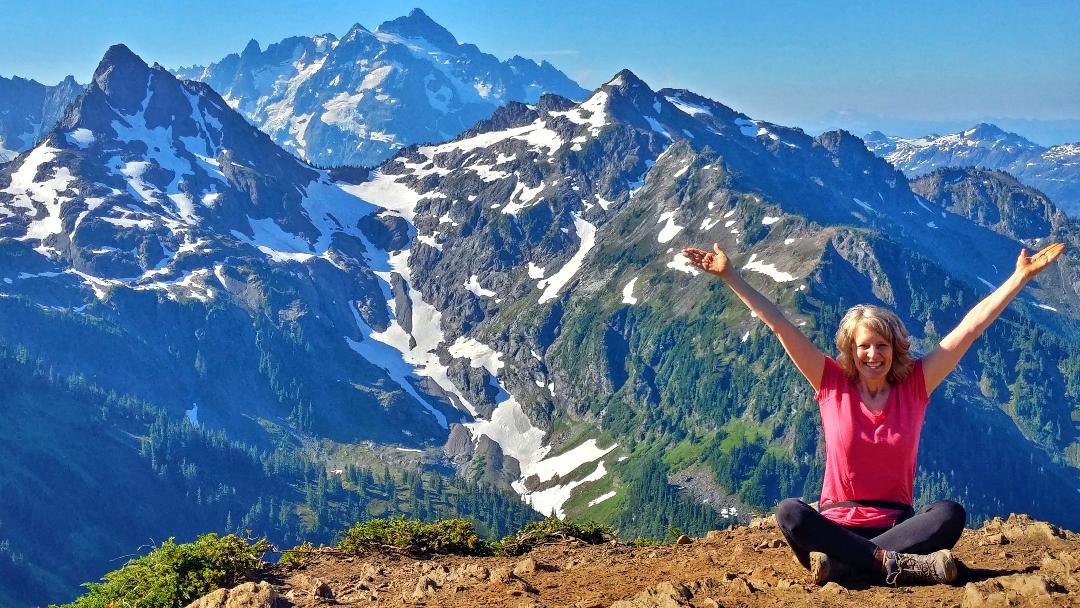
The white-capped, jagged peaks Catch the clouds and collect them, Draping them like scarves across their shoulders. The sun dances between floating puffs, Painting the canvas below with light and shadow.
It shocks my heart with joy each time, This ten thousand year old sculpture, Always new, never changing, This staging ground of life and death Against which every disaster obliterates itself. As the world remains whole.
This unshakeable frame of history Breathes into me its strength, I will fail often and fail at last, But in our failing, the world endures, Folding us into its story,
Its beauty and goodness echoes in my soul, The glory within resonating to the glory without, My joyful agreement, invitation, oneness With all that is good in the universe. I am an indispensable character in the eternal drama.
I got choked up when a friend posted this John Milton poem to my page, a poem written as he was losing his eyesight. It so perfectly reflects my own present struggle that it resonated deeply with me in a way it never had before.
When I consider how my light is spent
Ere half my days in this dark world and wide,
And that one talent which is death to hide
Lodg’d with me useless, though my soul more bent
To serve therewith my Maker, and present
My true account, lest he returning chide;
“Doth God exact day-labour, light denied?”
I fondly ask. But Patience to prevent
That murmur, soon replies: “God doth not need
Either man’s work or his own gifts; who best
Bear his mild yoke, they serve him best. His state
Is kingly. Thousands at his bidding speed
And post o’er land and ocean without rest:
They also serve who only stand and wait.”
Kimberly and I were visiting her relatives in Arkansas for a week, and some days after that, my laptop died. It is much easier for me to pick up my laptop as I sit on the sofa and begin to compose, but now I must come into our office and sit at a desk to compose, and it takes away the spontaneity and ease (and requires coordination with my wife). So I’ve been missing. Kimberly read to me this morning from a book written by the father of a boy with disabilities. He quoted a poem by Wendell Berry that I appreciated and so will share here:
You will be walking some night
in the comfortable dark of your yard
and suddenly a great light will shine
round about you, and behind you
will be a wall you never saw before.
It will be clear to you suddenly
that you were about to escape,
and that you are guilty; you misread
the complex instructions, you are not
a member, you lost your card
or never had one. And you will know
that they have been there all along,
their eyes on your letters and books,
their hands in your pockets,
their ears wired to your bed.
Though you have done nothing shameful,
they will want you to be ashamed.
They will want you to kneel and weep
and say you should have been like them.
And once you say you are ashamed,
reading the page they hold out to you,
then such light as you have made
in your history will leave you.
They will no longer need to pursue you.
You will pursue them, begging forgiveness.
They will not forgive you.
There is no power against them.
It is only candor that is aloof from them,
only an inward clarity, unashamed,
that they cannot reach. Be ready.
When their light has picked you out
and their questions are asked, say to them,
“I am not ashamed.” A sure horizon
will come around you. The heron will begin his evening flight from the hilltop.
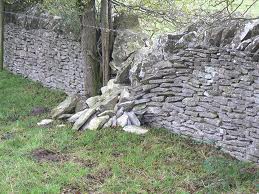
Something is there that doesn’t love a wall,
That sends the frozen-ground-swell under it,
And spills the upper boulders in the sun;
And makes gaps even two can pass abreast. The work of hunters is another thing:
I have come after them and made repair
Where they have left not one stone on a stone,
But they would have the rabbit out of hiding,
To please the yelping dogs. The gaps I mean,
No one has seen them made or heard them made,
But at spring mending-time we find them there.
I let my neighbour know beyond the hill;
And on a day we meet to walk the line
And set the wall between us once again.
We keep the wall between us as we go.
To each the boulders that have fallen to each.
And some are loaves and some so nearly balls
We have to use a spell to make them balance:
‘Stay where you are until our backs are turned!’
We wear our fingers rough with handling them.
Oh, just another kind of outdoor game,
One on a side. It comes to little more:
There where it is we do not need the wall:
He is all pine and I am apple orchard. My apple trees will never get across
And eat the cones under his pines, I tell him.
He only says, ‘Good fences make good neighbours.’
Spring is the mischief in me, and I wonder
If I could put a notion in his head:
‘Why do they make good neighbors? Isn’t it
Where there are cows? But here there are no cows.
Before I built a wall I’d ask to know
What I was walling in or walling out,
And to whom I was like to give offense.
Something is there that doesn’t love a wall,
That wants it down.’ I could say ‘Elves’ to him,
But it’s not elves exactly, and I’d rather
He said it for himself. I see him there
Bringing a stone grasped firmly by the top
In each hand, like an old-savage armed.
He moves in darkness as it seems to me,
Not of woods only and the shade of trees.
He will not go behind his father’s saying,
And he likes having thought of it so well
He says again, ‘Good fences make good neighbours.’


 The work of hunters is another thing:

 Janathan Grace Reflections