Archive for the ‘acceptance’ Tag
Matthew 1:3 Perez fathered Hezron and Hezron fathered Ram.
 Hezron and Ram have no stories, no histories, no parts to play. They are nobodies, appearing in the Old Testament simply as names in lists of genealogies. The vast majority of Israelites who lived then are not mentioned at all. They plowed and played; they held one another as their crops failed and laughed with delight at their grandchild’s first words; many worshipped God faithfully and walked with him daily but are completely unknown to us, very much like Hezron and Ram.
Since the Jewish Bible is primarily about the nation of Israel, the leaders of the nation and events that directed its course are inevitably featured. Still, it seems that God considers the “movers and shakers” as the important ones, the ones to write home about, the role-models to recommend. Compare how much we know of David in contrast to his brother Eliab, the firstborn. If you want to be on God’s A-list, you have to make a big impact in the world, make a name for yourself in his kingdom. And to do that, all you need is faith.
This view of the Bible seems oddly familiar to me. When I was growing up, the heroes were folks like Lincoln, rising from an obscure log cabin to the White House, or like Einstein, stepping out from behind a clerk’s desk to become the foremost scientist of his time. I grew up believing that I could be anything I wanted if I had enough self-confidence and commitment to the vision. This is the American dream, and ours is the land of opportunity where the only limitations are our faith and determination. This take on life provides a value system, a goal, and a means to that end, and without realizing it, I bring all of this to my reading of Scripture.
I measure the strength of my faith by the greatness of my deeds—am I like David? The completeness of my commitment will make me a Daniel. The weight of my godliness will get my name written down next to Job’s. I can be one of God’s role-models for my generation. If I simply make myself wholly available to God, he will make something great of me. But what if I give it everything I’ve got and never make it out of the log cabin or clerk’s office? Do I lack faith, is my commitment faulty, am I unusable? Does God find me of little value?
Perhaps something is wrong with my perspective of what God wants, what is important, and what I should value and aim for in life. I don’t think God was less pleased with the unnamed in Israel who sincerely followed him. But this culture runs in my blood—I invariably measure the value of my contribution, for instance, by how many folks read and find benefit from my blog. The engine is not more valuable than the engine mount bolt… without the bolt, the engine will fall off and the airplane crash. Every role in God’s kingdom is vital, irreplaceable. If that’s my theology, why do I so often feel like a loser?
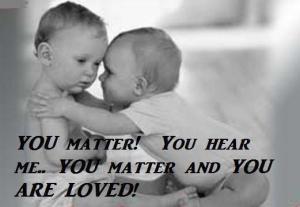 It seems a still deeper issue clouds my view of what really matters to God. Does he care more about what I do or who I am? Why do I find myself so obsessed with doing rather than becoming or relating? Why does accomplishment determine my value–“I may be only a bolt, but I’ll be the best bolt ever made”? How drastically would my outlook and life change if my focus were rather on who I am and how I relate to others? How would it impact my understanding and application of Scripture? If it is David’s faith rather than his triumphs, skills, and leadership that is to inspire us, what would that faith look like in the life of a farmer, a seamstress, or a store clerk, in Hezron and Ram and me? Rabbi Zusya said, “In the coming world, they will not ask me, ‘Why were you not more like Moses?’ They will ask me: ‘Why were you not Zusya?’” Considering how God filled the earth with “nobodies” instead of “somebodies,” he must value us a lot! Or to put it differently, everyone is a very big “somebody” to someone else, even if that someone else is only God. Did I say, “only God”?!
Gilles Le Cardinal shares a vital life concept he learned from those with disabilities, an idea he called revolutionary
Because it is about how our weaknesses can be fecund and fruitful. Especially for handicapped people, but also for others. And that was something I discovered from handicapped people, when they said you do not have to hide what is imperfect in you. And this changed me. Because in a competitive world, you must hide what is weak or wrong. Someone will try to beat you when they discover a weakness, try to take advantage of the weakness. When two players on different teams play, they try to defeat each other. And that is exactly where the handicapped disagree. They respect our mutual weakness.
And then Ian Brown, the author who quoted this conversation, a father of a severly disabled boy named Walker, goes on to write a naturalistic explanation with more respect for “the least of these” than many a Christian perceives.
One is revealed by one’s need. There is no need for posturing…. So you can perhaps forgive me for thinking, some days, that Walker has a purpose in our evolutionary project, that he is something more than an unsuccessful attempt at mutation and variation. For thinking, probably vainly, that if his example is noted and copied and “selected,” he might be one (very small) step towards the evolution of a more varied and resilient ethical sense in a few members of the human species. The purpose of intellectually disabled people like Walker might be to free us from the stark emptiness of the survival of the fittest.
Which, I might add, is a tendency we all have to cope and get ahead in this world, even we who are not evolutionists.
 Kimberly and I have started reading a book on “Sabbath” each Sunday morning. It suddenly occurred to me today that we are called to follow not only God’s example of rest, but his example of spending 6 days in creativity, like him expressing who we are to the world (for our gifts are simply an outflow of the unique creation each of us is). If we could discover and have the courage to be our true selves before the world, offering it what we have rather than what we do not have, the world would be marvelous. If we could only value each one for who she truly is and what her being means to my life and the life of the world as a whole. If we could only live in a spirit of curiosity and receptivity for (and therefore blessing from) the uniqueness of each.

D.I.Y FACELIFT
Instead, we live out of who we are not, pushed into acting in ways for which we were not created, living a lie. We hide our shame with pretenses and cover-ups, unable to encourage others to be themselves (and delighting in it) because of the fear out of which we live. We find the uniqueness of others to be threatening, confusing, irritating, dividing, and so we push for them to conform to our ways of thinking and doing and being. It is unsafe for any of us to be himself, since being rejected for our essence is the ultimate disgrace. Sadly such shame disables and distorts God’s own creation as he designed each to be, with both our limitations and our abilities. May we all learn to welcome and relish the beauty of differences.
 Berly was having a black day this morning, remembering some very painful experiences in her last work place. I sat and listened and asked questions. Her sharing gave me a new perspective of my own struggles over the years because of my time in India. I had no solutions, but just listening and accepting her thoughts and feelings picked up her spirits and enabled her to deal with some of the detritus from that time. Some time later I was feeling emotionally fatigued, it seemed that life had no purpose and that nothing could change it. I shared my sense of hopelessness, and simply interacting about it with Kimberly lifted the heaviest part of that weight. We are continually amazed at how just sharing our feelings with an accepting person, who shares empathy rather than advice, does a work of healing in our souls. Since nothing is actually ‘fixed’ and often no new insight is shed, it always suprises us to feel the relief, like little miracles that have no rational explanation. Real Grace.
Mike Yaconelli in Messy Spirituality:
 It was time for the Scripture reading and a girl shuffled toward the front of the church. What a moment for Connie. She had finally mustered enough courage to ask the pastor if she could read the Scripture. Without hesitation, he said yes. For years Connie had stifled her desire to serve in the church because of her “incompetencies.” Reading was extremely difficult for her, and Connie had a terrible time enunciating clearly. But she had been in this church many years, and she was beginning to understand the grace of God. Jesus didn’t die just for our sins; he died so people who couldn’t read or speak could read and speak. Now she could serve the Jesus she loved so much. Now she could express her desire for God in a tangible way.
Connie’s steps were labored as she made her way to the front; one leg was shorter than the other, causing her body to teeter from side to side. Finally, she was standing up front, looking at the congregation with pride and joy. The congregation was silent. Too silent.
 The screaming silence was covering up the congregation’s discomfort. Clearly, most of them were trying to understand what Connie was doing, and they were trying not to notice her many incompetencies. Her eyes were too close together, and her head twisted back and forth at odd angles while her face wrenched from one grimace to another. Connie began to read, and stammering, stuttering, she stumbled proudly through the passage in a long sequence of untranslatable sounds, garbled sentences, long tortuous pauses, and jumbled phrases. Finally, the reading was over, and the congregation was exhausted.
Connie didn’t notice the exhaustion. She was ecstatic. Her face seemed no longer distorted, only full of joy. Her cheeks were flush with pride; her eyes were sparkling with the joy of accomplishment; her heart was warm with knowing she had served the congregation, participated in her faith. Yes, she would remember this day for a long time. How wonderful it was, she thought, to no longer be a spectator in church; she was the church this morning!
Thank God her mental capacities were limited. Thank God she was not able to discern the faces of the congregation or she would have crumbled in despair. Thank God she wasn’t able to sense what people were really thinking. Almost everyone in the congregation was thinking, This is an outrage! I know this is what they were thinking, because the senior pastor, my father, was ordered to attend an emergency board meeting after the service.

Stain Glass Masquerade
by Casting Crowns
(click image to hear)
“How did this happen?” they demanded to know. “What were you thinking?”
“Connie wanted to read the Scripture,” he replied softly.
“Well, let her stand at the door and pass out bulletins, or help in the mailroom, but don’t have her read! The girl can’t read or speak. Her reading took ten minutes! The church,” they said, “is not a place for incompetence.”
My father believes, as I do, that the church is the place where the incompetent, the unfinished, and even the unhealthy are welcome. I believe Jesus agrees.
Matthew 1:2 “And Isaac the father of Jacob”
 No, that was not Isaac’s choice. He wanted to be known as “Isaac the father of Esau.” Esau was the first born, a macho man, and his favorite son. For those familiar with the Bible stories, “Jacob and Esau” rolls easily off the tongue, but for Isaac it was “Esau and Jacob.” Everyone knew Esau was heir apparent, standing in the wings for his call onto the stage as head of the family and forefather of the covenant people. And I expect most folks approved. Esau was clearly the one who commanded respect, the one with courage and boldness, the natural born leader. Jacob was a mama’s boy, always running away, always cowering behind some trickery. In the hard-scrabble land of the Middle East, Jacob was a Loser.
When Isaac was old and blind and felt death approaching, he prepared for Esau’s coronation, only to have Jacob filch the throne by deceit. Oddly enough, Jacob was God’s pick from the beginning. What did God see in him that made him the obvious choice? Even children know who to pick for their team—the one with the most abilities—and through that lens we read Scripture. We suppose that God chose Mary to be the mother of his Son because she was pure and good and obedient, so good as to be sinless according to some theologians. But the angel of God in Luke clearly tells us why she was chosen—it was based on God’s grace he says twice over, not on Mary’s virtue. The Greek word for grace, Charis (in KJV “highly favored”), is not a reference to how deserving Mary was. She was picked by grace, not merit. “How Lucky!” would be a closer rendering than “How worthy!”
All through history God chooses those who don’t deserve him, who know they don’t deserve him, who are convinced they will never deserve him, and have at last opened to his welcoming embrace. It is the strong, talented, and self-sufficent who find grace, full grace, undeserved grace, hard to swallow. I am so grateful that our God is “the God of Abraham, Isaac, and Jacob,” yes, even Jacob… especially Jacob. God loves me with all the strength and intensity of his great heart. How lucky am I?!
The strange path to freedom.
 I have many coping mechanisms to protect me from the prickly world, a combination of defenses unique to myself. I was a compliant child, a trait sometimes mistakenly referred to as “good” or “obedient,” so I responded to my insecurites by trying to make the grade (measured by my approval ratings). This was my basis for self-worth: scoring a 10 on my performance. When I was judged as inadequate, my deeply ingrained, almost instinctive reaction was to rachet up the effort. I proved my value as a person by doing more, better, faster, by never repeating failures or mistakes, by meeting or exceeding every expectation that appeared worthy.

CHASING SUCCESS
Perhaps the hardest coping mechanisms to overcome are those which are inescapably tied to the necessities of living. Every addiction has its unique power of control. Bulimics, unlike alcoholics, literally cannot live without the substance to which they are addicted, and that significantly complicates their deliverance. In the same way, I cannot live without doing. I cannot abandon all tasks in order to break free from my addiction to effort–I am forced to keep succeeding at a job, at finances, at relationships, and all the other tasks essential to life. They say success breeds success, but in my case, success breeds bondage (and unfortunately so does failure).
For me, at a subconscious level, every task accomplished inevitably feeds my sense of worth and every task unfinished feeds my shame. I don’t knowingly tell myself, “See what I have done. I am a good person after all.” The telltale sign of this malady may only be a sense of satisfaction, which is natural enough, but the reason for my satisfaction is largely a sense of worth based on my work.
In short: I have an addiction to effort as a means to gain worth, I cannot live without doing, but each time I do something and feel better as a person, I subconsciously strengthen my addiction.
Let me give an example. I have said something that has hurt my colleague Mike. I am afraid of what he now thinks of me, especially because his evaluation of me feeds my doubts of my own worth. Since love is the best motivation, I tell myself to reach out to him in love and concern for his well-being. These are my conscious thoughts, but underneath, my very value as a person depends on his renewed approval of me. My fear escalates as I ask for a minute of his time. Why fear? Because my worth is at stake. If he is reconciled by my apology, my fear turns to pleasure. “See,” I tell myself, “love works!” when in fact I have just succeeded in strengthening a false basis for my worth as a person–I am worthy because of what I do, in this case reconciliation.
 The motivation for what I do is the key. I can act out of a place of grace or a place of should and shame, though that makes it sound dichotomous when really my motives are always mixed to some degree. If I complete a chore more out of fear than of grace, I strengthen my doubt in God’s love. If I act more from grace, I strengthen my faith in God’s love. But if I am pressured by ‘should,’ how can I respond out of grace? For me at least, operating out of a sense of should is really responding from a doubt of God’s acceptance, from a sense that his love depends on my behavior, from a fear of being unworthy. I find that if I do not first challenge the should, face it down, call out its lies of conditional love, then I feed my doubt and insecurity with each task I complete. I feel better, but am worse for it.
Back to Mike. If he is unwelcoming, I become defensive–I try to “explain” more clearly, I express my hurt at his response, I point out his matching faults. Unlike my successful attempt, my failure to win him over suddenly reveals my real motivation. It was not love, but insecurity. Insecurity will always be present, but if it predominates as my motivation, it will harm me and my relationships. It may feel better to both of us if it “works,” but it is a sugar high that eventually leads to diabetes. I am most aware of my insecurities when my coping mechanism fails, when my “right” actions for self-redemption flounder. If at first I don’t go to Mike, but sit with my insecurity long enough to find saving grace, to believe my worth has no basis in what I do, then I can go to Mike in a way that leads to wholeness for us both.
 In certain situations, this time of processing is effective, but often, the longer I delay acting, the more anxious I become. I am constantly being pressured by a “should,” and this crowds out the emotional space I need to find grace. In the past I often had to go ahead and complete the task (and so remove the pressure), and then try to deal with the shame-based motivation. My grasp of grace was not firm enough to escape self-condemnation if I failed to act, but at least being aware of my true motivations was a fundamental step to addressing them.
To be continued…
I married off my sister-in-law today and gave this message.
The Third Strand Makes All the Difference
They say love is one long sweet dream and marriage is the alarm clock. I can testify to the truth of that. But waking up is not a bad thing unless you want to spend your life in a coma. Erin & David have been through a lot together already and gotten to know each other pretty well. I’ve been impressed to see them work through major decisions like buying a house, employment changes and relocation. Still marriage always brings in new dynamics.
Before marriage there is always a question, you have to have a backup plan, you can’t really trust the future. Marriage is a commitment for life. It gives the safety you need to work out personal and relational issues, strength and courage to engage in difficult endeavors, and instead of a place to call home, you will have a person to call home, a resting place for your heart.
No longer I and you, but us: as the song says, “Me and You Against the World”. Everything that happens to you happens to the other as well. Every relationship you have becomes part of the marriage (as you can see here today). No decision you make will be for you alone, but will involve your partner in some way. You start thinking about “us” instead of “me.” What does “our” future hold is a very different question from what does “my” future hold.

In Ecclesiastes, a cord of three strands, is about three persons: husband and wife, and the third I am inclined to believe is God himself. But I would like also to consider the three strands of love, three crucial expressions of love, the dynamics that hold the strands together. I call them “graces” to emphasize that to work well, they must flow not simply from you, but from God’s heart through yours to your mates—loves 3 strands.
Grace of Acceptance
Love is full of delight, so accepting one another should be easy, right? But you are human, you will fail and hurt and misunderstand each other. All marriages have these struggles, but healthy marriages acknowledge and face them honestly. This does not mean detente where you just sidestep issues, but a real effort to understand, respect, and make room for your differences. Learn to recognize and respond to one another’s true needs, the needs of the heart.
I can’t tell you how much personal healing and growth I have gained from Kimberly accepting my weaknesses as well as my strengths. It is scary. It may feel uncomfortable to cry in front of your wife, for instance, but if I do not let her in, I stay locked inside myself. When you are given permission to be yourself, to bring all of who you are into relationship, and be embraced as a whole person, it gives you the safety and strength to accept yourself and grow into the beautiful person God designed you to be.
The problem comes when your spouse is just “wrong.” How can you accept that? Trying to settle who is “right” and “wrong” will probably make matters worse. Accepting them is not agreeing with them–it is rather trying to understand where they are coming from, what their needs are, and how those needs can be met. Where do you get the strength to love unconditionally? Only from God.
Grace flows from Him into us before it flows out from us to our spouse. We need to discover ourselves as loved unconditionally before we have the strength and security to love another truly. Author and minister Brennan Manning says, “God loves you as you are and not as you should be! Do you believe this? That God loves you beyond worthiness and unworthiness, beyond fidelity and infidelity, that He loves you in the morning sun and the evening rain, that He loves you without caution, regret, boundary, limit, or breaking point?”
Grace of Trust
Giving someone your trust is a great act of love. You can only be vulnerable with the deepest parts of yourself, those things you want to hide from everyone, to the extent you can trust the other person. But you can’t order trust for overnight delivery. It is a life long intentional process. You can’t make someone trust you and you can’t simply choose to trust another. A deep level of trust is never simply granted to someone, even the one closest to you, but is earned step by step as you share your inadequacies and receive empathy in return. Everyone doubt’s their own loveliness. You can each be the reflection of God’s loving eyes to the other.
There will be stumbles and falls along this journey of building trust. Expect it. The pressures of the world blast against you and blow you off course, but this is the bedrock to which you always return, this commitment you make today and every day after: to live in integrity–being honest, understanding, and accepting, out of a heart growing in love. I have seen that you two have such a commitment to being honest with one another, that you are willing to show each other your emotions, even the difficult ones.
Nothing is more powerful a support than someone knowing your failings and loving you regardless, I don’t mean the failings that are obvious, but the ones you have hidden all your life. Out of fear of rejection you covered them up, you felt unlovable because of these shadows. But how can we ever feel secure until we find someone who will love us after knowing us completely? God does this for us, but we need someone to show us this, someone with skin on, with a voice and smile and hug we can really hear and see and feel. Having experienced this with Kimberly, I can say this has been the truest revelation of love to me.
Grace of Sharing (Listening, Understanding, Respecting)
Set aside regular times when you turn off the TV, turn off your cell phones, forget your To-Do lists, and concentrate on listening to one another. It will take hard work and a lot of time. I can tell you ahead of time that you will need to learn a new language and culture, become an anthropological researcher.
Erin, you women are complicated creatures. You understand each other by some magic telepathy. Please remember that our brains don’t tune to that channel. If the man asks, “How are you?” and you say, “Fine!” he will take your word for it, give you a peck on the cheek and sit down with the remote. You have 49 distinct meanings for ‘fine’ depending on your intonation, your eyebrows, your lips, your hands, your posture. You are so eloquent… but we completely miss your subtlety. We can only understand what you say plainly with words.
David, never assume anything. You don’t know women, not even Erin. The good news is you can learn, the bad news is it will take a lot of effort and patience. You have to ask questions repeatedly. You probably won’t even know the right questions to ask, which is okay because Erin already knows what she wants to say. You just have to open the door. Even if you don’t understand at first, but really listen, she will feel better. By listen, I don’t mean nodding and saying “uh huh” as you watch the Colts fumble. The DVR was invented to save marriages.
 Kimberly and I come from different families, backgrounds, experiences, and personalities, and when she shared bits and pieces of her perspective with me, they didn’t fit into my worldview. It sounded like Chinese.
We all have unique perspectives, which seem normal to us. If my point of view is normal to me, then your point of view has to be abnormal. We all stand at the point we think is the correct balance. To the right of us are conservative tightwads and to the left are profligate spendthrifts. To the right of us are workaholics and to the left are lazy bums. On this side are the messy and on the other are the clean freaks. Where you stand is always “reasonable” (otherwise you wouldn’t stand there). This means the other person’s position is “unreasonable.” So you will always grudge yielding.
Kimberly wanted me to vacuum behind the sofa where no one could see the dust, not even us. It was “unreasonable.” Many of you say “Your wife is right, that is very reasonable. What is unreasonable is cleaning behind the hot water heater.” But those who clean behind the hot water heater see that as normal, it is the people who scrub their driveways that are bonkers. Whatever your position, it is what it is. Erin, your view is entirely legitimate. David doesn’t have to agree that you are right and he is wrong, but he needs to respect your perspective and make room for it as much as he is able. And the same for you Erin. That big scrap of metal he wants to keep looks like trash to you, but to him it is a little piece of a dream. Let him have a shed to stack his dreams in.
The source of these expressions of love, these graces of trust and vulnerability, listening and understanding, respect and acceptance, the source is God, the strand that keeps the cord from unraveling. It is crucial to your marriage that each of you individually and as a couple develop a deep, honest, trusting relationship with God, find in him the grace you need for yourself and one another. His love is limitless as the sky, constant as the sun, deeper than the ocean, eternal and unconditional as only God Himself is. In Him you will find life, and through him your marriage will be a little taste of heaven (with a few quarrels mixed in).

 I have hinted at the positive direction that Kimberly and I are headed, but some might wonder if it is really worth all the pain and struggle. Believe me, we asked ourselves the same question many times, and for the first year or two of marriage I regularly wondered in the middle of a conflict if we had made a mistake in getting married. But we couldn’t help ourselves. Neither of us felt there was much benefit in a shallow relationship, and the only alternative we knew was to keep going deeper in honest understanding, acceptance, and respect for ourselves and one another.
As we worked through the foundational issues in our conflicting worldviews, some pretty amazing things happened within each of us and in our relationship.

UM... UH... SO ABOUT MY ISSUES.
Nothing has ever affected me so powerfully as being accepted for who I really am right now in all my brokenness (not for what I do, who I project I am, or who I one day will be). It did not come easy for either of us, but I cannot remember a single major conflict in the last two years and Kimberly has difficulty even remembering the hard times. Of course we were on the fast track, often talking 3, 4, even 5 hours a day trying to understand our fear, pain and depression, and each of us had already spent many years working through our own issues.
I could say that it was the best thing to happen to me since I heard the good news of Christ, but that would make it sound like a different thing than the gospel, and Berly is just my clearest experience of the gospel. I discovered God’s grace through her in ways I had never known it before. I want to encourage you with snapshots of my personal healing and growth as a result of our relationship (the changes in Berly are her own story to tell).

You Did WHAT?!
Let me start with my anger. I had been taught in youth that anger was either good (“righteous indignation”) or bad (“the wrath of man”). The difference lay in whether or not the one who exasperated me was truly wrong or guilty. If he was, then my anger was justified, if he was not, then my anger was aberrant. When I got mad, it was someone’s fault–me for illegitimate vexation or him for illegitimate behavior. The most important thing was to discover who was at fault and have them repent. The matter was thus fixed and the relational conflict resolved. If I thought he was at fault, and he refused to admit it, then I would forgive him. To avoid condemnation, I worked hard at justifying my temper and blaming the other person. I was good and he was bad. Being “right” became very important… it was the only way I could save myself from the shame of sinful anger.
Kimberly was afraid of my anger, and given my perspective, when she shared her discomfort, I only heard this as judgment of my anger and reacted defensively. But she did not have my take on anger: She was not blaming me, wanting me to agree with her, or asking me to change. She just wanted to share her feelings with me (which I could only hear as a demand for change). Because she respected me, wanted to understand and accept me, she kept affirming my feelings, even though they scared her, and I gradually came to trust that she really did accept me when I was cross, that she thought my anger was always “legitimate” because it was revealing to me my heart, not the guilt of the other person. As she accepted my defensive feelings in this way, she wanted to understand me better, so when she asked about my aggravation, it was not to correct me, “fix” my rage, or gain ammunition for shaming me out of it. She had compassion for me and my experience of anger.
In this harbor of safety where I slowly grew less defensive about my temper, with less need to use it to protect myself, learning to have compassion for myself, I started to discover what lay beneath my frown. From what was my temper guarding me? To hear these deeper throbs of my heart, I had to embrace my feelings with compassion . If I had to protect myself, it meant that I was afraid. With Kimberly’s help, I learned to have compassion for the fear behind my anger instead of shaming myself for it. Only with this gentleness could I feel safe enough to explore my anxieties. Berly always justified my fears, affirming that they always had a very good reason, I just had to uncover it. Discovering the roots of my fear (which often was a long process) led me to find the substructure, the actual beliefs on which I lived my life, and often they conflicted in some way with my stated theology.
 Again, Kimberly’s grace and acceptance gave me the support I needed not to shame myself for these faulty beliefs, but to see myself as the victim of these legalistic lies and to be led by grace into believing grace for myself, to discover that God’s grace was the healing for my fears. My fears were not the enemy. They were doors into grace: “‘Twas grace that taught my heart to fear, and grace my fears relieved,” in the words of John Newton. I had always thought this was a one time event brought about by the amazing grace of the gospel… as though I didn’t need the gospel of grace all through every day. I think working through my fears is a life long process of growth in grace, applying the gospel to each wound as I need it, believing each day more fully that God loves me completely, always, and without any strings attached.
Mark’s beloved dog Arden, a lab mix, is sick with perhaps a terminal illness. One option, says the vet, is to keep an eye on him and hope for the best. Mark writes about himself and his friend Paul:
“Emily Dickinson says that hope, that thing with feathers—That perches in the soul, cannot be silenced; it never stops–at all–but because she is a great poet, in a little while she will say a completely contradictory thing. She who felt a funeral in her brain, the underlying planks of sense giving way, most certainly understood depression and despair. Perhaps even in her famous poem figuring hope as a bird, she hints at the possibility of hope’s absence, since if hope has feathers, it is most likely capable of flying away.
“Paul has a bracingly Slavic attitude toward hope. His ancestors starved in the fields outside of Bratislava, between plagues and invasions, and their notion that hoping for a better future would have been a costly act of self-delusion seems practically written into his genes. He would agree with Virgil, who says in his Georgics, “All things by nature are ready to get worse.”
“But this is ultimately something of a pose, a psychic costume for a sensibility no less vulnerable than my own. He believes that low expectations about the future will protect him—whereas I, six years older and thus a child of the sixties, can’t stop myself from thinking, perhaps magically, that our expectations shape what’s to come.
Though it’s true that I, who am more likely to hope overtly, publicly, am also more likely to crash the harder when that hope is voided.” Mark Doty in Dog Years.
Stoicism and hope can each be coping mechanisms in the face of potential disappointment. Conservative Christians tend to blame the stoics for having no faith before the disappointment and blame the hopeful for having no faith after the disappointment. That seems unfortunate to me because I believe neither perspective is inherently godly or ungodly, that belief or unbelief can be just as certainly present in both views. There are advantages and disadvantages to either outlook, differences in personality that can be embraced as each valuable in its own right. Our American society has a strong commitment to happiness as a value, even a fundamental right… it is written into the preamble of our founding document as a nation, so optimists are consistently lauded in every niche of our society (except art, where it is often seen as disingenuous).
A January 17, 2005 Time article reports a revealing psychological study “In the late 1970s… most therapists took the Freudian view that depressed people–and by extension, pessimists–were out of touch with reality. It made sense, since depression was considered an aberrant mental state… In carefully designed [seminal] experiments, psychologists Lauren Alloy and Lyn Abramson sat students in front of a panel featuring a green light and a button that they were told would activate the light when pressed. In fact, the amount of control students had over the light varied from 0% to 100%, with many points in between. When they were asked how much control they thought they had over the light, the answers surprised the psychologists. Optimistic types (who scored low on tests for depressive symptoms) consistently overestimated their influence. By a lot. On average they believed they had 60% control even in sessions in which their button pressing had purely random effects. ‘The nondepressed had an illusion of control when in fact they had none,’ says Alloy. By contrast, more pessimistic students (those who had more depressive symptoms) judged their performance more accurately. The finding that depressive types were ‘sadder but wiser,’ as the researchers put it, rocked conventional thinking in psychology.”
The article goes on to explain that optimists showed a more accurate estimate of other folks than did pessimists (who thought others were more in control than they themselves were). I expect that the presence of faith plays out in different ways in each personality type and is not simply present in the one and not the other. Hope may come from many sources other than faith and may be a coping mechanism to stifle insecurities. Stoicism, even pessimism (expecting negatives), may be the result of faith in openly acknowledging one’s insecurities (which takes a great deal of courage). May we all find ways of appreciating and benefiting from one another’s differences.

EMBRACING DIFFERENCES

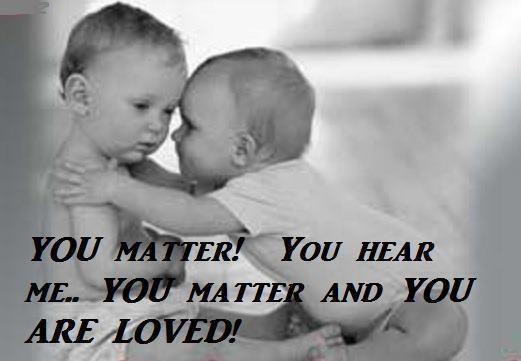 It seems a still deeper issue clouds my view of what really matters to God. Does he care more about what I do or who I am? Why do I find myself so obsessed with doing rather than becoming or relating? Why does accomplishment determine my value–“I may be only a bolt, but I’ll be the best bolt ever made”? How drastically would my outlook and life change if my focus were rather on who I am and how I relate to others? How would it impact my understanding and application of Scripture? If it is David’s faith rather than his triumphs, skills, and leadership that is to inspire us, what would that faith look like in the life of a farmer, a seamstress, or a store clerk, in Hezron and Ram and me? Rabbi Zusya said, “In the coming world, they will not ask me, ‘Why were you not more like Moses?’ They will ask me: ‘Why were you not Zusya?’” Considering how God filled the earth with “nobodies” instead of “somebodies,” he must value us a lot! Or to put it differently, everyone is a very big “somebody” to someone else, even if that someone else is only God. Did I say, “only God”?!













 Janathan Grace Reflections