Archive for the ‘fear’ Tag
I lost my USB drive holding my reflections on forgiveness, so my momentum on that topic has died, but here is a great quote from Stanley Hauerwas in The Peaceable Kingdom:
It is crucial that we understand that such a peaceableness is possible only if we are also a forgiven people. We must remember that our first task is not to forgive, but to learn to be the forgiven. Too often to be ready to forgive is a way of exerting control over another. We fear accepting forgiveness from another because such a gift makes us powerless—and we fear the loss of control involved. Yet we continue to pray, “Forgive our debts.” Only by learning to accept God’s forgiveness as we see it in the life and death of Jesus can we acquire the power that comes from learning to give up that control….

To be forgiven means that I must face the fact that my life actually lies in the hands of others. I must learn to trust them as I have learned to trust God….
But because we have learned to live as a forgiven people, as a people no longer in control, we also find we can become a whole people. Indeed the demand that we be holy is possible only because we find that we can rest within ourselves. When we exist as a forgiven people we are able to be at peace with our histories, so that now God’s life determines our whole way of being—our character. We no longer need to deny our past, or tell ourselves false stories, as now we can accept what we have been without the knowledge of our sin destroying us.
I grew up the son of a preacher. We went to Sunday school, Sunday morning service, Sunday evening service, and Wednesday prayer meeting. We had daily family devotions with Bibles and hymn books, and all six kids, without exception, prayed out loud. But we looked on liturgy with suspicion. A real relationship with God was spontaneous, not circumscribed by rituals like all those unsaved Roman Catholics. I never even heard of Lent until I was an adult, but we lived Lent all year long–self-examination, repentance, discipline, sacrifice. The problem is that we never got out of Lent.

By the time I discovered grace, I had enough Lent practice behind me to cover several lives over. Last year was my first participation in Lent, and I approached it with the eyes of grace–to bless my soul by releasing it from some burden that weighed it down, to sacrifice a problem not a pleasure. I decided to sacrifice busyness and embrace rest. It was so good for my heart, that after 40 days I made it my spiritual emphasis for the year. I have planned another year-long Lenten emphasis for 2013–sacrificing my need to figure things out (and so a reliance on my acuity), in other words, I am embracing ignorance.

I did not come to this point willingly. I begged and pleaded for insight, thought myself into and out of a thousand speculations, tried to pry the lid off that sealed box of truth, and finally gave up. Learning to trust God with a confused mind is a bit crazy and doesn’t feel very safe. I was just now reminded that learning to trust God last year was pretty tough too–expecting more from doing less? That doesn’t make a heck of a lot of sense either. I don’t know if my brain needs a break, but I’m pretty sure my reliance on it is false security. I have enough faith to take this path, I need more faith if I am to find peace along this way instead of turmoil and fear.
I love mystery in arts and entertainment, but I don’t want it following me into the parking lot and hitching a ride home. If insight is a blessing, mystery is a curse. If knowledge is power, mystery is paralysis. What possible good can it bring? Of course, there was that little incident over the tree of the knowledge of good and evil that ended rather badly. Apparently some knowledge and control is better left in God’s hands. But it’s scary to be left in the dark. It feels like it’s my fault, as though God is put out with me and won’t turn on the light, not as though he’s doing it out of love and support. I’m really struggling to trust God with my unresolved ignorance and confusion. Mystery has never been part of my spiritual tool chest. Gerald May explains why:
When we were children, most of us were good friends with mystery. The world was full of it and we loved it. Then as we grew older, we slowly accepted the indoctrination that mystery exists only to be solved. For many of us, mystery became an adversary; unknowing became a weakness. The contemplative spiritual life is an ongoing reversal of this adjustment. It is a slow and sometimes painful process of becoming “as little children” again, in which we first make friends with mystery and finally fall in love again with it. And in that love we find an ever increasing freedom to be who we really are in an identity that is continually emerging and never defined. We are freed to join the dance of life in fullness without having a clue about what the steps are.
We’re just getting reacquainted. It’s going to take a lot more time before mystery is a friend, especially a trusted friend.
My first feeling was horror, quickly followed by outrage, and then a creeping sense of helplessness: horror for how many and how young the victims; outrage for the unprovoked, extreme violence; and helplessness because it was inexplicable and unpredictable. As a red-blooded, American male with an overblown sense of responsibility, my powerlessness is the most frightening of these emotions, so I try to get passed it as quickly as possible (though I would not have admitted this even to me most of my life). The way I protect myself from horror is to let my outrage stir me to resolve, to make sure such a terrible thing never happens again. In other words, the quickest way for me to escape those wretched feelings is to jump passed them into problem-solving mode.
My gut response to natural disasters or unavoidable accidents is quite different, much simpler and cleaner. I move easily into grief and solidarity with everyone since we are all in it together. There is nothing to examine and correct. I am responsible for nothing, and can simply feel. This acceptance is typical in fatalistic cultures, even for calamities that are preventable, but that seems like a defeatist attitude to us Americans.
As a nation carved out of the frontier by pioneers, we are very gifted at overcoming adversity with our “can do” spirit. We are independent, pragmatic, self-confident, and creative… so much so that we see everything in the light of problem-solution. We are able therefore to use action to largely override any feelings that crop up. In fact, feelings themselves are often seen as part of the problem that needs fixing. We tend to deal with insecurities by taming the situation. We are a nation of controllers. We take charge of ourselves, others, and our environment.
Within hours of the Newtown massacre, some of us were demanding solutions: better school security, more gun control, better ways to identify and fix those with emotional issues (or just as vigorously rejecting these ideas). “We can stop these killings; we can fix this,” we told one another. No. We can’t. We can limit violence in various ways, but we really are not in control of what happens on this old earth. The most we can do is influence it for the better. Malicious, unprovoked, random violence is an inescapable part of our broken world, and embracing our sense of vulnerability and fear might be a good place for us to start.
I am a particular kind of controller. I gain a sense of security by figuring things out. I am at my most vulnerable when I am confused or stymied. I often “resolve” my feelings of powerlessness by sorting, categorizing, and explaining the situation–intellectual escapism. (I guess this blog is exhibit A.) When I am lost in the maze of life, I fall easily into depression. But choosing a sense of helplessness rather than avoiding it can be my way into grace.
So in my next blog I will get out of my head and into my feelings.
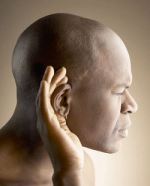 “Is it God’s voice I hear in my heart or my own voice mimicking God? How can I tell the difference?” I asked Kimberly tonight as we stared at the candle flames. It was more a doubt than a question. “Even if it IS God talking to me, I may hear it all wrong, just like I do with you,” I continued. God’s voice may be in my head, but it is hardly the only voice there. In fact, as a boy I assumed dad was God’s mouthpiece. I still have trouble telling apart their voices inside me, not because they sound so much alike, but because the mix-up was so long standing. Over the years I have internalized more inflections–preachers, authors, teachers, Christians. So who’s talking now? I am learning to distrust those messages that do not harmonize with grace. God’s heart-songs are always the cadence of love–even if it is a hard scrabble love.
 When I have a friend with me, it colors all that I do, how I do it, and how I feel about it. If he is critical by nature, I will be cautious and inhibited, tense and doubtful. If my daily companion is God, what kind of God is he? If my hours are spent with a God who is focused on fixing my flaws, I will live out of fear and shame. I will be worse off for all my spiritual intent. It is crucial for me that the God I chat with over the dishes and in my car is the God of all grace. It is not only his presence I need, but his compassionate presence. I have enough harsh voices in my brain without adding Sinai to the cacophony. “Perfect love casts out fear.” May we all drink from that stream of redemption.
 Most evenings before supper Kimberly and I light some candles, listen to a word of grace, and invite God into conversation with us. Tonight I told him frankly I don’t know how to include him in the quagmire of my life. All through the day I talk to him and wait on him, but hear no answers for my doubts, feel no healing for my pain, see no clarity for my path, find no energy for my tasks. When I bring God my suffering and weakness and lostness, why do I find no comfort or strength or direction? Why does he leave me sunken in misery? Faith grows haggard without tokens of hope.
 I wrote that paragraph last night and sat thinking for a long time. If God is not in my life to fix me, then why is he here? Somehow, all my theology seems to circle back to relationship… where it should start in the first place. It took me years to learn this with Kimberly–what we both need from the other in our brokenness is compassionate presence, not problem-solving. But God is different from Kimberly–she can’t fix me but he can. He knows exactly what I need and how to provide it. So why doesn’t he?! oh… maybe he does… maybe what I truly need is his compassionate presence.
This is so counter-intuitive for me. If he loves me, doesn’t he want to remove my pain? If he can heal me and doesn’t, is he not callous and unloving? Imagine a doctor with wonderful bedside manners who refuses to cure his suffering patient. And perhaps here is the answer to my riddle. When I treat God as my doctor, I forget he is my friend, my dearest friend who holds my broken heart in his tender hands. My focus locks on my disease instead of our friendship.
I woke up this morning with a nameless dread which slowly distilled into a sense of the pointlessness of my life, and a fear that nothing will change. What did I do this week? I stained the wooden borders around our yard, but in a couple of years I will have to do it again… and to what end? I exercise, clean, shop, cook… a meaningless round of repetition. I enjoy my job in the library, but what difference does it make in the world? Well, it provides me a salary so that I can repair appliances, buy groceries, pay bills… and then do it all over again. When will I find real purpose and direction for my life, something meaningful? As I lay in bed, the thoughts of last night drifted into my mind. So instead of asking God for a fix, I simply shared with him my anxiety. In the end, what if the great purpose of my life is not something, but Someone?

 Kimberly woke me at 2 a.m. on Thanksgiving morning. She felt uneasy, restless, and her heart was racing. I couldn’t find the pulse at her wrist, so I tried her neck–boomboomboomboom–the staccato thumping of a quarter-mile sprinter, probably 200 beats a minute. That scared me. We were at her aunt’s home and I had no idea where the hospital was… I didn’t even know our address. “Should we go to the ER?” I asked. She said, “We can’t afford it, we don’t have insurance.” I quickly answered, “That doesn’t matter.” She responded, “I don’t want to sit there for hours in the waiting room. By the time we see a doctor, I will have no symptoms to check. Let’s look it up on the internet.”
WebMD called it “Supraventricular Tachycardia”– her heart’s electrical system was misfiring–and we should go to the emergency room if it “persisted”–how long is that?! Her veins had been drumming for 10 minutes, but she had none of the listed signs of heart failure, so we kept reading. It offered some home fixes–cough, gag, or shove her face in ice water to shock her pump steady. She tried some dainty coughs, afraid of waking up others. I told her to cough hard as I kept my finger on her jugular. Within minutes the beating slowed.
So, tell me… what are you grateful for this Thanksgiving?
 I have been fighting with fear for a month now, and a sense of being overwhelmed. It partly comes from my anxiety of having to survive this summer on my lawn-mowing income (along with my inability to pick up sufficient regular clients) and partly from forgetting (as a result) my 2012 commitment to rest. It has made me think afresh of the Biblical command, not to keep the Sabbath, but to remember to keep the Sabbath. Apparently I’m not alone in having fear and busyness crowd out the vital place of rest for my soul. I notice that, remarkably, I accomplish less, not more, when I neglect the rest my soul needs… the fear and drivenness drain away my energy. This has not always been the case.
 Most of my life I lived by overriding my own needs. I thought I was meeting my soul’s needs by spending hours in prayer, meditation and Bible study, going to church, self-examination and the like. But in fact these were just more activities to which I drove myself. They were not “means of grace,” but means of accomplishment, of spiritual advancement. In those days I measured success by how much I changed the world for the better, not realizing that I was denying with my life the very gospel I preached. It is hard for the fruits of grace to spring from the drivenness of legalism. I was getting more tasks done (being successful) because of my unceasing labor, but grace would have had so much more space to work had I learned to do much less while acting from a spirit of unconditional love (in both receiving it and sharing it).
 My conception of success has changed so drastically since those days. The ghost of ‘failures past’ still haunts me at times. I have not been able to fully shake off those old definitions (mostly because the whole world seems to speak that language), but I realize now that my soul’s health and thereby the health of the hearts around me is my new measure of success. It has little to do with numbers of tasks completed or people fixed. I would rather accomplish one thing a day graciously than a dozen without grace, and because of my unhealthy proclivities, the more I try to fit into the day, the more likely I will shortchange grace. As I grow in grace, I believe I will be able to do more good, but for now I must live within my limits and refuse the shame that shouts at me for doing too little, learning to trust more in God’s grace.
 The law is good, as Paul says, and it has several beneficial uses. One use is to teach us what God is like, and provide insight on how we might be like him. Of course, all of Scripture (not just the commands) is designed to help us in this way whether history, teaching, prophecy, or the like. For those who want to be intimate with God and be shaped into his beautiful likeness, it doesn’t really matter whether a biblical teaching is grammatically in the command form. The only question is whether it will help me grow personally and relationally.
The word “should” has close links with law, and it carries several connotations. First, it suggests an evaluative role. It is telling us what would be a good or better course of action. This may have no moral connotations, such as: “You should try Ben and Jerry’s New York Fudge Chunk.” Second, and closely connected to the first, is an implication of pressure to act in a certain way. We could place it on a continuum to demonstrate this: Can—–Should—-Must. Again, this need not be concerned with morality: “You must try this app!” The third connotation of should, like the word law, is one of potential personal judgment. Even if this regards simply a choice of wrenches, the person who fails to do what he should is faulted. Something is wrong with him. He is defective or weak or stupid or belligerant. Finally, because it is poised to judge, should appeals to a particular motivation. It is not a positive motivation (as the first two connotations might be); it does not attract by the beauty or benefit or health of the choice. It rather motivates by the fear and shame of being bad, unacceptable, dis-graced.
I do not want to live my life being motivated by fear and shame. I want to be motivated by God’s love for me and my echo of love for him and others, in other words, grace. Sometimes the should of law is necessary to shape external behavior to curb the harm a person may do to herself or others, but as long as the individual is acting from fear or shame, it is only her behavior which is affected. Her heart is not growing in grace. It may even be shrinking. I think the primary judgment role of law and should is to help us recognize our real inadequacies and faults, not in order to shape our behavior but to awaken us to the gospel. Some folks think grace has no power to motivate, but I have found it incredibly powerful… that must wait for another post.
Given a couple of negative responses to my recent posts, I apparently need to explain what I mean by grace. I think there are some common interpretations of grace that can really take us down the wrong path. One of the most common misunderstandings of grace is to equate it with freedom of action while equating law with restriction of action. freedom and restriction of action are about method and context, while grace and law are about motivation and direction. Grace does not play the high notes or the low notes on this freedom/restriction continuum, but plays the whole keyboard. That is to say, it confines or releases as directed by love.

EVERY NOTE IS A GRACE NOTE
Law motivates by fear, shame, and guilt. These are very legitimate motivations, because they point out how screwed up we really are, but if we try to remedy our fear and guilt by making better choices, we are doomed by our imperfections. The fear and shame are not intended to drive us to work harder at being good, but to awaken us to our need of the grace of God (forgiveness, love, acceptance, strength, hope, blessing, in short, the gospel).

THE FACE OF THE LAW
Here is where confusion and misgivings easily catch us. We know that fear and shame are powerful motivators, they have profoundly molded our behavior and the behavior of others towards us. If you remove law, what will keep me in check? We think fear and guilt make us good, when they really only change our actions, not our hearts. Still, if this motivation is removed, what will inspire us to go in the right direction. If there is therefore now no condemnation, won’t I just act like a spoiled brat, won’t others “take advantage” of grace? No. It is impossible to “take advantage” of grace. If you try, if you decide to fulfill every “forbidden pleasure,” it will leave you more empty, lost, broken, and even farther from the blessings of grace–not because grace resists you, for it always has open arms, but because you resist grace, which is the way of true peace, fulfillment, joy, love. The only way to take advantage, full advantage, of God’s grace is to throw yourself whole-heartedly into his embrace.
Let me quote a reply I gave a questioning friend: In my mind “doing as I please” is a serious misunderstanding of grace, and is profoundly different from doing what my soul needs. The differentiation in my mind is not that the first matches my desires and feelings and the second matches my duty, but that the first matches superficial desires and feelings often at odds with my deeper feelings (e.g. choosing sex as a replacement for love), while the second is discovering my true feelings and true needs and seeking to meet those. At this point in my understanding of God’s grace, I believe that my soul’s truest needs are never in conflict with God’s will, and if they appear to be, I misunderstand one or the other.

SAFE HANDS