Archive for the ‘God’s love’ Tag
Matthew 1:5 Salmon was the father of Boaz by Rahab.
 In America, our job defines us. It is the first, most important identifier when we’re introduced, “Good to meet you. So what do you do?” Sometimes it’s even tacked on like a surname: Joe the Plumber or Bob the Accountant. With one word we label, categorize, and define someone from the moment we meet them. Just imagine if your meaning as a person was distilled into the name Karen the Harlot. You are suddenly no longer a person, but a commodity, and the worst sort of commodity, associated with all that is unclean, cheap, and dark. When someone hears “prostitute,” they do not think of giggling children, fresh-squeezed orange juice, and butterfly kisses. Rahab was part of a cursed race of uncircumcised philistines and she was known as Rahab the Harlot. Then God came.
In the gospels, Jesus was a trash-magnet. The discards of society were drawn to him like the starving to a feast of love. They found in him the acceptance and respect and embrace they never knew. Like father, like son they say, and the God of Israel was the Father of all widows and orphans, the poor and lost. He saw in Rahab what no one else saw, and said of her “I want her in the royal line as mother to my Son.” The beauty in all of us originates always with God, and it is our faith, not our goodness, that opens the door to his glory. Those least able to “make a name for themselves” are the ones most welcoming of grace. “Blessed are the poor in spirit, for theirs is the kingdom heaven.”

RECYCLED RAGS
2,000 years after her first appearance, we find Rahab again. Her past has not been air-brushed away–she is still “Rahab the Harlot”–because grace does not re-write our past; it transforms that twisted frame into an instrument of glory. She is now immortalized in the Hebrews 11 Hall of Faith as a model for us all to follow. God embraces a pagan prostitute simply because she opened her arms to him by faith. God does not ask us to patch together the shredded pieces that make up our lives, but asks us to trust him with those tattered remnants. He makes all things beautiful, all things placed in his hands.
This 3 minute video is a remarkable parable of grace
 I am an artist and poet at heart. I’m not referring to my abilities, but to my perspective and energy. I have powerful visceral responses to all things creative, whether by God or fellow humans, and my mind bursts into a flurry of thought shooting out in all directions like a fireworks display. Within minutes, each separate thought has branches and sub-branches like a cauliflower head bursting into bloom in my mind. It is exciting, invigorating, delicious.
 But when my spirit is tamped down by depression, I stumble along with just enough energy to lift one foot at a time between long halts to rest. Everything around me is dusted with dullness like the shoulders of a dirt road. I can see and appreciate beauty, but it does not sink into my heart to awaken life. As a young man I was so full of energy and purpose and hope, but I spent it all on “virtuous” sacrifices that broke down my spirit rather than building it up. I did not live out of the spontaneous delight of who I was but out of the driven obligation of who I should be. I did not live from the joy of God’s love, but from the fear of his frown. I lived out of the law and not out of the gospel.
Emotional energy is much like a sponge–once dried out, it loses its powers of absorption. Without some emotional reserve to start, I cannot soak up the encouragements around me. I see them, but cannot feel them at any deep level. They do not renew me. Because it takes time for the good to soften my soul, I need an oasis in which to rest, an environment rich with living waters, but in my experience those spots are rare and brief, and so the desert winds parch away the rain that falls. I catch and hoard my little cupful, but it does not last long. Had I lived from the start out of my true self and in the riches of God’s grace, the energy I used for good would have been a renewable resource. But I feel as though my forest is chopped down, and I must start over, scratching out life from the dust. I see hopeful saplings of emotional growth, but the full rewards seem still a long way off.

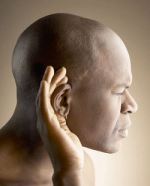 “Is it God’s voice I hear in my heart or my own voice mimicking God? How can I tell the difference?” I asked Kimberly tonight as we stared at the candle flames. It was more a doubt than a question. “Even if it IS God talking to me, I may hear it all wrong, just like I do with you,” I continued. God’s voice may be in my head, but it is hardly the only voice there. In fact, as a boy I assumed dad was God’s mouthpiece. I still have trouble telling apart their voices inside me, not because they sound so much alike, but because the mix-up was so long standing. Over the years I have internalized more inflections–preachers, authors, teachers, Christians. So who’s talking now? I am learning to distrust those messages that do not harmonize with grace. God’s heart-songs are always the cadence of love–even if it is a hard scrabble love.
 When I have a friend with me, it colors all that I do, how I do it, and how I feel about it. If he is critical by nature, I will be cautious and inhibited, tense and doubtful. If my daily companion is God, what kind of God is he? If my hours are spent with a God who is focused on fixing my flaws, I will live out of fear and shame. I will be worse off for all my spiritual intent. It is crucial for me that the God I chat with over the dishes and in my car is the God of all grace. It is not only his presence I need, but his compassionate presence. I have enough harsh voices in my brain without adding Sinai to the cacophony. “Perfect love casts out fear.” May we all drink from that stream of redemption.
 Most evenings before supper Kimberly and I light some candles, listen to a word of grace, and invite God into conversation with us. Tonight I told him frankly I don’t know how to include him in the quagmire of my life. All through the day I talk to him and wait on him, but hear no answers for my doubts, feel no healing for my pain, see no clarity for my path, find no energy for my tasks. When I bring God my suffering and weakness and lostness, why do I find no comfort or strength or direction? Why does he leave me sunken in misery? Faith grows haggard without tokens of hope.
 I wrote that paragraph last night and sat thinking for a long time. If God is not in my life to fix me, then why is he here? Somehow, all my theology seems to circle back to relationship… where it should start in the first place. It took me years to learn this with Kimberly–what we both need from the other in our brokenness is compassionate presence, not problem-solving. But God is different from Kimberly–she can’t fix me but he can. He knows exactly what I need and how to provide it. So why doesn’t he?! oh… maybe he does… maybe what I truly need is his compassionate presence.
This is so counter-intuitive for me. If he loves me, doesn’t he want to remove my pain? If he can heal me and doesn’t, is he not callous and unloving? Imagine a doctor with wonderful bedside manners who refuses to cure his suffering patient. And perhaps here is the answer to my riddle. When I treat God as my doctor, I forget he is my friend, my dearest friend who holds my broken heart in his tender hands. My focus locks on my disease instead of our friendship.
I woke up this morning with a nameless dread which slowly distilled into a sense of the pointlessness of my life, and a fear that nothing will change. What did I do this week? I stained the wooden borders around our yard, but in a couple of years I will have to do it again… and to what end? I exercise, clean, shop, cook… a meaningless round of repetition. I enjoy my job in the library, but what difference does it make in the world? Well, it provides me a salary so that I can repair appliances, buy groceries, pay bills… and then do it all over again. When will I find real purpose and direction for my life, something meaningful? As I lay in bed, the thoughts of last night drifted into my mind. So instead of asking God for a fix, I simply shared with him my anxiety. In the end, what if the great purpose of my life is not something, but Someone?

Matthew 1:3 Perez fathered Hezron and Hezron fathered Ram.
 Hezron and Ram have no stories, no histories, no parts to play. They are nobodies, appearing in the Old Testament simply as names in lists of genealogies. The vast majority of Israelites who lived then are not mentioned at all. They plowed and played; they held one another as their crops failed and laughed with delight at their grandchild’s first words; many worshipped God faithfully and walked with him daily but are completely unknown to us, very much like Hezron and Ram.
Since the Jewish Bible is primarily about the nation of Israel, the leaders of the nation and events that directed its course are inevitably featured. Still, it seems that God considers the “movers and shakers” as the important ones, the ones to write home about, the role-models to recommend. Compare how much we know of David in contrast to his brother Eliab, the firstborn. If you want to be on God’s A-list, you have to make a big impact in the world, make a name for yourself in his kingdom. And to do that, all you need is faith.
This view of the Bible seems oddly familiar to me. When I was growing up, the heroes were folks like Lincoln, rising from an obscure log cabin to the White House, or like Einstein, stepping out from behind a clerk’s desk to become the foremost scientist of his time. I grew up believing that I could be anything I wanted if I had enough self-confidence and commitment to the vision. This is the American dream, and ours is the land of opportunity where the only limitations are our faith and determination. This take on life provides a value system, a goal, and a means to that end, and without realizing it, I bring all of this to my reading of Scripture.
I measure the strength of my faith by the greatness of my deeds—am I like David? The completeness of my commitment will make me a Daniel. The weight of my godliness will get my name written down next to Job’s. I can be one of God’s role-models for my generation. If I simply make myself wholly available to God, he will make something great of me. But what if I give it everything I’ve got and never make it out of the log cabin or clerk’s office? Do I lack faith, is my commitment faulty, am I unusable? Does God find me of little value?
Perhaps something is wrong with my perspective of what God wants, what is important, and what I should value and aim for in life. I don’t think God was less pleased with the unnamed in Israel who sincerely followed him. But this culture runs in my blood—I invariably measure the value of my contribution, for instance, by how many folks read and find benefit from my blog. The engine is not more valuable than the engine mount bolt… without the bolt, the engine will fall off and the airplane crash. Every role in God’s kingdom is vital, irreplaceable. If that’s my theology, why do I so often feel like a loser?
 It seems a still deeper issue clouds my view of what really matters to God. Does he care more about what I do or who I am? Why do I find myself so obsessed with doing rather than becoming or relating? Why does accomplishment determine my value–“I may be only a bolt, but I’ll be the best bolt ever made”? How drastically would my outlook and life change if my focus were rather on who I am and how I relate to others? How would it impact my understanding and application of Scripture? If it is David’s faith rather than his triumphs, skills, and leadership that is to inspire us, what would that faith look like in the life of a farmer, a seamstress, or a store clerk, in Hezron and Ram and me? Rabbi Zusya said, “In the coming world, they will not ask me, ‘Why were you not more like Moses?’ They will ask me: ‘Why were you not Zusya?’” Considering how God filled the earth with “nobodies” instead of “somebodies,” he must value us a lot! Or to put it differently, everyone is a very big “somebody” to someone else, even if that someone else is only God. Did I say, “only God”?!
Matthew 1:3 Judah fathered Perez and Zerah by Tamar
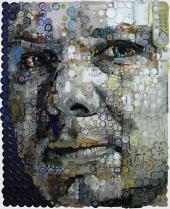
Art from Trash
Perez and Zerah are named together because they are twins, but why Tamar was mentioned is a quandry. None of the honorable women before her in the genealogy are noted, but when we hit a scandal, Matthew has to dredge it up. Well, he didn’t really have to go digging because the Old Testament itself was quite blatant about the whole sordid affair. Tamar was Judah’s widowed daughter-in-law, and she prostituted herself to get pregnant by Judah. Anyone proud of their genealogy would surely have skipped past this crooked branch, but Matthew, for some reason, calls attention to it, as though reminding his readers that their glory was not from their ancestors, but from their gracious God who could use the worst to bring the best. It is not to God’s discredit that he used such flawed materials to construct his kingdom, but it shows the incomparable power of his redemption.
God is in the salvage and reclamation business, and he is so creative that he makes the results better than if they had come from perfect materials. His second creation far surpasses his first, not just restoring innocence, but infusing us and our relationships with a far greater life force. The glories of forgiveness, mercy, patience, sacrifice, in short of grace, were unrevealed in Genesis one. It is natural for beautiful things to be appreciated and enjoyed, but that is such a meager understanding of love compared to that revealed by one who treasures the broken and ugly, so much as to sacrifice himself for our sake. Without the Fall, we could not have experienced the depths, lengths, and heights of God’s unconditional love.

WHO IS LOVED?
Being loved for only what is good in us is a direct building block of legalism–be good and you will be loved. If we are loved only in our beauty, then we are unloved as ourselves. How astonishing to discover God saying–be bad and I will love you every bit as much. Unshakeable security only rests in an unchangeable love… for, as Paul tells us, “if we are faithless, he remains faithful— for he cannot deny himself.” He cannot stop being a love-filled God, even though it breaks his heart. It seems to me that we have a far greater awareness and experience of God’s love than Adam and Eve who literally walked with God daily. Who can express the deep peace and intense bond that comes from being loved wholly, being embraced with our every defect?
 Perhaps those who are concerned about my emphasis on grace are worried that I may encourage irresponsibility. Some folks seem inclined to let things slide, choose the easy way, care too little for the concerns of others. We think they need a “kick in the pants.” I use “seem” to describe them because we really don’t know the issues they are struggling with, the energy, insight, support they do or do not have and so forth. The closer I am to them, and the more perceptive I am at understanding others deeply, the more clearly I may be able to see what is at work inside them, but if they are clueless about themselves, I can easily be misled. It is common to confuse fear, shame, depression, fatigue and the like with laziness, and the last thing such folks need is a kick.
As I see it, those who are truly irresponsible create two problems, and these can be profound depending on the level of their negligence. The first is what it does to them, and the second is what it does to others (and their relationships). When  we say that these folks “take advantage of grace,” I think we mean that grace allows them to be irresponsible (does not force them to be responsible). But when they choose this course, they are retreating from grace rather than embracing it, and the result, far from being to their happiness, is to their unhappiness. They do not “get away” with it because sin always has its natural consequences–sin is always a harmful choice, to the ones acting as well as to everyone whom they touch (that’s why God warns us against it). Grace can only bring redemption to such a situation if it is embraced, and this can only be done by faith, which is to say the slackers now see things God’s way. Given this vantage point, I think we would pity the irresponsible, and if we have some role to play in their lives and are motivated by love, we may wish to warn them from this folly and invite them back to grace.
The second problem with the neglectful is their impact on others and their relationships, and this is where many feel grace is inadequate and the law must be applied. What do we mean by “law” and “grace” in this context. Is there something one does that the other does not? If law is about restriction and grace is about freedom, then our call to apply law is to bring force to bear, either the force of a guilty conscience (say, by rebuking him) or the force of retribution or punishment (say, by taking his keys). But why do we think these actions are connected to law and disconnected from grace? Is it not possible for grace to stir the conscience or give a wake-up call of negative consequences? To my mind, the whole distinction lies in what motivation prompts the act.
 It seems to me that I turn to the obligation and punishment of law not from concern for the slouch, but from concern for the law (that the law is respected, obeyed) or concern for the “victim” (who may be me). It often seems to us that in order to side with the victim, we must side against the negligent. Thankfully, the grace of God does not need to love one less in order to love the other fully. He wants the best for all concerned, and he will do what is best for all concerned. If grace sends negative consequences on the irresponsible, it is not because God takes umbrage and is punishing them, but because he knows this is the best he has to give, the choice of extravagent love, not love withheld. It is his invitation to redemption. The exile of Israelis from their land is a prime example of this “tough love.” Far from this being an act of God’s impatience and abandonment, it was the richness of his love at work to restore them to their true selves and reawaken their immensely fulfilling love relationship with him.
Matthew 1:2 “And Isaac the father of Jacob”
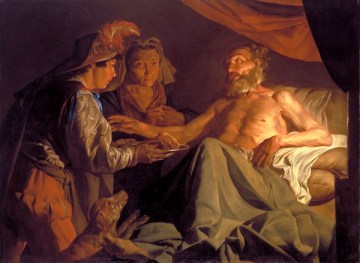 No, that was not Isaac’s choice. He wanted to be known as “Isaac the father of Esau.” Esau was the first born, a macho man, and his favorite son. For those familiar with the Bible stories, “Jacob and Esau” rolls easily off the tongue, but for Isaac it was “Esau and Jacob.” Everyone knew Esau was heir apparent, standing in the wings for his call onto the stage as head of the family and forefather of the covenant people. And I expect most folks approved. Esau was clearly the one who commanded respect, the one with courage and boldness, the natural born leader. Jacob was a mama’s boy, always running away, always cowering behind some trickery. In the hard-scrabble land of the Middle East, Jacob was a Loser.
When Isaac was old and blind and felt death approaching, he prepared for Esau’s coronation, only to have Jacob filch the throne by deceit. Oddly enough, Jacob was God’s pick from the beginning. What did God see in him that made him the obvious choice? Even children know who to pick for their team—the one with the most abilities—and through that lens we read Scripture. We suppose that God chose Mary to be the mother of his Son because she was pure and good and obedient, so good as to be sinless according to some theologians. But the angel of God in Luke clearly tells us why she was chosen—it was based on God’s grace he says twice over, not on Mary’s virtue. The Greek word for grace, Charis (in KJV “highly favored”), is not a reference to how deserving Mary was. She was picked by grace, not merit. “How Lucky!” would be a closer rendering than “How worthy!”
All through history God chooses those who don’t deserve him, who know they don’t deserve him, who are convinced they will never deserve him, and have at last opened to his welcoming embrace. It is the strong, talented, and self-sufficent who find grace, full grace, undeserved grace, hard to swallow. I am so grateful that our God is “the God of Abraham, Isaac, and Jacob,” yes, even Jacob… especially Jacob. God loves me with all the strength and intensity of his great heart. How lucky am I?!
 The law is good, as Paul says, and it has several beneficial uses. One use is to teach us what God is like, and provide insight on how we might be like him. Of course, all of Scripture (not just the commands) is designed to help us in this way whether history, teaching, prophecy, or the like. For those who want to be intimate with God and be shaped into his beautiful likeness, it doesn’t really matter whether a biblical teaching is grammatically in the command form. The only question is whether it will help me grow personally and relationally.
The word “should” has close links with law, and it carries several connotations. First, it suggests an evaluative role. It is telling us what would be a good or better course of action. This may have no moral connotations, such as: “You should try Ben and Jerry’s New York Fudge Chunk.” Second, and closely connected to the first, is an implication of pressure to act in a certain way. We could place it on a continuum to demonstrate this: Can—–Should—-Must. Again, this need not be concerned with morality: “You must try this app!” The third connotation of should, like the word law, is one of potential personal judgment. Even if this regards simply a choice of wrenches, the person who fails to do what he should is faulted. Something is wrong with him. He is defective or weak or stupid or belligerant. Finally, because it is poised to judge, should appeals to a particular motivation. It is not a positive motivation (as the first two connotations might be); it does not attract by the beauty or benefit or health of the choice. It rather motivates by the fear and shame of being bad, unacceptable, dis-graced.
I do not want to live my life being motivated by fear and shame. I want to be motivated by God’s love for me and my echo of love for him and others, in other words, grace. Sometimes the should of law is necessary to shape external behavior to curb the harm a person may do to herself or others, but as long as the individual is acting from fear or shame, it is only her behavior which is affected. Her heart is not growing in grace. It may even be shrinking. I think the primary judgment role of law and should is to help us recognize our real inadequacies and faults, not in order to shape our behavior but to awaken us to the gospel. Some folks think grace has no power to motivate, but I have found it incredibly powerful… that must wait for another post.
Given a couple of negative responses to my recent posts, I apparently need to explain what I mean by grace. I think there are some common interpretations of grace that can really take us down the wrong path. One of the most common misunderstandings of grace is to equate it with freedom of action while equating law with restriction of action. freedom and restriction of action are about method and context, while grace and law are about motivation and direction. Grace does not play the high notes or the low notes on this freedom/restriction continuum, but plays the whole keyboard. That is to say, it confines or releases as directed by love.

EVERY NOTE IS A GRACE NOTE
Law motivates by fear, shame, and guilt. These are very legitimate motivations, because they point out how screwed up we really are, but if we try to remedy our fear and guilt by making better choices, we are doomed by our imperfections. The fear and shame are not intended to drive us to work harder at being good, but to awaken us to our need of the grace of God (forgiveness, love, acceptance, strength, hope, blessing, in short, the gospel).

THE FACE OF THE LAW
Here is where confusion and misgivings easily catch us. We know that fear and shame are powerful motivators, they have profoundly molded our behavior and the behavior of others towards us. If you remove law, what will keep me in check? We think fear and guilt make us good, when they really only change our actions, not our hearts. Still, if this motivation is removed, what will inspire us to go in the right direction. If there is therefore now no condemnation, won’t I just act like a spoiled brat, won’t others “take advantage” of grace? No. It is impossible to “take advantage” of grace. If you try, if you decide to fulfill every “forbidden pleasure,” it will leave you more empty, lost, broken, and even farther from the blessings of grace–not because grace resists you, for it always has open arms, but because you resist grace, which is the way of true peace, fulfillment, joy, love. The only way to take advantage, full advantage, of God’s grace is to throw yourself whole-heartedly into his embrace.
Let me quote a reply I gave a questioning friend: In my mind “doing as I please” is a serious misunderstanding of grace, and is profoundly different from doing what my soul needs. The differentiation in my mind is not that the first matches my desires and feelings and the second matches my duty, but that the first matches superficial desires and feelings often at odds with my deeper feelings (e.g. choosing sex as a replacement for love), while the second is discovering my true feelings and true needs and seeking to meet those. At this point in my understanding of God’s grace, I believe that my soul’s truest needs are never in conflict with God’s will, and if they appear to be, I misunderstand one or the other.

SAFE HANDS










 Janathan Grace Reflections