Archive for the ‘grace’ Tag
Matt. 1:5 Boaz fathered Obed by Ruth.
Ruth was the original Cinderella. From a pagan, destitute widow she became the affluent, honored bride of Boaz and the great-grandmother of King David. Tales of rags to riches are told in a thousand tongues, and American versions come with a moral: work hard enough and every pauper can reach the palace. Whether Carnegie or Rockefeller, Lincoln or Edison, our heroes rise from obscurity and poverty to wealth and fame by their own sweat. But this is not Ruth’s story. The central message of Ruth is redemption, deliverance purely by grace.
Ruth didn’t go looking for God in the promised land, but God went to Moab looking for Ruth. When He showed up, she embraced Him and clung to Him through ten years of childlessness, the death of her husband, and the loss of her home, and in that destitution she followed Him back to Israel. Her faith was truly remarkable, but it was faith, not self-reliance or reward. Faith is simply throwing the doors open for God to come in and do His thing. And the more of God we let in, the bigger the difference He makes, though major renovations are not easy or quick or painless (ask my wife about this!).
Boaz is the “kinsman-redeemer,” a wonderful foreshadowing of the coming Messiah who would rescue the poor and broken. Boaz was rich, powerful, and widely respected, but like his coming King, he saw a penniless migrant as wholly worthy of his heart. She was not a charity-case for whom he had pity, a bride who would always feel inadequate and undeserving of his love, abashed by his greatness, self-deprecating and daunted, always working feverishly to avoid his disappointment. Rather Boaz considered himself blessed and delighted to have her. What did she bring to the marriage? Only herself… which was the one thing Boaz wanted. She filled his heart.
From Ruth’s line would finally come the promised Messiah, stepping across an infinite gap of greatness to be with the ones He loves. We are the center of His thoughts, the passion of His heart. He valued us at the price of Himself, His own life. The bond between the most loving husband and wife, of Boaz and Ruth, is a pale image of His embrace of us, drawing us into His heart until we are one. It is not too much to say that He has tied His eternal happiness to us… we can break his heart and make his heart sing. But whatever we do or do not do, His love for us never weakens or wavers because it is anchored in His very nature. We bring nothing to this relationship but ourselves, and that is what delights Him and fills His heart.
This is the unpublished conclusion to my post “The Spiritual Exercise of Shirking Duty”
I think God is telling me, “You’re going to keep spinning your wheels until you let off the gas. You’re here to learn the art of idling.”
Idleness as a spiritual goal? That sounds very wrong-headed. I spent most of my life trying to maximize every minute, sleeping as little as possible so as to make the biggest spiritual profit for God. Every activity, even entertainment, was scored on how useful it was. If I read books, it must be for my growth. If I took a vacation, it was at a monastery. Every meal with friends was to “sharpen iron with iron.” Pleasures without eternal benefits were wasteful and wrong, and slowly every simple joy was twisted into a duty. I was driven by the fear that God valued me for what I did for him, and it was never enough.

My beliefs have changed, but the shadow remains over those natural delights that would ordinarily bring me pleasure. When I try to simply enjoy reading, writing, music, hiking, gardening, wood-working, and the like, this imperious gravity pulls me to turn each one into something productive, cutting off its wings and tethering it with a burden of obligation. Since last winter my only sure escape has been solitaire, not because it is especially fun, but because it is especially profitless, and so I can’t use it for brownie points with God. While shuffling cards, I’m doing nothing good for the world; I’m just killing time. And as I’ve learned to trust God’s grace there in the middle of that uselessness, I have discovered pure grace, not “grace” in exchange for my good efforts.

DUTY: LOOKS GOOD, BUT TIES ME IN KNOTS
How can I rebuild my life around the joy of being who God created me to be instead of the slave-driven motive of duty? As long as I keep believing that God loves me more when I do more for him, and less when I do less, I can never find rest in his grace. To truly discover the riches of God’s full acceptance apart from my profitability, I may need to become more useless still in order to set my faith free from its false grounding in my own goodness. “The foolishness of God is wiser than men.”

GOING OUT ON A LIMB OF FAITH
Delayed by confusion, Anne at last flung herself from her seat just as the ski lift lurched into its ascent. The five foot drop stunned her, and so a kindly hand helped her into a small lodge to recover. Unfortunately, the kerosene stove inside increased her nausea. But as she lay there, a whiff of fresh, pine-scented air brushed her face. It trickled in through the cracked windows just enough to keep her from smothering under the acrid fumes. She called it “a thin ribbon of grace.”
Berly and I read this Lamott story weeks ago, but Sunday stumbled across her retelling it in a Youtube interview, and this time the phrase popped. When I am lost and broken and sick to my soul, I want God to fling open the windows of grace, but what I get is barely enough to keep me coherent, like a drowning man who is chucked under his chin just enough to keep his nose above this moment’s wave and then dropped again… like a malnourished child fed a few crumbs above a starvation diet. Survival grace. For those of us wishing for life to end, this frayed ribbon of grace seems less like love and more like torture. Why is God so tightfisted with His goodness as though He’s worried He’ll run short or we’ll fritter it away? What present consolation can we suck from the ending “happily ever after” if life’s story is “miserable until death.”
But Anne’s phrase whispered across my thoughts, enticing. Is it enough, this thin ribbon? I want a bank full of grace to draw on for my needs, but I am only given enough for this moment… sometimes barely enough. It’s true that I haven’t drowned yet, but every time the finger holding up my chin drops away, I’m sure the next wave will take me under. After all, I’ve been left spluttering for air many times. It’s a fact that I haven’t starved, but this is my last bowl of soup, and the cupboards are bare. Living hand-to-mouth is so precarious, so uncertain, so constricting, whether the shortage is literally financial and physical or the deficit lies deeper still, a hole in the heart.
In the desert the Israelites were completely dependent on God, and in spite of dining on a daily miracle, hunger was always just one day off, for forty years running. A thousand winters later, not much has changed for the children of God as they prove in their principal prayer: “give us this day our daily bread.” What is this addiction God has for pocket change allowances? Surely He doesn’t make us suffer needlessly. If He is truly a loving God, he must think this arrangement is a real windfall for us.
But as Berly points out, many of God’s children are jobless and friendless, homeless and hungry; some die agonizing deaths. We are not promised health or happiness or even sanity. Exactly what does it mean to claim that His grace is sufficient if it is not even sufficient to keep us breathing? From somewhere the thought drifted into my mind–His grace is sufficient for our hearts, the one thing that matters above all to us. In spite of life’s miserable suffering, we cannot deny that our hearts have not only survived, but grown. We are blossoming into the ones God created us to be. We have faced into our fears and discovered new strength, challenged shame and found love. We opened our hearts, and truth came in with insight, wisdom, and freedom.
But we are still tormented by depression. Something seems very wrong with our chosen path when we end up here. If we follow God as best we know how, should we not find peace, joy, rest, and fulfillment? Isn’t that what grace looks like? We want a life plan that works, that makes us feel good, accomplished, confident, whole, and if that’s the goal, our plan is clearly broken. But we tried other popular strategies, and they gutted our souls. Perhaps we’ve been measuring grace by the wrong scale. If our personal growth is the better gauge, then God has been truly lavish towards us, and if it comes to us through pain, we will welcome it gratefully. He sends a thin ribbon of consolation to keep our hearts from breaking, but his grace is not limited to this meager thread. His grace towards us has proven to be a river, not a ribbon, even if we cannot feel it or understand it.
I lost my USB drive holding my reflections on forgiveness, so my momentum on that topic has died, but here is a great quote from Stanley Hauerwas in The Peaceable Kingdom:
It is crucial that we understand that such a peaceableness is possible only if we are also a forgiven people. We must remember that our first task is not to forgive, but to learn to be the forgiven. Too often to be ready to forgive is a way of exerting control over another. We fear accepting forgiveness from another because such a gift makes us powerless—and we fear the loss of control involved. Yet we continue to pray, “Forgive our debts.” Only by learning to accept God’s forgiveness as we see it in the life and death of Jesus can we acquire the power that comes from learning to give up that control….

To be forgiven means that I must face the fact that my life actually lies in the hands of others. I must learn to trust them as I have learned to trust God….
But because we have learned to live as a forgiven people, as a people no longer in control, we also find we can become a whole people. Indeed the demand that we be holy is possible only because we find that we can rest within ourselves. When we exist as a forgiven people we are able to be at peace with our histories, so that now God’s life determines our whole way of being—our character. We no longer need to deny our past, or tell ourselves false stories, as now we can accept what we have been without the knowledge of our sin destroying us.

COSTLY SAVE
I am more productive just staying in bed than trying to multitask. When I try juggling tasks, I drop all of them, and one of them inevitably knocks over a vase. Unfortunately, I can’t even multi-think. I can’t keep two disparate ideas together in my head, however simple they are. The new thought drives out the old. I try to compensate with lists (which I forget to bring), notes scribbled on the back of used envelopes (which I inadvertently throw out), and pleas for Kimberly to remind me (a job she rarely accepts). I had a thumb drive with a to-do list that I cleverly kept on my key ring–can’t leave without it. But several times I almost left work with the drive (and my keys) still in the office computer, locking me out of both my building and my car at 2 a.m., so I took the USB drive off the key ring, and within a week I lost it.
 Today I was working around the house and actually thought to keep a pair of reading glasses with me for small-print labels and dimly lit spaces. Hanging loosely around my neck they could easily get damaged, so I slid them to the top of my head (see, I’m planning!). As I was mowing, a tree branch knocked them off. I almost got down to retrieve them, but decided to grab them on my next pass. As I swung back by, I saw they lay in the cut grass, so I could just keep mowing and get them later. After three more passes I forgot and ran right over them. I found only a part of the mangled frame. I now know not to mow with glasses on my head… but next time I will forget I have them on my head or I’ll take them off for safe keeping and plop a book on them. This is why I buy $2 Walmart glasses. I have back-up plans for back-up plans… three or four levels of compensatory strategies.
It is a real disability–I’ve completely missed a couple days of irregularly scheduled work, wrecked our cars, and almost burned the house down. No amount of scolding or shaming on the part of others or planning and compensating on my part is going to fix it. When I clamp down on one thing, something else shakes loose. I’m grateful for a patient, understanding wife and a God who keeps an eye out for me. I still have my job and cars and house… and a supportive wife and caring God too!
My real back-up plan is God. I have to depend so much more on Him than many others do. His grace has such a bigger field of play in my life than in those whose lives are well-ordered. The penalty for not being able to take care of myself is that God takes care of me. Who could imagine a better arrangement? Happy frailties! (2 Cor. 12:9)

Matthew 1:5: Boaz fathered Obed by Ruth
 April 17 is the feast day of Benedict Joseph Labre who was called “a patron saint for failures.” He was rejected as unsuitable by all the monastic orders to which he applied, several of them suspecting him of mental illness. He became a mendicant holy man, sleeping in corners of abandoned buildings, dressed in rags, covered in lice, living on alms, and eventually dying of malnutrition. It took another century for him to be sainted. This is somebody I can relate to… except for the sainthood, although considering his credentials, maybe I’d have a shot at that too! Many more of God’s followers look like bums than Hollywood stars. After all, it is the bitter life of the marginalized that drives them to grace. But there are exceptions like Boaz.
Boaz was rich and powerful, with lots of land and plenty of servants. He was also godly, generous, and humble. He had it all. The patron saint of bankers and CEOs, perhaps, except that he lived for the benefit of others. On top of all that, he had royalty in his veins as great-grandfather to King David and through him the King of Kings. It’s unusual for someone with such heavy credentials to welcome grace, for someone who has it all to realize they have nothing with which to recommend them to God. The more you have, the more you have to lose when you’re stripped down to nothing but your bare soul. Boaz had to admit he was no better than the likes of a dirty, tattered B. J. Labre.
 Unlike caste in India or aristocracy in Europe, egalitarianism is the American way, but we have our own homegrown pecking order, and we know our place. We defer to those with more money, status, education, looks or what have you, and on the other side we expect to be treated better than “a common bum.” When people are smelly, unkempt, crude, or slow they get treated differently… I’m ashamed to say that I too react as though they are less deserving. Tragically, human hierarchy destroys grace, no matter where you rank yourself. Wonderfully, the gospel knocks off all the rungs of our social ladder. We are all penniless. We come to God with empty pockets.
At first glance, it seems sad that we are all bankrupt, until we realize that an empty account is the one prerequisite to receiving grace. When we come to the end of ourselves–our efforts, our pedigrees, our abilities–the gospel finally makes sense. If we are full of ourselves, we cannot be full of God. For those of us who feel we are near the bottom rung, there is no sweeter sound than the tintinnabulation of grace. I am on equal footing with Boaz, Bono, and Billy Graham. The canonized saints have nothing on me when it comes to the love of God. I am just as much His favorite. The more screwed up I am, the more He loves me. That’s amazing enough to make a pig sing the Hallelujah chorus!
Forgiveness 5: Sorting Out My Feelings
When I am insulted or slighted, abused or betrayed and the offender won’t discuss it, at least not honestly, I try to decipher her on my own so I can better shape my response. In every conflict I want to be as gracious as I’m able, starting with grace to myself so that I will have the resources to be gracious to the offender, genuinely gracious—out of freedom, not obligation. Self-acceptance, not shame or duty, is the soil from which true forgiveness springs. When I am wounded, it may take time to recover my own sense of grace (that is, to settle into God’s grace). It takes as long as it takes. It is crucial that I not sacrifice my own well-being by rushing to work through emotional issues. I do not nurse my hurt, but I should not belittle my hurt either. Neither of these is an honest and healthy approach. Doing a quick patch-up job is disrespectful of and harmful to myself as well as our relationship.
Again, my focus is on my own pain, not on blaming the other person, but since I have been hurt, I no longer feel safe with her. Until I have found some personal resolution, our relationship will also lack resolution. I may need a break from our usual level of interaction… whatever I need to stay emotionally safe long enough to work through my own stuff. I should tell her clearly that I am not punishing her, that this is about me and what I need and not an effort to manipulate her into feeling bad or changing her behavior. (And I need to be sure this is true.)
Ultimately I want to somehow get to the point that I feel no ill will towards her. Whether I reach this through exonerating her or through forgiving her is not crucial as long as I am respectful towards myself (my perspective and feelings) in the process. I may decide that this is primarily my own issue and not hers. I may determine that she is at fault, and that I will need to forgive her. I am not her final judge, so I may fault her wrongly, but forgiveness still works: it frees me from suffocating on my own anger and bile.
Since I work till 2 a.m., Kimberly and I keep different sleep schedules, even on the weekend. Being the only one awake late at night can be very lonely, and feeling a bit lost tonight, I flipped through some TV shows—a little basketball, a bit of news, the tale end of 48 Hours, a CSPAN symposium of legal experts pontificating on Dr. Seuss (the ethics of Whoville, surprisingly interesting)… channel-surfing to try to ride out my negative energy. I wandered into the kitchen, looking in the frig and cupboards for something to fill my soul. But I came up empty.
Then I took a desperate measure… I opened Anne Lamott. For me, reading without a smidgen of positive energy is like trying to get a plane off the runway at 30 mph. Apparently God puffed a tail-wind, a penny miracle to aid my shaky effort to break free of gravity. This one time my sputtering spirit settled into a quiet purr of reflection. My life seems to be more stagger and flop than gliding, but I’m grateful for tonight. May each of you find a little breeze of grace today.
On my way to work tonight I turned from our winding, unlit street onto Hawkins Mill Rd, and an oncoming car flashed its brights. I looked down, saw the blue square on my dash, and flicked off my high-beams while responding with a surprised, “Oh, thanks!” to no one in particular. My mind flipped back two nights to our drive home from a school play. The guy behind me had on his brights, too intense even for the night-time position of my rear-view mirror, so I shoved it up against the roof and leaned right to avoid the glare in my side mirror. In less than a mile I was so irritated I wanted to pull off, get behind him, and power up my highs… just to teach him a lesson. I didn’t mention this to Kimberly.


My grace period for dumb driving is short. If the nuisance behind me had dropped his floods within a few blocks, I would have been grateful; within a quarter-mile, my “thank you” would have been sarcastic; after that, the dumb stamp would stick fast. Notice that I am even-handed. If I had kept my highs on tonight for another 15 seconds or a second flicker-reminder, I would have said, “Oh, sorry!” instead of “Oh, thanks!” And if I accidentally went a mile as a high-beam tailgater, I would have slapped my forehead with an idiot label. My good Christian conscience insists that I treat everyone equal before the law. It’s the golden rule in reverse: I only disparage others to the extent I disparage myself. Perhaps we could call it the iron rule.
Kimberly likes to keep things fair too, but her scales are those of grace rather than justice. She sees mistakes as a daily, inevitable occurrence and wants us all to live in acceptance of one another’s shortcomings. Wow, I think, no societal norms, no expectations, no standards? Ignore the stop signs and traffic lights; it’s every man for himself. I’m going to need an SUV. No, she says, just lowered expectations… sometimes people are late for meetings or forget to return a phone call or leave their high beams on, and that is okay. No one shoots 100% of their free-throws (she didn’t actually use the b-ball analogy). I agree with her. So how do I reach this new high standard of grace? After all, a 50-year rut is not overcome quickly, even by a perfectionist… especially by a perfectionist… or maybe ever by a perfectionist. Now that I think about it, perfectionism seems to have a Teflon grip on grace–the harder I squeeze, the quicker it squirts away. Grace falls into the open hand of acceptance It’s a gift, not a conquest.
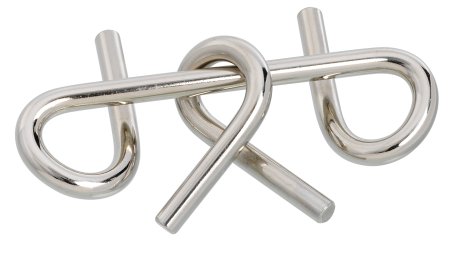
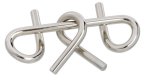 Such wise sounding words, but what do they mean? Like those twisted metal puzzles I got as a kid–it looks simple, but I don’t see how to solve it. I can either work at being more gracious or not work at being gracious. So I set goals and standards and work hard to be nice and patient and accepting. Now I have a new standard by which to judge myself and others–instead of criticizing the late and forgetful, I criticize the impatient and demanding. Wait, something went wrong. So I stop working at it and just keep living as I’ve always lived, as a curmudgeon… hmm. Why can’t my spiritual journey be as uncomplicated as everyone else’s seems to be? I’ve sorted out this grace puzzle before, but it seems I have to re-learn it every time I stumble on another facet of my deep-seated legalism. So here we go again.
“Grace… [is] the force that infuses our lives and keeps letting us off the hook. It is unearned love—the love that goes before, that greets us on the way. It’s the help you receive when you have no bright ideas left, when you are empty and desperate and have discovered that your best thinking and most charming charm have failed you. Grace is the light or electricity or juice or breeze that takes you from that isolated place and puts you with others who are as startled and embarrassed and eventually grateful as you are to be there.
“It is amazing. I do not at all understand the mystery of grace—only that it meets us where we are but does not leave us where it found us.” –Anne Lamott Traveling Mercies











 Janathan Grace Reflections