Archive for the ‘grace’ Tag
Today I ran across this video from 2011. It is a vignette of two famous actors who have been in the gutter more than once, but prop each other up with forgiveness and acceptance as they stumble along. Hollywood films portray beautiful truths, but Hollywood lives rarely do. Here is a two minute “acceptance speech” by Walter Downey Jr. that is a message of hope for those of us who are recovering sinners

EMBRACING THE FALLEN
My first feeling was horror, quickly followed by outrage, and then a creeping sense of helplessness: horror for how many and how young the victims; outrage for the unprovoked, extreme violence; and helplessness because it was inexplicable and unpredictable. As a red-blooded, American male with an overblown sense of responsibility, my powerlessness is the most frightening of these emotions, so I try to get passed it as quickly as possible (though I would not have admitted this even to me most of my life). The way I protect myself from horror is to let my outrage stir me to resolve, to make sure such a terrible thing never happens again. In other words, the quickest way for me to escape those wretched feelings is to jump passed them into problem-solving mode.
My gut response to natural disasters or unavoidable accidents is quite different, much simpler and cleaner. I move easily into grief and solidarity with everyone since we are all in it together. There is nothing to examine and correct. I am responsible for nothing, and can simply feel. This acceptance is typical in fatalistic cultures, even for calamities that are preventable, but that seems like a defeatist attitude to us Americans.
As a nation carved out of the frontier by pioneers, we are very gifted at overcoming adversity with our “can do” spirit. We are independent, pragmatic, self-confident, and creative… so much so that we see everything in the light of problem-solution. We are able therefore to use action to largely override any feelings that crop up. In fact, feelings themselves are often seen as part of the problem that needs fixing. We tend to deal with insecurities by taming the situation. We are a nation of controllers. We take charge of ourselves, others, and our environment.
Within hours of the Newtown massacre, some of us were demanding solutions: better school security, more gun control, better ways to identify and fix those with emotional issues (or just as vigorously rejecting these ideas). “We can stop these killings; we can fix this,” we told one another. No. We can’t. We can limit violence in various ways, but we really are not in control of what happens on this old earth. The most we can do is influence it for the better. Malicious, unprovoked, random violence is an inescapable part of our broken world, and embracing our sense of vulnerability and fear might be a good place for us to start.
I am a particular kind of controller. I gain a sense of security by figuring things out. I am at my most vulnerable when I am confused or stymied. I often “resolve” my feelings of powerlessness by sorting, categorizing, and explaining the situation–intellectual escapism. (I guess this blog is exhibit A.) When I am lost in the maze of life, I fall easily into depression. But choosing a sense of helplessness rather than avoiding it can be my way into grace.
So in my next blog I will get out of my head and into my feelings.
Matthew 1:5 Salmon was the father of Boaz by Rahab.
 In America, our job defines us. It is the first, most important identifier when we’re introduced, “Good to meet you. So what do you do?” Sometimes it’s even tacked on like a surname: Joe the Plumber or Bob the Accountant. With one word we label, categorize, and define someone from the moment we meet them. Just imagine if your meaning as a person was distilled into the name Karen the Harlot. You are suddenly no longer a person, but a commodity, and the worst sort of commodity, associated with all that is unclean, cheap, and dark. When someone hears “prostitute,” they do not think of giggling children, fresh-squeezed orange juice, and butterfly kisses. Rahab was part of a cursed race of uncircumcised philistines and she was known as Rahab the Harlot. Then God came.
In the gospels, Jesus was a trash-magnet. The discards of society were drawn to him like the starving to a feast of love. They found in him the acceptance and respect and embrace they never knew. Like father, like son they say, and the God of Israel was the Father of all widows and orphans, the poor and lost. He saw in Rahab what no one else saw, and said of her “I want her in the royal line as mother to my Son.” The beauty in all of us originates always with God, and it is our faith, not our goodness, that opens the door to his glory. Those least able to “make a name for themselves” are the ones most welcoming of grace. “Blessed are the poor in spirit, for theirs is the kingdom heaven.”

RECYCLED RAGS
2,000 years after her first appearance, we find Rahab again. Her past has not been air-brushed away–she is still “Rahab the Harlot”–because grace does not re-write our past; it transforms that twisted frame into an instrument of glory. She is now immortalized in the Hebrews 11 Hall of Faith as a model for us all to follow. God embraces a pagan prostitute simply because she opened her arms to him by faith. God does not ask us to patch together the shredded pieces that make up our lives, but asks us to trust him with those tattered remnants. He makes all things beautiful, all things placed in his hands.
This 3 minute video is a remarkable parable of grace
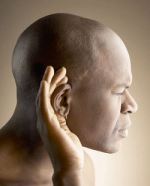 “Is it God’s voice I hear in my heart or my own voice mimicking God? How can I tell the difference?” I asked Kimberly tonight as we stared at the candle flames. It was more a doubt than a question. “Even if it IS God talking to me, I may hear it all wrong, just like I do with you,” I continued. God’s voice may be in my head, but it is hardly the only voice there. In fact, as a boy I assumed dad was God’s mouthpiece. I still have trouble telling apart their voices inside me, not because they sound so much alike, but because the mix-up was so long standing. Over the years I have internalized more inflections–preachers, authors, teachers, Christians. So who’s talking now? I am learning to distrust those messages that do not harmonize with grace. God’s heart-songs are always the cadence of love–even if it is a hard scrabble love.
 When I have a friend with me, it colors all that I do, how I do it, and how I feel about it. If he is critical by nature, I will be cautious and inhibited, tense and doubtful. If my daily companion is God, what kind of God is he? If my hours are spent with a God who is focused on fixing my flaws, I will live out of fear and shame. I will be worse off for all my spiritual intent. It is crucial for me that the God I chat with over the dishes and in my car is the God of all grace. It is not only his presence I need, but his compassionate presence. I have enough harsh voices in my brain without adding Sinai to the cacophony. “Perfect love casts out fear.” May we all drink from that stream of redemption.
Matthew 1:4 And Nahshon fathered Salmon.
The name Salmon appears only once in the Old Testament, at the end of Ruth in a four-verse genealogy. (He appears one other time as Salma in a mirror genealogy of Chronicles).

In the town of Bethlehem, Salmon’s son Boaz plays supporting actor in the romance play Ruth. As a historical introduction to Ruth, the book of Judges tells of the steep moral decline in Israel, ending with a 3-day civil war in which tens of thousands of Israelis are killed. Bethlehem was at the epicenter of this huge national crisis for it all began with one of their own daughters being brutally gang-raped and dismembered. Without a timeline we do not know whether Salmon was a soldier in this battle, but he certainly struggled against the corruption that engulfed his country.
Salmon lived in the days of the Judges, and that book finishes ominously, “In those days there was no king in Israel; everyone did what was right in his own eyes.” But springing up from this maelstrom of evil is Ruth, a book of hope, whose last verse reads: “To Boaz was born Obed, and to Obed, Jesse, and to Jesse was born David.” That is to say, King David, forefather of the promised Messiah. Yet Salmon had no glimpse of this hope. He died in the night that swallowed his nation.
In spite of this, Salmon (according to Matthew’s genealogy) was in the center of the world’s great channel of redemption. Without knowing it, he was the father from whom the Christ was to be born. His life and history and progeny were surrounded by God’s richest outpouring of grace, the giving of His very Self to the world. How might this realization have lit up his darkness with hope, his trials with patience, his life with purpose? And amazingly, we are each in that very place of Salmon… in a far better place, actually.

We are not simply in a long line of succession through whom God’s grace will eventually come, but we are today channels of God’s grace to the world. The Messiah has come. He is here. If Christ is in us, then He is shining out from us to the world, despite how troubled and confused and pointless our lives may seem or how foreboding the shadows. I am his candlestick, and it is mine to burn, however feebly. It is His to shine that light where He sees fit, and He always makes the best use of every flicker. I am His vital partner in this bedraggled world’s salvation.
 Ayn Rand’s philosophy is simple: the purpose of humans is to live fully as humans, pain and pleasure direct us towards life or death, and we must choose life. I find myself agreeing with her. “Choose life!” God tells Israel repeatedly through Moses. Surely life lived to the fullest is God’s design for us, and misery or joy seem to be fairly reliable indicators of what benefits or harms us. But some caution niggles in the back of our brains: if we avoid pain and pursue pleasure, are we not hedonists?
Rand decries hedonism: “When… the gratification of any and all desires is taken as an ethical goal… men have no choice but to hate, fear and fight one another, because their desires and their interests will necessarily clash. If ‘desire’ is the ethical standard, then one man’s desire to produce and another man’s desire to rob him have equal ethical validity…. If so, then man’s only choice is to rob or be robbed, to destroy or be destroyed, to sacrifice others to any desire of his own or to sacrifice himself to any desire of others; then man’s only ethical alternative is to be a sadist or a masochist. The moral cannibalism of all hedonist and altruist doctrines lies in the premise that the happiness of one man necessitates the injury of another.” Hedonism and altruism are alike in this: one person’s well-being must be sacrificed for the sake of another’s.

Rand Is a Rationalist
“The Objectivist ethics,” Rand explains, “holds that human good does not require human sacrifices and cannot be achieved by the sacrifice of anyone to anyone. It holds that the rational interests of men do not clash.” She sees a benevolent world in which every person can find genuine, full happiness regardless of the actions of others. I’m not sure how an atheist such as Rand can be so optimistic, but if the God of all grace rules the world, hope is an inescapable, logical conclusion. A theist might read her statement “the spiritual or life-giving interests of men do not clash.” If God is committed to what is best for me, then I fulfill his will by living out this truth. God must see to it that the choices I make in pursuing what is best for me do not undermine what is best for another.
*Rand is an individualist, so we must still refine her thoughts with the Biblical truths of community and interdependence.
Matthew 1:4 Ram fathered Amminadab and Amminadab fathered Nahshon
Wouldn’t it be great to be Billy Graham’s brother? I’m not so sure. How would you be introduced at parties? Whose exploits would your children talk about around the dinner table? In public, whose reputation would you be most concerned to protect? CNN, Time, NBC would all contact you… with only questions about Billy. Imagine your whole life and personhood defined by someone else.
Amminadab knew that feeling. His name appears nine times before the gospel of Matthew, in four separate books of the Bible, and we know nothing about him. But we know about his son Nahshon. Even in the middle of a genealogical listing, the registrar pauses to trumpet Nahshon: “Ram was the father of Amminadab, Amminadab was the father of Nahshon, the leader of the people of Judah.” The only reason Amminadab’s name crops up at all is to note his relationship to Nahshon… except for his first appearance, when he is footnoted as the father-in-law of Aaron, the high priest of Israel.
We all live in someone else’s shadow that is cast by the spotlight on their better performance in cooking or speaking, patience or punctuality. As I do life with others, it is naturally hard to feel good about myself, hard to avoid competing with Jennifer’s achievements, hard to resist comparing Jason’s friendliness to my own. But when our culture also constantly rates us against our fellow, noting how we fall short, it becomes nearly impossible. I can either sign up for this game where I must be a winner (in everything) to feel adequate, or I can opt out and be labeled a loser. That is, I can constantly chase after the adequacy that is just beyond my grasp or I can give up in despair and accept my own worthlessness… or I can stumble into grace.
When you consider Amminadab, Nahshon, Aaron and Moses in the light of their descendant at the culmination of Matthew’s genealogy, they all rank shoulder to shoulder. We all stand equally shadowed by Jesus’ glory. But here the simile breaks down, for Jesus does not diminish us by his greatness, but transforms us by it. We stand not in his shadow, but in his glory, and this comes not as the borrowed, vicarious glory of a famous relative, but in his fulfilling in us all he designed us to be. Jesus being all he is makes me all I am and can be. May we be such life-givers to one another.
 Berly was having a black day this morning, remembering some very painful experiences in her last work place. I sat and listened and asked questions. Her sharing gave me a new perspective of my own struggles over the years because of my time in India. I had no solutions, but just listening and accepting her thoughts and feelings picked up her spirits and enabled her to deal with some of the detritus from that time. Some time later I was feeling emotionally fatigued, it seemed that life had no purpose and that nothing could change it. I shared my sense of hopelessness, and simply interacting about it with Kimberly lifted the heaviest part of that weight. We are continually amazed at how just sharing our feelings with an accepting person, who shares empathy rather than advice, does a work of healing in our souls. Since nothing is actually ‘fixed’ and often no new insight is shed, it always suprises us to feel the relief, like little miracles that have no rational explanation. Real Grace.
Matthew 1:3 Judah fathered Perez and Zerah by Tamar

Art from Trash
Perez and Zerah are named together because they are twins, but why Tamar was mentioned is a quandry. None of the honorable women before her in the genealogy are noted, but when we hit a scandal, Matthew has to dredge it up. Well, he didn’t really have to go digging because the Old Testament itself was quite blatant about the whole sordid affair. Tamar was Judah’s widowed daughter-in-law, and she prostituted herself to get pregnant by Judah. Anyone proud of their genealogy would surely have skipped past this crooked branch, but Matthew, for some reason, calls attention to it, as though reminding his readers that their glory was not from their ancestors, but from their gracious God who could use the worst to bring the best. It is not to God’s discredit that he used such flawed materials to construct his kingdom, but it shows the incomparable power of his redemption.
God is in the salvage and reclamation business, and he is so creative that he makes the results better than if they had come from perfect materials. His second creation far surpasses his first, not just restoring innocence, but infusing us and our relationships with a far greater life force. The glories of forgiveness, mercy, patience, sacrifice, in short of grace, were unrevealed in Genesis one. It is natural for beautiful things to be appreciated and enjoyed, but that is such a meager understanding of love compared to that revealed by one who treasures the broken and ugly, so much as to sacrifice himself for our sake. Without the Fall, we could not have experienced the depths, lengths, and heights of God’s unconditional love.

WHO IS LOVED?
Being loved for only what is good in us is a direct building block of legalism–be good and you will be loved. If we are loved only in our beauty, then we are unloved as ourselves. How astonishing to discover God saying–be bad and I will love you every bit as much. Unshakeable security only rests in an unchangeable love… for, as Paul tells us, “if we are faithless, he remains faithful— for he cannot deny himself.” He cannot stop being a love-filled God, even though it breaks his heart. It seems to me that we have a far greater awareness and experience of God’s love than Adam and Eve who literally walked with God daily. Who can express the deep peace and intense bond that comes from being loved wholly, being embraced with our every defect?
 I have been fighting with fear for a month now, and a sense of being overwhelmed. It partly comes from my anxiety of having to survive this summer on my lawn-mowing income (along with my inability to pick up sufficient regular clients) and partly from forgetting (as a result) my 2012 commitment to rest. It has made me think afresh of the Biblical command, not to keep the Sabbath, but to remember to keep the Sabbath. Apparently I’m not alone in having fear and busyness crowd out the vital place of rest for my soul. I notice that, remarkably, I accomplish less, not more, when I neglect the rest my soul needs… the fear and drivenness drain away my energy. This has not always been the case.
 Most of my life I lived by overriding my own needs. I thought I was meeting my soul’s needs by spending hours in prayer, meditation and Bible study, going to church, self-examination and the like. But in fact these were just more activities to which I drove myself. They were not “means of grace,” but means of accomplishment, of spiritual advancement. In those days I measured success by how much I changed the world for the better, not realizing that I was denying with my life the very gospel I preached. It is hard for the fruits of grace to spring from the drivenness of legalism. I was getting more tasks done (being successful) because of my unceasing labor, but grace would have had so much more space to work had I learned to do much less while acting from a spirit of unconditional love (in both receiving it and sharing it).
 My conception of success has changed so drastically since those days. The ghost of ‘failures past’ still haunts me at times. I have not been able to fully shake off those old definitions (mostly because the whole world seems to speak that language), but I realize now that my soul’s health and thereby the health of the hearts around me is my new measure of success. It has little to do with numbers of tasks completed or people fixed. I would rather accomplish one thing a day graciously than a dozen without grace, and because of my unhealthy proclivities, the more I try to fit into the day, the more likely I will shortchange grace. As I grow in grace, I believe I will be able to do more good, but for now I must live within my limits and refuse the shame that shouts at me for doing too little, learning to trust more in God’s grace.








 Janathan Grace Reflections