My first feeling was horror, quickly followed by outrage, and then a creeping sense of helplessness: horror for how many and how young the victims; outrage for the unprovoked, extreme violence; and helplessness because it was inexplicable and unpredictable. As a red-blooded, American male with an overblown sense of responsibility, my powerlessness is the most frightening of these emotions, so I try to get passed it as quickly as possible (though I would not have admitted this even to me most of my life). The way I protect myself from horror is to let my outrage stir me to resolve, to make sure such a terrible thing never happens again. In other words, the quickest way for me to escape those wretched feelings is to jump passed them into problem-solving mode.
My gut response to natural disasters or unavoidable accidents is quite different, much simpler and cleaner. I move easily into grief and solidarity with everyone since we are all in it together. There is nothing to examine and correct. I am responsible for nothing, and can simply feel. This acceptance is typical in fatalistic cultures, even for calamities that are preventable, but that seems like a defeatist attitude to us Americans.
As a nation carved out of the frontier by pioneers, we are very gifted at overcoming adversity with our “can do” spirit. We are independent, pragmatic, self-confident, and creative… so much so that we see everything in the light of problem-solution. We are able therefore to use action to largely override any feelings that crop up. In fact, feelings themselves are often seen as part of the problem that needs fixing. We tend to deal with insecurities by taming the situation. We are a nation of controllers. We take charge of ourselves, others, and our environment.
Within hours of the Newtown massacre, some of us were demanding solutions: better school security, more gun control, better ways to identify and fix those with emotional issues (or just as vigorously rejecting these ideas). “We can stop these killings; we can fix this,” we told one another. No. We can’t. We can limit violence in various ways, but we really are not in control of what happens on this old earth. The most we can do is influence it for the better. Malicious, unprovoked, random violence is an inescapable part of our broken world, and embracing our sense of vulnerability and fear might be a good place for us to start.
I am a particular kind of controller. I gain a sense of security by figuring things out. I am at my most vulnerable when I am confused or stymied. I often “resolve” my feelings of powerlessness by sorting, categorizing, and explaining the situation–intellectual escapism. (I guess this blog is exhibit A.) When I am lost in the maze of life, I fall easily into depression. But choosing a sense of helplessness rather than avoiding it can be my way into grace.
So in my next blog I will get out of my head and into my feelings.
We think of traditions as ancient, honored customs… but they had to begin somewhere, sometime. After all, the first Christmas was in a pile of barnyard hay with a few dirty sheep-herders gawking nearby (the natty, gift-bearing VIPs showed up later). Jesus was not born in a room full of colored lights and snow-flake medallions. Even the angels singing out in the muddy fields didn’t show up for his party as far as we know. So Kimberly and I decided to start from scratch in creating our own unique holiday traditions. We planned to emphasize a different aspect of the season each week of advent… only it isn’t playing out as we had expected.

CHARLIE BROWN
ALL GROWN UP
We both like Christmas conifers, and the use of evergreens in winter speaks to us of life outwitting death, of stubborn hope in the midst of barrenness. So we decked our banisters and brought in a scrub tree from the yard. My idea was to decorate in stages, emphasizing each particular advent week focus, but our scraggly, homegrown tree looked more like a sign of want than of hope. It started life as a weed in our flowerbed, and not having the heart to toss it out, I dug it up and planted it in the back yard. It has been growing there for four years, completely neglected, and is now 6 feet of meager, sickly green thistles. Those barbs were painful enough to scrape against, but since the branches were so weak, we had to shove decorations deep inside. We should have worn long sleeves and gloves. That pathetic see-through shrub had all its defenses up… a tree thick with issues… how appropriate for our home. It was truly a symbol of life… life as we know it.

NOT MUCH ROOM TO MOVE
BUT WHAT A VIEW!
To put a positive spin on our impecunious Christmas, our first week spoke of simplicity. No lights, tinsel, streamers, or presents under the tree. Even if we had a star, the top of the tree was too flimsy to hold it. Kimberly and I live out of a shortage of resources. I didn’t have the energy to find and care for a nice pine or fir, or even the initiative to plan that far in advance. I had a little energy, and with it I transplanted a sprout, and now we have a tree, spindly as it is. Having fewer resources makes for a tight circle of possibilities, and that may feel like a bare prison stripped of goodness or a narrow shelf above a sheer cliff. We have felt that at times. But a simple lifestyle may also be seen as freedom from the clutter of excess and from the need for a wider cleft in the rock. We have fewer choices and less to protect, and that helps us focus on what is truly important, helps us enjoy the simple things more richly, gives us access to one another’s hearts more openly and easily. The only difference between a simple lifestyle and an impoverished one is faith, and that difference is profound.
From one of my new favorite blogs:
What’s that in the Pool?
Parts of the Rocky Mountains look like
algae bloom out in the Indian Ocean.
Parts of me look like parts of you
and here we go with oneness
being nothing more than
pattern recognition and optical illusion;
though I hope there is more to it than that.
My hurt might not be your hurt,
but I have a sense of it.
Likewise your hope may not resemble mine,
but it cheers you just the same
and we are all the better for it.
We needn’t replicate each other
or attempt imitation,
but recognition is a kind thing
and art is what we all have to share.
Matthew 1:5 Salmon was the father of Boaz by Rahab.
 In America, our job defines us. It is the first, most important identifier when we’re introduced, “Good to meet you. So what do you do?” Sometimes it’s even tacked on like a surname: Joe the Plumber or Bob the Accountant. With one word we label, categorize, and define someone from the moment we meet them. Just imagine if your meaning as a person was distilled into the name Karen the Harlot. You are suddenly no longer a person, but a commodity, and the worst sort of commodity, associated with all that is unclean, cheap, and dark. When someone hears “prostitute,” they do not think of giggling children, fresh-squeezed orange juice, and butterfly kisses. Rahab was part of a cursed race of uncircumcised philistines and she was known as Rahab the Harlot. Then God came.
In the gospels, Jesus was a trash-magnet. The discards of society were drawn to him like the starving to a feast of love. They found in him the acceptance and respect and embrace they never knew. Like father, like son they say, and the God of Israel was the Father of all widows and orphans, the poor and lost. He saw in Rahab what no one else saw, and said of her “I want her in the royal line as mother to my Son.” The beauty in all of us originates always with God, and it is our faith, not our goodness, that opens the door to his glory. Those least able to “make a name for themselves” are the ones most welcoming of grace. “Blessed are the poor in spirit, for theirs is the kingdom heaven.”

RECYCLED RAGS
2,000 years after her first appearance, we find Rahab again. Her past has not been air-brushed away–she is still “Rahab the Harlot”–because grace does not re-write our past; it transforms that twisted frame into an instrument of glory. She is now immortalized in the Hebrews 11 Hall of Faith as a model for us all to follow. God embraces a pagan prostitute simply because she opened her arms to him by faith. God does not ask us to patch together the shredded pieces that make up our lives, but asks us to trust him with those tattered remnants. He makes all things beautiful, all things placed in his hands.
This 3 minute video is a remarkable parable of grace
 I am an artist and poet at heart. I’m not referring to my abilities, but to my perspective and energy. I have powerful visceral responses to all things creative, whether by God or fellow humans, and my mind bursts into a flurry of thought shooting out in all directions like a fireworks display. Within minutes, each separate thought has branches and sub-branches like a cauliflower head bursting into bloom in my mind. It is exciting, invigorating, delicious.
 But when my spirit is tamped down by depression, I stumble along with just enough energy to lift one foot at a time between long halts to rest. Everything around me is dusted with dullness like the shoulders of a dirt road. I can see and appreciate beauty, but it does not sink into my heart to awaken life. As a young man I was so full of energy and purpose and hope, but I spent it all on “virtuous” sacrifices that broke down my spirit rather than building it up. I did not live out of the spontaneous delight of who I was but out of the driven obligation of who I should be. I did not live from the joy of God’s love, but from the fear of his frown. I lived out of the law and not out of the gospel.
Emotional energy is much like a sponge–once dried out, it loses its powers of absorption. Without some emotional reserve to start, I cannot soak up the encouragements around me. I see them, but cannot feel them at any deep level. They do not renew me. Because it takes time for the good to soften my soul, I need an oasis in which to rest, an environment rich with living waters, but in my experience those spots are rare and brief, and so the desert winds parch away the rain that falls. I catch and hoard my little cupful, but it does not last long. Had I lived from the start out of my true self and in the riches of God’s grace, the energy I used for good would have been a renewable resource. But I feel as though my forest is chopped down, and I must start over, scratching out life from the dust. I see hopeful saplings of emotional growth, but the full rewards seem still a long way off.

 Kimberly and I had a tiff yesterday on our way home from the screening of a documentary at Lynchburg College. In the middle of the film I had left to use the bathroom, and when I returned they were concluding a segment on Ruth Gruber’s role in bringing WWII refugees to America. So in the car afterwards I said, “Tell me about the refugees.” Kimberly responded, “Well, Ruth was in Alaska–” I interrupted, “I was there for the part about Alaska, what happened in Europe?” She started over, “I was telling you that. Ruth was in Alaska working with soldiers. She was sent there under the auspices of the U. S. Government–” I broke in again, showing irritation, “I was there for the segment on Alaska. Tell me about the refugees.” She told me and then grew quiet, upset by my sharpness.
 I was raised on impatience. I’m not sure why my family was so anxious to get to the point. We were in a hurry about everything, and when someone seemed to be dragging their feet, we poked them to pick up the pace. None of us took this personally since efficiency was a shared family value–if I were going too slowly, I expected a shove. Whether getting dressed, sweeping the kitchen, learning to bike, or figuring out the road map, we allowed no one to dally. Efficiency and patience are not bosom buddies. Kimberly, however, was raised to value being considerate of others– if you feel frustrated, keep it to yourself and let the other person take the time they need.
 In other words, to keep the group together, I want the plodders to speed up and Kimberly wants the brisk to slow down. Conversely, I feel it is rude when others hold back my progress, and Kimberly feels it is rude when others push her to go quicker. On the highway, I react to dawdlers in the fast lane and Kimberly reacts to tailgaters in the slow lane… okay, I admit it, I react to everyone. I say we “feel” it is rude because I’m talking about our emotional reaction to someone else. I may feel disrespect even when the other person intends none, and my feelings are affected far more by early family values than by present-day interactions.
Just now I have laid it all out even-handedly, but I don’t find Scripture so balanced. Patience is a huge emphasis in the Bible, and efficiency is… well… um… there must be a verse here somewhere. I know my father, a preacher, would categorize it under “stewardship,” but examples of wise use of resources in Scripture are focused almost exclusively on money and possessions. I am hard put to find time-efficiency as a biblical recommendation. God’s scales of morality seem to be stacked heavily on the side of waiting. I don’t mean to suggest that slowness or inefficiency is a virtue–it can certainly create real problems–but I think our emphasis on it comes less from our faith and more from our culture’s priorities. So I’m learning the value of patience. Of course, 50 years of my ingrained habit is not going to change overnight, so Kimberly will have to learn patience as well.

PATIENCE IS SELF-REWARDING
 “Is it God’s voice I hear in my heart or my own voice mimicking God? How can I tell the difference?” I asked Kimberly tonight as we stared at the candle flames. It was more a doubt than a question. “Even if it IS God talking to me, I may hear it all wrong, just like I do with you,” I continued. God’s voice may be in my head, but it is hardly the only voice there. In fact, as a boy I assumed dad was God’s mouthpiece. I still have trouble telling apart their voices inside me, not because they sound so much alike, but because the mix-up was so long standing. Over the years I have internalized more inflections–preachers, authors, teachers, Christians. So who’s talking now? I am learning to distrust those messages that do not harmonize with grace. God’s heart-songs are always the cadence of love–even if it is a hard scrabble love.
 When I have a friend with me, it colors all that I do, how I do it, and how I feel about it. If he is critical by nature, I will be cautious and inhibited, tense and doubtful. If my daily companion is God, what kind of God is he? If my hours are spent with a God who is focused on fixing my flaws, I will live out of fear and shame. I will be worse off for all my spiritual intent. It is crucial for me that the God I chat with over the dishes and in my car is the God of all grace. It is not only his presence I need, but his compassionate presence. I have enough harsh voices in my brain without adding Sinai to the cacophony. “Perfect love casts out fear.” May we all drink from that stream of redemption.
 Most evenings before supper Kimberly and I light some candles, listen to a word of grace, and invite God into conversation with us. Tonight I told him frankly I don’t know how to include him in the quagmire of my life. All through the day I talk to him and wait on him, but hear no answers for my doubts, feel no healing for my pain, see no clarity for my path, find no energy for my tasks. When I bring God my suffering and weakness and lostness, why do I find no comfort or strength or direction? Why does he leave me sunken in misery? Faith grows haggard without tokens of hope.
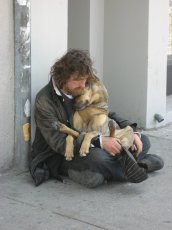 I wrote that paragraph last night and sat thinking for a long time. If God is not in my life to fix me, then why is he here? Somehow, all my theology seems to circle back to relationship… where it should start in the first place. It took me years to learn this with Kimberly–what we both need from the other in our brokenness is compassionate presence, not problem-solving. But God is different from Kimberly–she can’t fix me but he can. He knows exactly what I need and how to provide it. So why doesn’t he?! oh… maybe he does… maybe what I truly need is his compassionate presence.
This is so counter-intuitive for me. If he loves me, doesn’t he want to remove my pain? If he can heal me and doesn’t, is he not callous and unloving? Imagine a doctor with wonderful bedside manners who refuses to cure his suffering patient. And perhaps here is the answer to my riddle. When I treat God as my doctor, I forget he is my friend, my dearest friend who holds my broken heart in his tender hands. My focus locks on my disease instead of our friendship.
I woke up this morning with a nameless dread which slowly distilled into a sense of the pointlessness of my life, and a fear that nothing will change. What did I do this week? I stained the wooden borders around our yard, but in a couple of years I will have to do it again… and to what end? I exercise, clean, shop, cook… a meaningless round of repetition. I enjoy my job in the library, but what difference does it make in the world? Well, it provides me a salary so that I can repair appliances, buy groceries, pay bills… and then do it all over again. When will I find real purpose and direction for my life, something meaningful? As I lay in bed, the thoughts of last night drifted into my mind. So instead of asking God for a fix, I simply shared with him my anxiety. In the end, what if the great purpose of my life is not something, but Someone?
 Kimberly woke me at 2 a.m. on Thanksgiving morning. She felt uneasy, restless, and her heart was racing. I couldn’t find the pulse at her wrist, so I tried her neck–boomboomboomboom–the staccato thumping of a quarter-mile sprinter, probably 200 beats a minute. That scared me. We were at her aunt’s home and I had no idea where the hospital was… I didn’t even know our address. “Should we go to the ER?” I asked. She said, “We can’t afford it, we don’t have insurance.” I quickly answered, “That doesn’t matter.” She responded, “I don’t want to sit there for hours in the waiting room. By the time we see a doctor, I will have no symptoms to check. Let’s look it up on the internet.”
WebMD called it “Supraventricular Tachycardia”– her heart’s electrical system was misfiring–and we should go to the emergency room if it “persisted”–how long is that?! Her veins had been drumming for 10 minutes, but she had none of the listed signs of heart failure, so we kept reading. It offered some home fixes–cough, gag, or shove her face in ice water to shock her pump steady. She tried some dainty coughs, afraid of waking up others. I told her to cough hard as I kept my finger on her jugular. Within minutes the beating slowed.
So, tell me… what are you grateful for this Thanksgiving?
Matthew 1:4 And Nahshon fathered Salmon.
The name Salmon appears only once in the Old Testament, at the end of Ruth in a four-verse genealogy. (He appears one other time as Salma in a mirror genealogy of Chronicles).

In the town of Bethlehem, Salmon’s son Boaz plays supporting actor in the romance play Ruth. As a historical introduction to Ruth, the book of Judges tells of the steep moral decline in Israel, ending with a 3-day civil war in which tens of thousands of Israelis are killed. Bethlehem was at the epicenter of this huge national crisis for it all began with one of their own daughters being brutally gang-raped and dismembered. Without a timeline we do not know whether Salmon was a soldier in this battle, but he certainly struggled against the corruption that engulfed his country.
Salmon lived in the days of the Judges, and that book finishes ominously, “In those days there was no king in Israel; everyone did what was right in his own eyes.” But springing up from this maelstrom of evil is Ruth, a book of hope, whose last verse reads: “To Boaz was born Obed, and to Obed, Jesse, and to Jesse was born David.” That is to say, King David, forefather of the promised Messiah. Yet Salmon had no glimpse of this hope. He died in the night that swallowed his nation.
In spite of this, Salmon (according to Matthew’s genealogy) was in the center of the world’s great channel of redemption. Without knowing it, he was the father from whom the Christ was to be born. His life and history and progeny were surrounded by God’s richest outpouring of grace, the giving of His very Self to the world. How might this realization have lit up his darkness with hope, his trials with patience, his life with purpose? And amazingly, we are each in that very place of Salmon… in a far better place, actually.
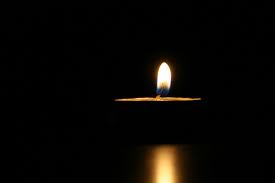
We are not simply in a long line of succession through whom God’s grace will eventually come, but we are today channels of God’s grace to the world. The Messiah has come. He is here. If Christ is in us, then He is shining out from us to the world, despite how troubled and confused and pointless our lives may seem or how foreboding the shadows. I am his candlestick, and it is mine to burn, however feebly. It is His to shine that light where He sees fit, and He always makes the best use of every flicker. I am His vital partner in this bedraggled world’s salvation.



 Janathan Grace Reflections