 Yesterday Kimberly was reading to me from Anne Morrow Lindbergh’s “Gift from the Sea,” a breeze of calm and insight from the ocean by way of the author’s soul. Anne spoke of the slow drift between spouses and the need to restore the purity and simplicity of the first wave of love. Berly and I are coming up on our fifth anniversary (May 10), and neither of us want to return to those early days of our relationship. Folks remember the romance, the excitement, the uncomplicated acceptance of one another, the overlooking of each other’s faults and feel sad that those intense feelings and sense of inseparability are gone.
Kimberly and I feel sad rather for a culture that believes romance is the fullest expression of relationship. We would never want to trade what we have now for what we had then. It was pure and simple then because it was so superficial. We spent many hours every week for two years sharing openly with one another about the things closest to our hearts, so we knew one another fairly well at a basic level before we married, but knowing the basic truths about someone is so far short of really knowing them and connecting with their heart, which is why the first year of marriage is often so hard. I know it was for us.
 Like marriage, a sailboat on her maiden voyage looks sleek and beautiful, there are no rents or dings, and she slices effortlessly through the water. But it is only after years of riding with her through the storms, risking life and fortune, and recalling the story of every rattle and dent that the captain knows his boat as no one else ever will, and the bond is deep and fierce. As we share life with mutual understanding and love, the original beauty and delight I found in Berly fills with meaning and substance. For me, every line of her face is an etching of her soul. The roots of our hearts grow ever deeper and more entwined. To pull us apart now would rend our vitals.
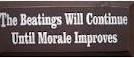 Perhaps those who are concerned about my emphasis on grace are worried that I may encourage irresponsibility. Some folks seem inclined to let things slide, choose the easy way, care too little for the concerns of others. We think they need a “kick in the pants.” I use “seem” to describe them because we really don’t know the issues they are struggling with, the energy, insight, support they do or do not have and so forth. The closer I am to them, and the more perceptive I am at understanding others deeply, the more clearly I may be able to see what is at work inside them, but if they are clueless about themselves, I can easily be misled. It is common to confuse fear, shame, depression, fatigue and the like with laziness, and the last thing such folks need is a kick.
As I see it, those who are truly irresponsible create two problems, and these can be profound depending on the level of their negligence. The first is what it does to them, and the second is what it does to others (and their relationships). When  we say that these folks “take advantage of grace,” I think we mean that grace allows them to be irresponsible (does not force them to be responsible). But when they choose this course, they are retreating from grace rather than embracing it, and the result, far from being to their happiness, is to their unhappiness. They do not “get away” with it because sin always has its natural consequences–sin is always a harmful choice, to the ones acting as well as to everyone whom they touch (that’s why God warns us against it). Grace can only bring redemption to such a situation if it is embraced, and this can only be done by faith, which is to say the slackers now see things God’s way. Given this vantage point, I think we would pity the irresponsible, and if we have some role to play in their lives and are motivated by love, we may wish to warn them from this folly and invite them back to grace.
The second problem with the neglectful is their impact on others and their relationships, and this is where many feel grace is inadequate and the law must be applied. What do we mean by “law” and “grace” in this context. Is there something one does that the other does not? If law is about restriction and grace is about freedom, then our call to apply law is to bring force to bear, either the force of a guilty conscience (say, by rebuking him) or the force of retribution or punishment (say, by taking his keys). But why do we think these actions are connected to law and disconnected from grace? Is it not possible for grace to stir the conscience or give a wake-up call of negative consequences? To my mind, the whole distinction lies in what motivation prompts the act.
 It seems to me that I turn to the obligation and punishment of law not from concern for the slouch, but from concern for the law (that the law is respected, obeyed) or concern for the “victim” (who may be me). It often seems to us that in order to side with the victim, we must side against the negligent. Thankfully, the grace of God does not need to love one less in order to love the other fully. He wants the best for all concerned, and he will do what is best for all concerned. If grace sends negative consequences on the irresponsible, it is not because God takes umbrage and is punishing them, but because he knows this is the best he has to give, the choice of extravagent love, not love withheld. It is his invitation to redemption. The exile of Israelis from their land is a prime example of this “tough love.” Far from this being an act of God’s impatience and abandonment, it was the richness of his love at work to restore them to their true selves and reawaken their immensely fulfilling love relationship with him.
Mike Yaconelli in Messy Spirituality:
 It was time for the Scripture reading and a girl shuffled toward the front of the church. What a moment for Connie. She had finally mustered enough courage to ask the pastor if she could read the Scripture. Without hesitation, he said yes. For years Connie had stifled her desire to serve in the church because of her “incompetencies.” Reading was extremely difficult for her, and Connie had a terrible time enunciating clearly. But she had been in this church many years, and she was beginning to understand the grace of God. Jesus didn’t die just for our sins; he died so people who couldn’t read or speak could read and speak. Now she could serve the Jesus she loved so much. Now she could express her desire for God in a tangible way.
Connie’s steps were labored as she made her way to the front; one leg was shorter than the other, causing her body to teeter from side to side. Finally, she was standing up front, looking at the congregation with pride and joy. The congregation was silent. Too silent.
 The screaming silence was covering up the congregation’s discomfort. Clearly, most of them were trying to understand what Connie was doing, and they were trying not to notice her many incompetencies. Her eyes were too close together, and her head twisted back and forth at odd angles while her face wrenched from one grimace to another. Connie began to read, and stammering, stuttering, she stumbled proudly through the passage in a long sequence of untranslatable sounds, garbled sentences, long tortuous pauses, and jumbled phrases. Finally, the reading was over, and the congregation was exhausted.
Connie didn’t notice the exhaustion. She was ecstatic. Her face seemed no longer distorted, only full of joy. Her cheeks were flush with pride; her eyes were sparkling with the joy of accomplishment; her heart was warm with knowing she had served the congregation, participated in her faith. Yes, she would remember this day for a long time. How wonderful it was, she thought, to no longer be a spectator in church; she was the church this morning!
Thank God her mental capacities were limited. Thank God she was not able to discern the faces of the congregation or she would have crumbled in despair. Thank God she wasn’t able to sense what people were really thinking. Almost everyone in the congregation was thinking, This is an outrage! I know this is what they were thinking, because the senior pastor, my father, was ordered to attend an emergency board meeting after the service.

Stain Glass Masquerade
by Casting Crowns
(click image to hear)
“How did this happen?” they demanded to know. “What were you thinking?”
“Connie wanted to read the Scripture,” he replied softly.
“Well, let her stand at the door and pass out bulletins, or help in the mailroom, but don’t have her read! The girl can’t read or speak. Her reading took ten minutes! The church,” they said, “is not a place for incompetence.”
My father believes, as I do, that the church is the place where the incompetent, the unfinished, and even the unhealthy are welcome. I believe Jesus agrees.
Matthew 1:2 Abraham fathered Isaac, Isaac fathered Jacob, Jacob fathered Judah and his brothers.
Finally brothers! Until now this family, chosen to be a great nation, barely survived with one child of promise per generation. The world must wait until Abraham’s great-grandchildren before the redemptive family tree grows more than one branch. I know that feeling well—-waiting. When God’s promises to redeem my situation seem long overdue, I begin to doubt God’s love. Why is he taking so long to respond? Doesn’t he care? For instance, why is God taking so long to fix my depression?
 Peter throws out an intriguing idea, “The Lord is not slow about His promise, as some count slowness, but is patient toward you.” God is not distracted, uncaring, or negligent about my needs. It is not we who are waiting for God to act, but God who is waiting for us to be ready, who watches our progress with sympathy, not disappointment. His patience is not a bridled impatience, but genuine good will. He knows it takes time. He is okay with it taking time. In fact he plans for it to take time. He is patient. In my urgency to reach the resolution, I want to hurry the process, but God’s focus is on the journey, his grace is at work in the process itself. Too often I miss his grace for today in my anxiety for the bigger deliverance that is farther down the road. My impatience is really towards myself rather than God. I blame myself for not growing faster, for bungling his stream-lined plans for me. But should we suppose that if Abram had had greater faith and faithfulness, he would have had a dozen sons at 39 instead of one at 99? Why have I always thought that God was in a rush?
 I think I have long been under the impression that God’s attributes are somehow in competition with each other. In this instance, his righteousness is at odds with his sympathy. He wants to hurry me into holiness, but he is being “patient” with me, which basically means he is holding himself back from chiding or nagging or otherwise showing his frustration at my slow growth. He is impatient, but hiding it. I guess that is how I have always pictured his so-called patience, and why I am so prone to agree with “God’s” condemnation of me. I need a new God, a good God, a God who is truly patient, not just pretending to be patient.
Matthew 1:2 “And Isaac the father of Jacob”
 No, that was not Isaac’s choice. He wanted to be known as “Isaac the father of Esau.” Esau was the first born, a macho man, and his favorite son. For those familiar with the Bible stories, “Jacob and Esau” rolls easily off the tongue, but for Isaac it was “Esau and Jacob.” Everyone knew Esau was heir apparent, standing in the wings for his call onto the stage as head of the family and forefather of the covenant people. And I expect most folks approved. Esau was clearly the one who commanded respect, the one with courage and boldness, the natural born leader. Jacob was a mama’s boy, always running away, always cowering behind some trickery. In the hard-scrabble land of the Middle East, Jacob was a Loser.
When Isaac was old and blind and felt death approaching, he prepared for Esau’s coronation, only to have Jacob filch the throne by deceit. Oddly enough, Jacob was God’s pick from the beginning. What did God see in him that made him the obvious choice? Even children know who to pick for their team—the one with the most abilities—and through that lens we read Scripture. We suppose that God chose Mary to be the mother of his Son because she was pure and good and obedient, so good as to be sinless according to some theologians. But the angel of God in Luke clearly tells us why she was chosen—it was based on God’s grace he says twice over, not on Mary’s virtue. The Greek word for grace, Charis (in KJV “highly favored”), is not a reference to how deserving Mary was. She was picked by grace, not merit. “How Lucky!” would be a closer rendering than “How worthy!”
All through history God chooses those who don’t deserve him, who know they don’t deserve him, who are convinced they will never deserve him, and have at last opened to his welcoming embrace. It is the strong, talented, and self-sufficent who find grace, full grace, undeserved grace, hard to swallow. I am so grateful that our God is “the God of Abraham, Isaac, and Jacob,” yes, even Jacob… especially Jacob. God loves me with all the strength and intensity of his great heart. How lucky am I?!
Matthew 1:2
“To Abraham was born Isaac.”
 Those five words are packed with dramatic history. The first seed in the family tree of salvation was barren. I think I would have written it, “To Abraham…. was……. born…………….Isaac. Abram had reached the end of a century with no son by his wife. He is known as the Father of faith, the Father of the nation of Israel. His very name meant father, from the Hebrew Ab, and if this were not enough, God renamed him Abraham, father of a multitude! No wonder he and Sarah laughed, though it was a bitter chuckle I’m sure.
God does not set his watch by the earth’s revolutions. He is unhurried, sometimes maddeningly slow. “Patience” is one of the major Old Testament virtues, and it is not primarily an exhortation to longsuffering with our fellow men, but with our God! That is why it is often used as a synonym for faith. We usually think of faith as the courage  to confront great odds, when in fact, it refers more often to doing nothing at all, to simply waiting on God to act. For most of us the second takes far more faith than the first, and far longer faith. It is not God who is impatient with our progress, but we who are impatient with His. We cry, “How long, O Lord?!” and he says, “Trust Me. Wait.” Especially in our hurried day, slow is a 4-letter word. I wonder if we have lost our peace because it couldn’t keep up with our quick pace.
This is a wonderful word of grace to those of us who fear that God is disappointed, tapping his foot in impatience till we get it right. It is the direction we are going rather than the length of our stride which keeps us in step with God. He is not waiting for us to catch up, running after him with our little legs. He is here for the relationship, not for the performance. He wants the journey to be full rather than the destination to be reached quickly. Slow is a word rich with peace, wisdom, and power.


I can’t do another thing!
The Lenten season is past, but not my Lenten blessing. I committed to fasting from haste and hurry, and this became a remarkable source of peace for me, as I eased back on my sense of should. I started this process over the last decade as I gradually realized that most of the duties to which I felt driven were not from God, and that I could choose grace over obligation. As I ignored these duties, I felt the sting of shame and clung to grace rather than works as a remedy.
But my Lenten exercise did something very unexpected for me. Since I committed to the spiritual exercise of slowing down (and therefore accomplishing less), I was struck by the conclusion that God wanted me to rest. It was not only that I could choose to ignore the pressure of obligation, that God would be patient with me in doing less, but that God wanted me to do less, he willed for me to offload these unnecessary burdens. Grace demanded that I stop forcing my soul and start listening to it and choosing for its needs. God was not impatiently waiting for me to “hurry up and get with it,” but he was calling me to be as patient with myself as he was with me. For some time my mind has been convinced theologically that God is more patient with my rate of growth than I am, but after focusing 40 days on rest as a direction from God rather than a concession to my weakness, my emotions were also convinced. God has designed growth as a life principle to go at a slow pace, and if I try to push harder and faster, I will make things worse instead of better, like too much water and fertilizer on my squash. I have always been an overzealous fellow.
No doubt many folks go too easy, and would help themselves by picking up the pace, not on the trail of duty, but of grace, stirred by the anticipation and joy and wonder of being transformed, of discovering how rich and full life can be. Grace removes the drive of obligation not to make us spiritually comotose, but to set us free to find and embrace the richness of grace, its inspiration and glory and power and freedom and joy. I still have a long way to go, but I am laying one more foundation stone of grace in making this my Year of Rest.

 The law is good, as Paul says, and it has several beneficial uses. One use is to teach us what God is like, and provide insight on how we might be like him. Of course, all of Scripture (not just the commands) is designed to help us in this way whether history, teaching, prophecy, or the like. For those who want to be intimate with God and be shaped into his beautiful likeness, it doesn’t really matter whether a biblical teaching is grammatically in the command form. The only question is whether it will help me grow personally and relationally.
The word “should” has close links with law, and it carries several connotations. First, it suggests an evaluative role. It is telling us what would be a good or better course of action. This may have no moral connotations, such as: “You should try Ben and Jerry’s New York Fudge Chunk.” Second, and closely connected to the first, is an implication of pressure to act in a certain way. We could place it on a continuum to demonstrate this: Can—–Should—-Must. Again, this need not be concerned with morality: “You must try this app!” The third connotation of should, like the word law, is one of potential personal judgment. Even if this regards simply a choice of wrenches, the person who fails to do what he should is faulted. Something is wrong with him. He is defective or weak or stupid or belligerant. Finally, because it is poised to judge, should appeals to a particular motivation. It is not a positive motivation (as the first two connotations might be); it does not attract by the beauty or benefit or health of the choice. It rather motivates by the fear and shame of being bad, unacceptable, dis-graced.
I do not want to live my life being motivated by fear and shame. I want to be motivated by God’s love for me and my echo of love for him and others, in other words, grace. Sometimes the should of law is necessary to shape external behavior to curb the harm a person may do to herself or others, but as long as the individual is acting from fear or shame, it is only her behavior which is affected. Her heart is not growing in grace. It may even be shrinking. I think the primary judgment role of law and should is to help us recognize our real inadequacies and faults, not in order to shape our behavior but to awaken us to the gospel. Some folks think grace has no power to motivate, but I have found it incredibly powerful… that must wait for another post.
Given a couple of negative responses to my recent posts, I apparently need to explain what I mean by grace. I think there are some common interpretations of grace that can really take us down the wrong path. One of the most common misunderstandings of grace is to equate it with freedom of action while equating law with restriction of action. freedom and restriction of action are about method and context, while grace and law are about motivation and direction. Grace does not play the high notes or the low notes on this freedom/restriction continuum, but plays the whole keyboard. That is to say, it confines or releases as directed by love.

EVERY NOTE IS A GRACE NOTE
Law motivates by fear, shame, and guilt. These are very legitimate motivations, because they point out how screwed up we really are, but if we try to remedy our fear and guilt by making better choices, we are doomed by our imperfections. The fear and shame are not intended to drive us to work harder at being good, but to awaken us to our need of the grace of God (forgiveness, love, acceptance, strength, hope, blessing, in short, the gospel).

THE FACE OF THE LAW
Here is where confusion and misgivings easily catch us. We know that fear and shame are powerful motivators, they have profoundly molded our behavior and the behavior of others towards us. If you remove law, what will keep me in check? We think fear and guilt make us good, when they really only change our actions, not our hearts. Still, if this motivation is removed, what will inspire us to go in the right direction. If there is therefore now no condemnation, won’t I just act like a spoiled brat, won’t others “take advantage” of grace? No. It is impossible to “take advantage” of grace. If you try, if you decide to fulfill every “forbidden pleasure,” it will leave you more empty, lost, broken, and even farther from the blessings of grace–not because grace resists you, for it always has open arms, but because you resist grace, which is the way of true peace, fulfillment, joy, love. The only way to take advantage, full advantage, of God’s grace is to throw yourself whole-heartedly into his embrace.
Let me quote a reply I gave a questioning friend: In my mind “doing as I please” is a serious misunderstanding of grace, and is profoundly different from doing what my soul needs. The differentiation in my mind is not that the first matches my desires and feelings and the second matches my duty, but that the first matches superficial desires and feelings often at odds with my deeper feelings (e.g. choosing sex as a replacement for love), while the second is discovering my true feelings and true needs and seeking to meet those. At this point in my understanding of God’s grace, I believe that my soul’s truest needs are never in conflict with God’s will, and if they appear to be, I misunderstand one or the other.

SAFE HANDS
 I did not mean to suggest in my last post that our long, long lists of good behaviors are not in fact good. I simply want to point out that they are not paramount. Brushing our teeth, paying our bills on time, making soup for our sick neighbor are all good things, but the phrase, “the good is (sometimes) the enemy of the best,” comes to mind. This aphorism is usually used to promote even higher, more taxing behavioral standards for ourselves, but I would use it to change the value scale altogether, to set a higher value on heart issues than behavior.
When I stop to compare how I treat friends with how I treat myself, I am often dumfounded at how disrespectful, rough, and unsympathetic I am to myself. I would never tell a friend what I tell myself. If a friend called me and said, “I’m really hurting right now, do you have time to talk?” I can’t imagine responding, “I’m not free right now, I have to cut the grass,” or “Really the only time I have to talk is Thursday 6-7.” But that is exactly what I used to tell my own soul many times every day. By the way I treated it, I was basically saying, “Shut up! I don’t have time for you! The dishes are more important.”
Over the last several years, I have worked hard at sloughing off responsibilities that made my soul feel it was of less value than some task. Of course, this list is unique to each person. For instance, skipping a meal in order to finish a project was never a sacrifice for me–but I did often suffer by driving myself to grind through a project when my soul was weary of it. To each his own.
Many of you would be surprised at the things that distress me, and perhaps shocked at some of the things I have chosen to offload from my list of duties for the sake of my spirit. Filing my annual taxes is always troublesome, and while I was still single, sometimes distressing. As April 15 drew closer, my distress increased, but I had no emotional energy to force myself to complete them. So in an effort to give my soul breathing room, I chose several times to file my taxes late and pay the resulting penalty. Poor stewardship? Of my money, yes, but not of my soul, and my soul is more important than money. In fact, what more valuable investment than supporting my soul…so I guess it was financially good stewardship as well. Thankfully, that spring dyspepsia is now eased with the presence of a life partner.
God gives us the strength to fulfill his call, but does he give us the strength to fulfill the calls of social norms or family expectations or friends’ needs? I have too often assumed that my soul’s cries for help were the voice of temptation rather than the voice of truth, the voice of God calling me to rest. Pain is the body’s signal that we should stop. If we listen to it as a practice, then sometimes choosing wisely to override it can actually benefit the body, but if we typically ignore the pain signal, we will tear down our bodies. I believe the same for our souls. It knows better than our brain when something is amiss and needs addressing, and if our inclination is to ignore it, we tear it down.

BE AS GENTLE TO YOUR SOUL AS YOU ARE TO YOUR FRIEND'S



















 Janathan Grace Reflections