I have so often misconstrued Scripture, oblivious to the grace that created each thought, that I found I could not read the Bible without feeling condemned. My legalistic filter poisoned the Bible for me. I studied it so diligently and thoroughly from this skewed perspective, that every re-reading of its pages undermined my hold on grace. I have gone several years now without any regular reading of Scripture. It has been just me and God (with Kimberly’s help) working to free me from this darkness. I think I have gotten enough grounding in grace that I can return to the Word to discover freshly its life-giving power. I’d like to share with others the grace I discover in these pages.
Matthew 1:1 This is the genealogy of Jesus the Messiah the son of David, the son of Abraham:

Matthew’s genealogy was written for the Jews, and so we assume he wrote it as he did (beginning with Abraham instead of Adam, for instance) to tap into the Jewish sense of identity and even pride in their ancestry. I was beguiled by Jewish veneration of David and Abraham into forgetting their great failures, which the Bible intimately describes. When Matthew highlights the marred women in Jesus’ ancestry, I see a wink from God, as though he took as much pleasure with the seedy side of his Son’s family line as the royal side. Israeli ancestry was passed down through the father, so Matthew carefully traces Jesus genealogy from Abraham through David straight down to Joseph… but at the last moment seems to dismiss its relevance by remarking that Joseph was not Jesus’ father anyway (biologically speaking). Even the greatest heroes, anointed prophets and kings, passed on nothing of their character, authority, power, or greatness through their bloodlines to Jesus. Rather all flowed the other way, from Christ to them. Jesus is not presented here as the greatest of a long line of great men. He is juxtaposed against all others—all others are sinners and he the only Savior; all others receive grace, he alone is the source of grace.

So when Matthew begins by calling Jesus the Son of David and of Abraham, he does not only want us to call to mind their greatness, but also their failures. THEY TOO needed a Savior. The story of God’s grace is so profound in both these men’s lives. Abraham, as Paul repeatedly reminds us, was declared righteous not by his goodness, but by faith. This justification and life he received was not the reward of faith, as though faith is such a wonderful thing that it calls for the reward of eternal life. Faith was merely the access point for grace, like a receiver for radio signals or a solar panel to absorb the sunrays, or an open hand to accept a gift offered. Abraham did not earn anything by some virtue of faith, for faith itself is a gift. In his natural self he was rather characterized by unbelief, not only regarding Ishmael, but even Isaac’s birth.
David was also deeply flawed, a murderer and adulterer (both capital crimes). The Psalms pour out his acknowledgment of his sinfulness and need for God’s grace. I have seen David as a hero to emulate, a man responsible for his own goodness and greatness, as though his title, “man after God’s own heart,” was about David replicating God’s virtues rather than God’s own heart being infused into David. Abraham and David were two of our greatest, but both knew they needed a Savior–that is what I want to emulate: a conviction of my neediness. I am on spiritual par with the holiest and greatest saints in history: the ground is all level at the foot of the cross, and we not only start our spiritual journey there but end it there as well. We all come from the gutter and end up in the palace, crowned as royalty, and the only bridge from that beginning to that ending is grace.

God built the bridge; we walk over it.
This is a letter from John Peter to Brennan Manning, one of my favorite authors on grace, a Catholic priest who was black-balled for getting married (to Roslyn).

They Tried To Make Me Go To Rehab... I said, "No, No, No!"
My wife, Lolly, and I were at a breaking point. I did not think I could continue to stay married to someone who was so self-destructive! But I wanted to consult you before moving out or calling a lawyer. When I did call you, Roslyn said that you were in route to Providence, Rhode Island, for a week of renewal at a Catholic church there. Ros also said that you had a layover in Newark to change planes. So I immediately drove to the Newark airport and, believe it or not, found you in the midst of that huge airport! I told you what was going on, and you said that I, under the circumstances, could leave Lolly—after twenty-five years of alcoholic drinking! So I drove back to our house in Manhasset, New York. When I arrived there some three hours later, I found Lolly all cleaned up and as sober as I had seen her in a long time. She announced to me that you were coming for dinner!
What had happened was some conservative Catholics at the church you went to visit in Providence found out that you were married and reported it to the bishop. The bishop then forbade that parish to have you speak there, so what did you do? You called Lolly and said you’d like to come to dinner! So I had to turn around and pick you up at LaGuardia and home we came. Lolly could not have been a more willing or welcoming hostess. She loved you, Brennan. After dinner I retired, and you and Lolly sat up and talked almost all night! She had sworn that she would never go back into treatment again, so you can imagine my surprise when, the next morning (Sunday), you told me that Lolly agreed to go back to Brunswick Hospital Rehab….
As you know, Lolly stayed sober in AA for the rest of her life—over twenty-five years! She passed away September 27, 2009. And the gift of her longtime sobriety was something that my children and I found as close to heaven as I suspect we’ll see this side of the grave.
–from All Is Grace, Mannings recent autobiography, though I would much more highly recommend The Ragamuffin Gospel or Abba’s Child if you want a taste.
For the last two months or so I have awakened each morning with a great heaviness of spirit that nothing seems to lift, a feeling of exhaustion and unhappiness. The only thing that seems to help is going back to sleep, which I have regularly done (since I work nights, I can do that). Just lying down, even without sleep, seems to help a good deal. It is my way of giving my soul a rest, removing all demands and expectations for the moment. The weight gradually lifts during the day on most days to the point that I can do something “productive” without cost to my soul. I have no energy for the creativity, vulnerability, and/or interpersonal connection that social media involves. My sister Mardi finds that she is pushed to express her feelings in art when she is depressed, but the opposite happens to me. So I stop blogging.
Some folks have suggested that I suffer from seasonal affective disorder, which comes out in the winter. But my struggles come out indiscriminately throughout the seasons, probably more affected by my life circumstances. Environment does impact my feelings significantly, cloudy days often cloud my spirit… in fact, when I can enjoy an overcast day it is a good indication that my soul is at rest.
Kimberly and I just had a week’s vacation at the beach, and it was very refreshing. Each day was quiet, slow, soothing. We slept in, read from a favorite author, and then talked about our thoughts and feelings; we had lunch, went for a long walk on the beach or in the woods with our dog Mazie and settled into a relaxed evening. We take great comfort in one another’s company and our sweet Mazie is a constant delight to us (Mazie is short for Amazing, so with our surname, Amazing Grace). I was hoping that calm would carry over into our days at home, but the personal gravity pulled me down as I rose from bed today, our first morning back. Reminds me of John Mayer
To all those who face this: my understanding and empathy are with you. May you find little landings of peace on the long climb, short embraces of sunlight piercing through, unexpected touches of gentleness for your battered soul… and when you need it, take a nap!
I phoned an old friend today. He wasn’t in and I had to leave a message. In anticipating his return call, I imagined Bob asking me, “How are you?” What would I say? What does the question mean? How am I this moment or overall? How am I in reference to what scale? How am I feeling or how is my soul or how are circumstances or…? Yes, I do complicate the simplest things, but it seems to lead me to a deeper understanding.
I think most people want a superficial (and pleasant) response, but my friends have learned to expect an honest, reflective answer from me… which begs the question, what is genuine? Consider margarine–is it imitation butter or genuine margarine? The truth is that I have been struggling for a few weeks about my self worth because I have been applying for a lot of second jobs, even minimum wage jobs, to cover the loss of income from Kimberly leaving her employment, and I have had no responses, as though I have nothing of value to offer the world. My overall emotions continue to improve in the long view, but I still experience much more psychological turmoil than I wish, a mark of how much farther I have still to grow. So the truth is that I am struggling.
However, I am like a cancer patient going through successful chemotherapy. In spite of all the pain and sickness, signs of improving health are very evident. I am on the road to recovery. One can feel miserable while being in a very good place personally. So the truth is that I am doing well, very well, increasingly well. That does not mean that I am feeling happy or content. Sometimes life is just hard (often hard for some of us), but it is well with my soul.
So, I haven’t posted for a while. Kimberly is away in New York leading a retreat for L’Arche members. I’m looking for a second job. I have an interview this Thursday which looks quite promising, a weekend supervisory role. While Kimberly is gone, I’m trying to get a few things done with which to surprise her. Primarily painting the living room a color we agreed on. Finding a close color match has not been as smooth as I expected, so I hope she is okay with the shade. I know she will appreciate not experiencing the fumes and mess that the painting will create.
I conducted the wedding for my sister-in-law and husband weekend before last. It was the first time I met many of my extended family in-laws. I have a new appreciation for destination weddings (this one in Fort Myers, FL). Spending several days with in-laws can create the basis for much quicker assimilation. As I told everyone, this was the first time I felt I was part of the family instead of part of Kimberly’s family. It felt good (though a little stressful to conduct a wedding for an in-law… if it goes badly… which thankfully it didn’t). I did manage to screw up the new name of the couple when I presented them after the kiss, but everyone seemed to be okay with that… after all, a beach wedding tends to be more casual (it was the first time I ever wore a suit in bare feet!) Lots of cameras and lots of photos and video. But I’m having trouble downloading them. I’ll try again later.
I married off my sister-in-law today and gave this message.
The Third Strand Makes All the Difference
They say love is one long sweet dream and marriage is the alarm clock. I can testify to the truth of that. But waking up is not a bad thing unless you want to spend your life in a coma. Erin & David have been through a lot together already and gotten to know each other pretty well. I’ve been impressed to see them work through major decisions like buying a house, employment changes and relocation. Still marriage always brings in new dynamics.
Before marriage there is always a question, you have to have a backup plan, you can’t really trust the future. Marriage is a commitment for life. It gives the safety you need to work out personal and relational issues, strength and courage to engage in difficult endeavors, and instead of a place to call home, you will have a person to call home, a resting place for your heart.
No longer I and you, but us: as the song says, “Me and You Against the World”. Everything that happens to you happens to the other as well. Every relationship you have becomes part of the marriage (as you can see here today). No decision you make will be for you alone, but will involve your partner in some way. You start thinking about “us” instead of “me.” What does “our” future hold is a very different question from what does “my” future hold.

In Ecclesiastes, a cord of three strands, is about three persons: husband and wife, and the third I am inclined to believe is God himself. But I would like also to consider the three strands of love, three crucial expressions of love, the dynamics that hold the strands together. I call them “graces” to emphasize that to work well, they must flow not simply from you, but from God’s heart through yours to your mates—loves 3 strands.
Grace of Acceptance
Love is full of delight, so accepting one another should be easy, right? But you are human, you will fail and hurt and misunderstand each other. All marriages have these struggles, but healthy marriages acknowledge and face them honestly. This does not mean detente where you just sidestep issues, but a real effort to understand, respect, and make room for your differences. Learn to recognize and respond to one another’s true needs, the needs of the heart.
I can’t tell you how much personal healing and growth I have gained from Kimberly accepting my weaknesses as well as my strengths. It is scary. It may feel uncomfortable to cry in front of your wife, for instance, but if I do not let her in, I stay locked inside myself. When you are given permission to be yourself, to bring all of who you are into relationship, and be embraced as a whole person, it gives you the safety and strength to accept yourself and grow into the beautiful person God designed you to be.
The problem comes when your spouse is just “wrong.” How can you accept that? Trying to settle who is “right” and “wrong” will probably make matters worse. Accepting them is not agreeing with them–it is rather trying to understand where they are coming from, what their needs are, and how those needs can be met. Where do you get the strength to love unconditionally? Only from God.
Grace flows from Him into us before it flows out from us to our spouse. We need to discover ourselves as loved unconditionally before we have the strength and security to love another truly. Author and minister Brennan Manning says, “God loves you as you are and not as you should be! Do you believe this? That God loves you beyond worthiness and unworthiness, beyond fidelity and infidelity, that He loves you in the morning sun and the evening rain, that He loves you without caution, regret, boundary, limit, or breaking point?”
Grace of Trust
Giving someone your trust is a great act of love. You can only be vulnerable with the deepest parts of yourself, those things you want to hide from everyone, to the extent you can trust the other person. But you can’t order trust for overnight delivery. It is a life long intentional process. You can’t make someone trust you and you can’t simply choose to trust another. A deep level of trust is never simply granted to someone, even the one closest to you, but is earned step by step as you share your inadequacies and receive empathy in return. Everyone doubt’s their own loveliness. You can each be the reflection of God’s loving eyes to the other.
There will be stumbles and falls along this journey of building trust. Expect it. The pressures of the world blast against you and blow you off course, but this is the bedrock to which you always return, this commitment you make today and every day after: to live in integrity–being honest, understanding, and accepting, out of a heart growing in love. I have seen that you two have such a commitment to being honest with one another, that you are willing to show each other your emotions, even the difficult ones.
Nothing is more powerful a support than someone knowing your failings and loving you regardless, I don’t mean the failings that are obvious, but the ones you have hidden all your life. Out of fear of rejection you covered them up, you felt unlovable because of these shadows. But how can we ever feel secure until we find someone who will love us after knowing us completely? God does this for us, but we need someone to show us this, someone with skin on, with a voice and smile and hug we can really hear and see and feel. Having experienced this with Kimberly, I can say this has been the truest revelation of love to me.
Grace of Sharing (Listening, Understanding, Respecting)
Set aside regular times when you turn off the TV, turn off your cell phones, forget your To-Do lists, and concentrate on listening to one another. It will take hard work and a lot of time. I can tell you ahead of time that you will need to learn a new language and culture, become an anthropological researcher.
Erin, you women are complicated creatures. You understand each other by some magic telepathy. Please remember that our brains don’t tune to that channel. If the man asks, “How are you?” and you say, “Fine!” he will take your word for it, give you a peck on the cheek and sit down with the remote. You have 49 distinct meanings for ‘fine’ depending on your intonation, your eyebrows, your lips, your hands, your posture. You are so eloquent… but we completely miss your subtlety. We can only understand what you say plainly with words.
David, never assume anything. You don’t know women, not even Erin. The good news is you can learn, the bad news is it will take a lot of effort and patience. You have to ask questions repeatedly. You probably won’t even know the right questions to ask, which is okay because Erin already knows what she wants to say. You just have to open the door. Even if you don’t understand at first, but really listen, she will feel better. By listen, I don’t mean nodding and saying “uh huh” as you watch the Colts fumble. The DVR was invented to save marriages.
 Kimberly and I come from different families, backgrounds, experiences, and personalities, and when she shared bits and pieces of her perspective with me, they didn’t fit into my worldview. It sounded like Chinese.
We all have unique perspectives, which seem normal to us. If my point of view is normal to me, then your point of view has to be abnormal. We all stand at the point we think is the correct balance. To the right of us are conservative tightwads and to the left are profligate spendthrifts. To the right of us are workaholics and to the left are lazy bums. On this side are the messy and on the other are the clean freaks. Where you stand is always “reasonable” (otherwise you wouldn’t stand there). This means the other person’s position is “unreasonable.” So you will always grudge yielding.
Kimberly wanted me to vacuum behind the sofa where no one could see the dust, not even us. It was “unreasonable.” Many of you say “Your wife is right, that is very reasonable. What is unreasonable is cleaning behind the hot water heater.” But those who clean behind the hot water heater see that as normal, it is the people who scrub their driveways that are bonkers. Whatever your position, it is what it is. Erin, your view is entirely legitimate. David doesn’t have to agree that you are right and he is wrong, but he needs to respect your perspective and make room for it as much as he is able. And the same for you Erin. That big scrap of metal he wants to keep looks like trash to you, but to him it is a little piece of a dream. Let him have a shed to stack his dreams in.
The source of these expressions of love, these graces of trust and vulnerability, listening and understanding, respect and acceptance, the source is God, the strand that keeps the cord from unraveling. It is crucial to your marriage that each of you individually and as a couple develop a deep, honest, trusting relationship with God, find in him the grace you need for yourself and one another. His love is limitless as the sky, constant as the sun, deeper than the ocean, eternal and unconditional as only God Himself is. In Him you will find life, and through him your marriage will be a little taste of heaven (with a few quarrels mixed in).

This is a powerful picture by a poet/author of the struggle of depression.
It’s the other pole of life, the negation that lives beneath the yes; the fierce chilly gust of silence that lies at the core of music, the hard precision of the skull beneath the lover’s face. the cold little metallic bit of winter in the mouth. One is not complete, it seems, without a taste of that darkness; the self lacks gravity without the downward pull of the void, the barren ground, the empty field from which being springs.
But then, the problem of the depressive isn’t the absence of that gravity, it’s the inability to see–and, eventually, to feel–anything else. Each loss seems to add a kind of weight to the body, as if we wore a sort of body harness into which the exigencies of circumstance slip first one weight and then another: my mother, my lover, this house, that garden, a town as I knew it, my own fresh and hopeful aspect in the mirror, a beloved teacher, a chestnut tree in the courtyard of the Universalist Meeting House. They are not, of course, of equal weight; there are losses at home and losses that occur at some distance; their weight is not rationally apportioned.
My grandfather, whom I loathed, weighs less to me in death than does, I am embarrassed to admit, my first real garden, which was hard-won, scratched out of Vermont soil thick with chunks of granite, and a kind of initial proof of the possibility of what love could make, just what sort of blossoming the work of home-keeping might engender. Sometimes I seem to clank with my appended losses, as if I wear an ill-fitting, grievous suit of armor.
There was a time when such weight was strengthening, it kept me from being too light on my feet; carting it about and managing to function at once requred the development of muscle, of new strength. But there is a point as which the suit becomes an encumbrance, somthing that keeps one from scaling stairs or leaping to greet a friend; one becomes increasinglly conscious of the plain fact of heaviness.
And then, at some point, there is the thing, the dreadful thing, which might, in fact, be the smallest of losses: of a particular sort of hope, of the belief that one might, in some fundamental way, change. Of the belief that a new place or a new job will freshen one’s spirit; of the belief that the new work you’re doing is the best work, the most alive and true. And that loss, whatever it is, its power determined not by its particular awfulness but merely by its placement in the sequence of losses that any life is, becomes the one that makes the weighted suit untenable. It’s the final piece of the suit of armor, the plate clamped over the face, the helmet through which one can hardly see the daylight, nor catch a full breath of air….
After years and years of resisting, of reaching toward affirmation, of figuring that there must always be a findable path, a possible means of negotiating against despair, my heart failed. Or, to change the metaphor, we could say what quit was my nerve, or my pluck, or my tenacity, or my capacity for self-deception.

My sister Mardi emailed me this a few years ago:
 On NPR I heard a really sweet story of a Dad and his little boy. The little boy had had a serious illness, had nearly died and had a long hospitalization and lots of surgery and treatments. Through it all he had clung to his Teddy Bear, Toby. Even after he had gotten better, he carried Toby with him everywhere. Then when he was 7 the family was on vacation and when they got home, Toby was missing. They told him and he said “I don’t know how I can go on without Toby” and then he said “I feel like I’ve lost my soul”!
Well, his Dad promptly got on the next plane back to Anaheim and went straight to the hotel. The hotel people looked and looked and asked the staff and found that the bear had been found by a cleaning person, but it was in a trashcan and so they had thrown it out. Undeterred, the father asked where the trash was put. They showed him the large (size of a semi truck) dumpster in the back. Good news, the truck had not yet come to pick it up, it was scheduled to pick it up the next day….bad news, it was completely sealed with no way of getting into it. But, as they were talking about it, the truck drove up! The father convinced half a dozen of the hotel employees to go with him and help him look for Toby. He said that they were all parents and understood why he needed their help. He also offered $100 to the person who found the bear. So they all get in a van and follow the garbage truck to the recycling facility. (at this point I am crying in the car as I am listening to the story unfold) Now, this facility is not just a city dump; it is a huge building with many bays where the trucks pull up and cranes lift off the dumpsters. Inside is an area the size of an airplane hanger with all sorts of equipment and vehicles and people working. The people at the facility are not going to let them go in there. But after a lot of talking they agree to shut down the equipment and let them look for Toby….but only for 15 minutes.
 Well, when they empty out the dumpster on the floor, he said it was a huge mountain of garbage, bigger than he could have imagined. It was all runny with a lake of brown garbage liquid with all these plastic bags sitting and floating in the brown goo. The hotel people jump in and start tearing open bags looking for the bear. The father is overwhelmed by the enormity of the task but begins tearing open bags too. Then a number of the employees of the facility put on their gloves and begin wading through the muck tearing open bags too! (I’m bawling in the car). There are now about 18 people looking through the mountain. But as the father looks at the size of the pile and the number of bags, he realizes in despair that it will be really impossible to look through it all. And in his heart he just says “Toby, we’re not going to be able to find you unless you somehow show yourself”. He said that he is not a particularly spiritual guy, he’s an accountant and auditor…. a “just the facts, ma’am” kind of a guy. But as that thought went through his mind, he tore open a bag, and there was Toby, dry and clean. Everyone, of course was jubilant. The father immediately calls home to tell his little boy that he had found Toby. He said his little boy was happy, but seemed kind of matter-of-fact and the father realized that for the little boy it seemed that his father had just gone and gotten his bear back. The child had no idea of the super-human effort that had been accomplished for him.
 I have hinted at the positive direction that Kimberly and I are headed, but some might wonder if it is really worth all the pain and struggle. Believe me, we asked ourselves the same question many times, and for the first year or two of marriage I regularly wondered in the middle of a conflict if we had made a mistake in getting married. But we couldn’t help ourselves. Neither of us felt there was much benefit in a shallow relationship, and the only alternative we knew was to keep going deeper in honest understanding, acceptance, and respect for ourselves and one another.
As we worked through the foundational issues in our conflicting worldviews, some pretty amazing things happened within each of us and in our relationship.

UM... UH... SO ABOUT MY ISSUES.
Nothing has ever affected me so powerfully as being accepted for who I really am right now in all my brokenness (not for what I do, who I project I am, or who I one day will be). It did not come easy for either of us, but I cannot remember a single major conflict in the last two years and Kimberly has difficulty even remembering the hard times. Of course we were on the fast track, often talking 3, 4, even 5 hours a day trying to understand our fear, pain and depression, and each of us had already spent many years working through our own issues.
I could say that it was the best thing to happen to me since I heard the good news of Christ, but that would make it sound like a different thing than the gospel, and Berly is just my clearest experience of the gospel. I discovered God’s grace through her in ways I had never known it before. I want to encourage you with snapshots of my personal healing and growth as a result of our relationship (the changes in Berly are her own story to tell).

You Did WHAT?!
Let me start with my anger. I had been taught in youth that anger was either good (“righteous indignation”) or bad (“the wrath of man”). The difference lay in whether or not the one who exasperated me was truly wrong or guilty. If he was, then my anger was justified, if he was not, then my anger was aberrant. When I got mad, it was someone’s fault–me for illegitimate vexation or him for illegitimate behavior. The most important thing was to discover who was at fault and have them repent. The matter was thus fixed and the relational conflict resolved. If I thought he was at fault, and he refused to admit it, then I would forgive him. To avoid condemnation, I worked hard at justifying my temper and blaming the other person. I was good and he was bad. Being “right” became very important… it was the only way I could save myself from the shame of sinful anger.
Kimberly was afraid of my anger, and given my perspective, when she shared her discomfort, I only heard this as judgment of my anger and reacted defensively. But she did not have my take on anger: She was not blaming me, wanting me to agree with her, or asking me to change. She just wanted to share her feelings with me (which I could only hear as a demand for change). Because she respected me, wanted to understand and accept me, she kept affirming my feelings, even though they scared her, and I gradually came to trust that she really did accept me when I was cross, that she thought my anger was always “legitimate” because it was revealing to me my heart, not the guilt of the other person. As she accepted my defensive feelings in this way, she wanted to understand me better, so when she asked about my aggravation, it was not to correct me, “fix” my rage, or gain ammunition for shaming me out of it. She had compassion for me and my experience of anger.
In this harbor of safety where I slowly grew less defensive about my temper, with less need to use it to protect myself, learning to have compassion for myself, I started to discover what lay beneath my frown. From what was my temper guarding me? To hear these deeper throbs of my heart, I had to embrace my feelings with compassion . If I had to protect myself, it meant that I was afraid. With Kimberly’s help, I learned to have compassion for the fear behind my anger instead of shaming myself for it. Only with this gentleness could I feel safe enough to explore my anxieties. Berly always justified my fears, affirming that they always had a very good reason, I just had to uncover it. Discovering the roots of my fear (which often was a long process) led me to find the substructure, the actual beliefs on which I lived my life, and often they conflicted in some way with my stated theology.
 Again, Kimberly’s grace and acceptance gave me the support I needed not to shame myself for these faulty beliefs, but to see myself as the victim of these legalistic lies and to be led by grace into believing grace for myself, to discover that God’s grace was the healing for my fears. My fears were not the enemy. They were doors into grace: “‘Twas grace that taught my heart to fear, and grace my fears relieved,” in the words of John Newton. I had always thought this was a one time event brought about by the amazing grace of the gospel… as though I didn’t need the gospel of grace all through every day. I think working through my fears is a life long process of growth in grace, applying the gospel to each wound as I need it, believing each day more fully that God loves me completely, always, and without any strings attached.
Mark’s beloved dog Arden, a lab mix, is sick with perhaps a terminal illness. One option, says the vet, is to keep an eye on him and hope for the best. Mark writes about himself and his friend Paul:
“Emily Dickinson says that hope, that thing with feathers—That perches in the soul, cannot be silenced; it never stops–at all–but because she is a great poet, in a little while she will say a completely contradictory thing. She who felt a funeral in her brain, the underlying planks of sense giving way, most certainly understood depression and despair. Perhaps even in her famous poem figuring hope as a bird, she hints at the possibility of hope’s absence, since if hope has feathers, it is most likely capable of flying away.
“Paul has a bracingly Slavic attitude toward hope. His ancestors starved in the fields outside of Bratislava, between plagues and invasions, and their notion that hoping for a better future would have been a costly act of self-delusion seems practically written into his genes. He would agree with Virgil, who says in his Georgics, “All things by nature are ready to get worse.”
“But this is ultimately something of a pose, a psychic costume for a sensibility no less vulnerable than my own. He believes that low expectations about the future will protect him—whereas I, six years older and thus a child of the sixties, can’t stop myself from thinking, perhaps magically, that our expectations shape what’s to come.
Though it’s true that I, who am more likely to hope overtly, publicly, am also more likely to crash the harder when that hope is voided.” Mark Doty in Dog Years.
Stoicism and hope can each be coping mechanisms in the face of potential disappointment. Conservative Christians tend to blame the stoics for having no faith before the disappointment and blame the hopeful for having no faith after the disappointment. That seems unfortunate to me because I believe neither perspective is inherently godly or ungodly, that belief or unbelief can be just as certainly present in both views. There are advantages and disadvantages to either outlook, differences in personality that can be embraced as each valuable in its own right. Our American society has a strong commitment to happiness as a value, even a fundamental right… it is written into the preamble of our founding document as a nation, so optimists are consistently lauded in every niche of our society (except art, where it is often seen as disingenuous).
A January 17, 2005 Time article reports a revealing psychological study “In the late 1970s… most therapists took the Freudian view that depressed people–and by extension, pessimists–were out of touch with reality. It made sense, since depression was considered an aberrant mental state… In carefully designed [seminal] experiments, psychologists Lauren Alloy and Lyn Abramson sat students in front of a panel featuring a green light and a button that they were told would activate the light when pressed. In fact, the amount of control students had over the light varied from 0% to 100%, with many points in between. When they were asked how much control they thought they had over the light, the answers surprised the psychologists. Optimistic types (who scored low on tests for depressive symptoms) consistently overestimated their influence. By a lot. On average they believed they had 60% control even in sessions in which their button pressing had purely random effects. ‘The nondepressed had an illusion of control when in fact they had none,’ says Alloy. By contrast, more pessimistic students (those who had more depressive symptoms) judged their performance more accurately. The finding that depressive types were ‘sadder but wiser,’ as the researchers put it, rocked conventional thinking in psychology.”
The article goes on to explain that optimists showed a more accurate estimate of other folks than did pessimists (who thought others were more in control than they themselves were). I expect that the presence of faith plays out in different ways in each personality type and is not simply present in the one and not the other. Hope may come from many sources other than faith and may be a coping mechanism to stifle insecurities. Stoicism, even pessimism (expecting negatives), may be the result of faith in openly acknowledging one’s insecurities (which takes a great deal of courage). May we all find ways of appreciating and benefiting from one another’s differences.
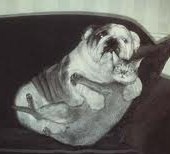
EMBRACING DIFFERENCES






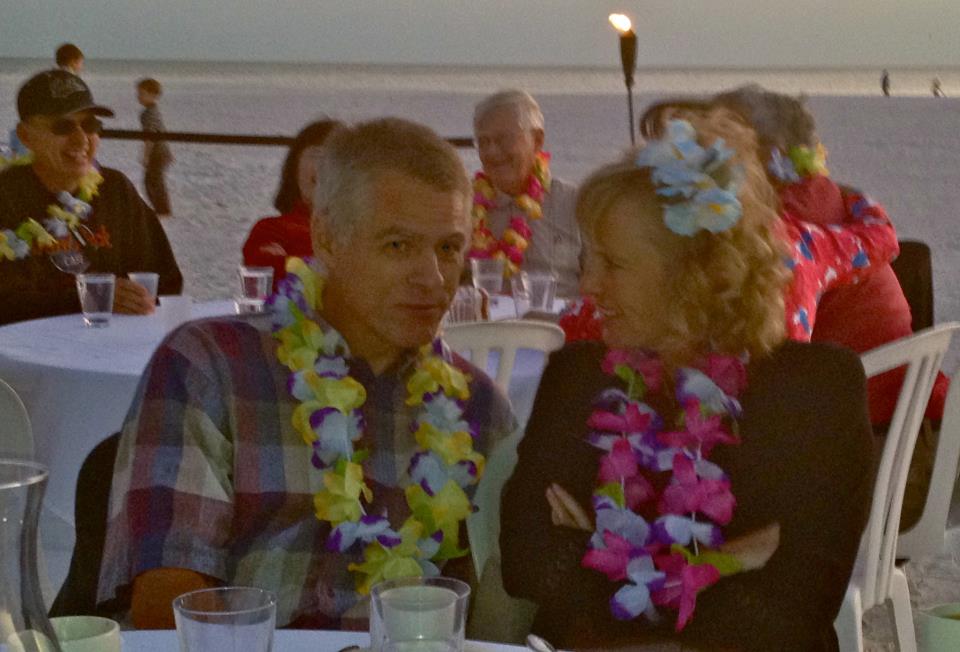



 Janathan Grace Reflections