
Emotional shrapnel from old battles tore unexpectedly at my vitals this afternoon, searing my heart from some random twist in my psyche as I drove down Lakeside Avenue. It flares up like this without warning, without any evident cause… something I saw or heard or remembered that touches a place still raw and sore, but too deep to identify. I am learning to live with it like rheumatism. Slow down, ease off, go gently till it lifts in an hour or day or month. Another tough opportunity to learn self compassion.
Archive for the ‘acceptance’ Tag
It Hurts Leave a comment
Befriending Myself 4 comments
I woke up this morning with spare change on the clock to get to church on time, but my soul was out of sorts, so I lay still, sensing its pulse instead of pushing myself out of bed. For the last decade I’ve honed the skill of listening to my feelings without judging them, but I’m only gradually learning to then respond with compassion, a crucial second step. Since I spent most of my life judging my feelings and driving them out with shame–calling them stupid or weak or petty–it was a giant step for me to learn to accept them as legitimate and meaningful, and it took years of stiff work.
That tenacious acceptance opened a huge cache of information about myself, a way to sort through my junk and set the furniture back on its feet. But with my cognitive bent, I’m slow on intuition, a key conduit to feelings. I often get stuck in my head, my thoughts going in circles like bugs around a rim, emotionally trapped, unable to move forward until I understand it.
I failed to realize that understanding someone and embracing him are quite distinct, and I don’t need to diagnose him in order to love him. Empathy can be profoundly healing even without an emotional biopsy. When I focus on fixing a “problem,” I default to analytics, but I can’t support the feelings when I treat them as the problem, a roadblock instead of a signpost. A hug is often better than a flow chart, not just for my wife, but surprisingly for me, the thinker.
When I’m busy dissecting feelings, I can forget compassion, especially for myself. Love seems a distraction from analyzing and engineering a solution… unless love IS the solution. “1+2 = love” does not make sense because feelings cannot be reduced to equations or formulas. But if love is not the answer, then perhaps I’m asking the wrong question, and if I’m not ending up at compassion, then I’m really off track. How would it shape my experience of life if I lived for love, not just for others, but for myself?
I know how to be a good friend to others: to listen, love, be gentle and patient, kind and thoughtful. But I don’t treat myself that way. I bully myself. I push and prod, roll my eyes, belittle pain, ignore my needs, devalue my efforts. I’m a really bad friend to myself.
So this morning I lay in bed, fully present to God and myself, ignoring the clock, being patient and gentle and sympathetic to my struggles like a good friend should. I took a feel-good shower instead of skipping it and rushing to church, and I discovered that being a better friend to myself made me a better friend to those I met. I’ve found a new buddy, and I think I’m going to really like him.
Be Honest Or Be Good? 1 comment
Following the great literary tradition of Dr. Seuss, someone coined the phrase “Fake it till you make it,” meaning that if you can’t do something good from the heart, do it without the heart until the heart catches up. If you hate someone, smile and be nice anyway. If you are frightened, affect a bold, unflinching attitude. If you are upset, act as though you are calm. Fake it.
Pretense never appealed to me. I take the honest approach. If I hate someone or think he’s stupid, I let him know it, scowl at him across four lanes of traffic or shake my head in pity. There’s a reason I don’t have any Jesus bumper stickers on my car–it would be false advertising. “Receive Jesus and you can be just like me” has some major shortcomings as a marketing strategy. To be honest (I’ll try to stick with that), I’ve noticed that when I force a smile through clenched teeth, and he smiles back, good happens, a sliver of peace accidentally slips down into my heart and relaxes my jaw.
Or not. When I try to stuff the bad feelings and force myself to be virtuous, it doesn’t work so well. I wrestle down my aggravation over this lane-hogging driver… and the one who dilly-dallied till I missed the green light… and this guy who parked so crooked I can’t pull in, and each time I push down the bubbling anger, it comes back up hotter. Putting a lid on it can make things boil over.
So which is it–does it help or hurt to act good when I don’t feel good? Why does positive behavior sometimes pull my reluctant heart along and at other times trip it up?
For me, it depends on the impetus. When I choose to do good in a way that seems to devalue and override my feelings, it turns radioactive. When I give grace to others by denying it to myself, it poisons me. In fact, I don’t think it’s real grace. Picture grace as electricity–I am the cable, and God is the generator, and when I cut myself off from grace, I also cut off those who receive it from me. Being only the wire, I can’t crank grace out on my own, especially not from legalism (which is the impetus if I am moved purely by obligation). Or to say it without wires and sparks: I cannot shame and fight my feelings and then hope to be accepting and generous towards others.
Here is how it plays out for me in two traffic scenarios. First, under law. I try to clamp down on my irritation by “shoulding” on myself, forcing down my feelings. Legalism makes me very conscientious as a driver–I don’t tail-gate, I let others merge in front of me (one car only, thank you), I don’t hold people up at traffic lights as I text on my phone. I work hard at it because my self-worth is tested daily, and I have to pass every section, even the driving part, to get my human license re-validated. If God’s keeping a scorecard, I can’t afford to make mistakes, and If I can’t have excuses, neither can you. It’s a tense way to be a driver… and a husband… and an employee… and a neighbor… and a human.
Grace only has room to flow in when I change the game from whack-a-mole to save-a-mole. I decide to accept myself and others with our mistakes instead of trying to beat out the faults till we deserve acceptance. Instead of saying in my head, I drive right, so you must drive right, I say, I make mistakes, so you may make mistakes. Now this is not a new equation of fairness on a different standard as though I am saying I will allow you as many mistakes as I allow myself, but if you cross the limit, I’ll whack you. Grace is unlimited. It is no longer based on fairness. Whatever I need I get and whatever you need you get.
But what if it goes past mistakes into meanness–she is deliberately unkind. Then grace takes the form of forgiveness, and since I need a lot of that too, I want forgiveness to be woven into the ambiance of grace in my relational world. I’m not suggesting a world without boundaries, leaving us defenseless. But walls are not weapons, so personal boundaries are not a conflict with grace, but a concession to our limitations. In fact, boundaries are a form of grace to myself, providing support for my weaknesses and security for my fears, and only then will I have the resources to offer grace to others, even to trolls, who are no less deserving. None of us have merit badges–that’s why we need grace.
Frictionless Marriage 3 comments
 By this afternoon the snow had mostly melted at our house, and it didn’t feel that cold, so I pulled on my tattered loafers sans socks and drove to the park with Mazie to walk. The asphalt path was mostly free of snow, but by the time I reached the end, my toes were stinging. When I turned onto the wooded dirt trail, I found half an inch of unmelted snow, and I started waddling with my feet splayed to keep from scooping snow into the gaping holes on the out-sides of my shoes. As I walked, something strange happened–my toes began to warm. I was surprised enough to pull out one foot and check that it wasn’t just going numb. It was cool to the touch, but not icy, in spite of the snow that was clinging to the edge of the open splits. Even on cold days my bare feet in loose shoes rub themselves warm against the leather as I walk, and now the broken trail made my feet slide around even more, increasing the friction. There is an upside to friction… even in relationships.
Berly uses her lunch break to stretch her legs, and since I walk Mazie at the same time, we phone-walk together. Today we chatted about yesterday’s blog post and how grace plays such a big role in our relationship. My sketch was true in its broad strokes, but don’t suppose that Berly is always trusting and I am never selfish. We screw up regularly. But we make room for that in our relationship. Our family values are framed by grace–we structure our lives to make space for one another’s weaknesses, fears, needs and the like. Grace designs the principles by which we live but also the manner in which we live these principles, or rather fail to live these principles. In other words, we give ourselves grace for failing to live by grace.
In my last post I said Berly trusts “that I am doing all that I can within the sphere of my emotional strength.” But sometimes I shortchange Kimberly by doing less than I can, intentionally or not (that is, sometimes I am lazy and at other times I simply underestimate my own energy level). We are deeply committed to one another, to mutual understanding, acceptance, and support and we live this consistently, but not perfectly. We have expectations… our expectations are that we will fall short of our ideals on a fairly regular basis. We trust one another not because we live flawlessly, but because we live in grace towards one another’s flaws.
In other words, we live with friction, and we think that’s good. It’s possible to smooth over all interactions, but the cost of such a tightly controlled “peace” is shallow and inauthentic relationships. Nothing is more lonely than a friendship where we cannot be ourselves. If we are unique individuals with our own histories, views, personalities, and preferences, then doing real life together at any depth is going to bring tension. Real life and growth comes from rubbing up against the rough grain of those we love and discovering that our flaws are the basis for our bonding. It is not fixing faults but embracing grace that strengthens relationships and deepens trust.
Feeling Good about Christmas 2 comments
 Before realizing what I had done, I started a post with the title “Holding onto the Good,” and the good referred to Christmas spirits. I was falling into the American error of confusing the good with good feelings, when truly the good often comes with the worst feelings possible. One of my fundamental life commitments is this: embrace the hard to gain the good, regardless of how it feels. But culture sucks me back into assuming that good feelings are the reward for good choices, that I can measure my spiritual pulse by how positive I feel, and negative feelings are a mark that I’ve slipped up somewhere. No wonder I want to leave up the tinsel and lights and stretch out this season to push back the bleak winter. That, and it just feels better. Who doesn’t want to feel good?!

For my LOTR friends
I affirm that desire: feeling good is not all bad. A sense of well-being gives me more energy to make the world a better place. It is a great blessing and resource. Like all resources, however, it can be turned to self interest. It can make me balk at choosing the hard or painful or costly. It can make me less patient, understanding, and sympathetic towards those who are struggling… even wanting to shove them away to insulate and save my positive vibes. Good feelings are emotional cash, which can be spent well or poorly. I’d like to have a big stash, but that’s not necessarily what’s best for my soul. In my experience, suffering has much more potential power in shaping me for good, true good.
Still I instinctively avoid it and wish it away. Pushing ahead through pain is like walking up to my knees in mud–it takes all my energy, gives no pleasure, and progress seems dismally slow. Perhaps my New Year’s resolution should be: learn to slog, which no doubt means adjusting my goals, expectations, and evaluations. Sometimes the measure of triumph is simply taking one more step.

Ambiance of Grace 4 comments
Forgiveness part 6: Grace-infused relationships
(I found my flash drive with my notes on forgiveness, so I’ll continue sharing my thoughts. So far I discussed the need for mutual understanding and self-support in relational conflicts.)
Forgiveness seems like such a wonderful resolution to any conflict… until you forgive me for a lie I did not tell or a missing wallet I did not steal. Here is the downside of forgiveness–it starts with blame. I was raised in a family that believed every conflict or pain in relationship was someone’s fault. If I feel hurt, it’s your fault or if you’re innocent, then I’m wrong to feel hurt. Someone’s always guilty. Every conflict was resolved by making the wrongdoer confess and apologize, a power struggle with a winner and loser (really no one wins, and the relationship suffers). Forced apologies are a stipend of American families: “Tell your brother you’re sorry!”
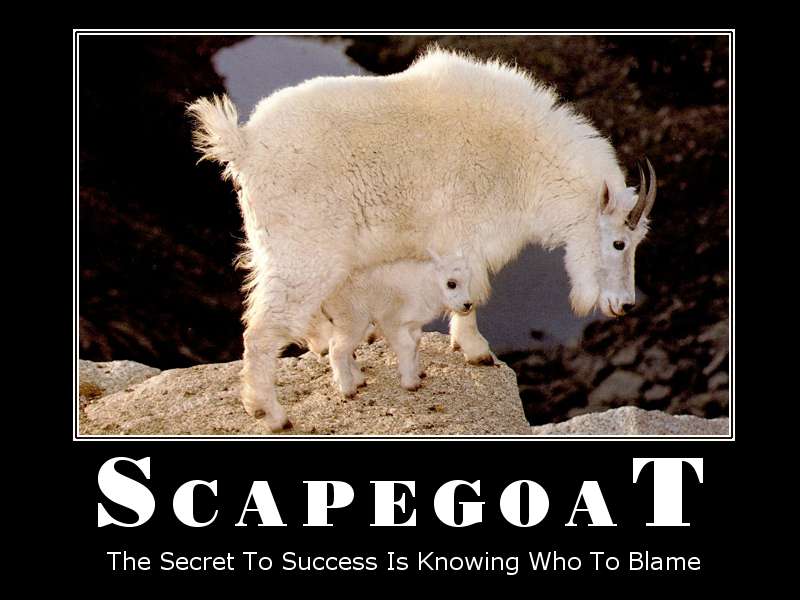
Genuine forgiveness is only one part of a whole gracious worldview with which I perceive others and relate to them. What others consider an issue of forgiveness is often simply an issue of acceptance for Kimberly and me. We offer grace to one another (patience, understanding, benefit of the doubt) without making it a question of someone being right and someone being wrong–we are both flawed and we want to create an environment where we are accepted with our shortcomings. We do this all the time in facing mild irritations—when she slams kitchen cupboards or I forget to empty the vacuum cleaner canister. But even with big issues, I have learned from Kimberly that the path of blame and forgiveness is usually a misguided diversion from sorting out our problems with grace.
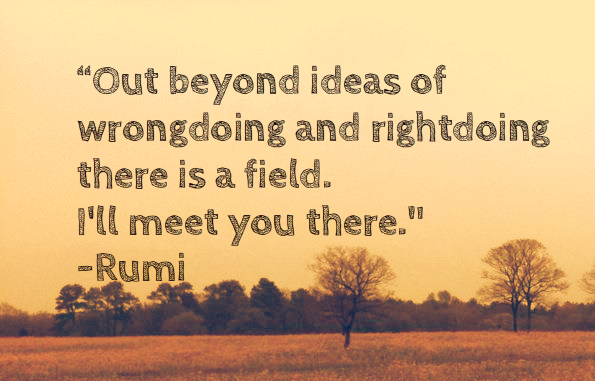
Using my family’s approach, I tried in our first few years of marriage to help her see her faults and correct them (shame her into goodness), but she would have none of it–it was not her deeds but my perceptions that were faulty. She was right, we needed better understanding and acceptance, not better behavior. Love certainly inspires us to change for one another, but it is the result of acceptance, not the basis for it. She and I have unique personalities and values, fears and pleasures, histories and perspectives, so we experience the same things quite differently. This does not make one of us right and the other wrong, one better and one worse. We are learning to appreciate our differences.

JUST ‘CAUSE WE’RE DIFFER’NT DON’T MEAN WE CAN’T GET ALONG
It’s true that Kimberly doesn’t tell me lies or steal my wallet, but neither do my colleagues or neighbors usually… not even most strangers I meet. Certainly there is plenty of real wrong in the world, evil that needs to be identified, confronted, and forgiven. But to me, that is the relational ER. For most of my daily interactions I want to foster a spirit of humble and loving acceptance and understanding. Blessed are the merciful, for they shall obtain mercy, and Lord knows I need a lot of it.

Spiritual Virtigo 14 comments
 My mother in her quirky way used to make us Christmas gifts of various kinds. This Christmas I noticed my dad is still using a bathrobe she made for him 30 years ago. She must have made it out of upholstery material, because it is soft and warm on the outside and stiff and scratchy on the skin-side. My older brother David once unwrapped a gift from her and responded graciously, “I love it! What is it?” Indecipherable love. God’s been putting together a special gift for me this year as a resource for my spiritual growth, and it looks like a box full of confusion, without an instruction manual. God, you know I’m already depressed, right? What the heck do I do with this?
Hundreds of years ago St. John of the Cross descended into “the dark night of the soul” and left a consoling account for those who followed. The Christian psychiatrist Gerald May describes his own experience of it:
[This spirit of virtigo] seems specifically designed for people like me, people who refuse to relinquish the idea that if only I could understand things, I could make them right. Having lost the old willpower and its satisfactions, we desperately try to figure out where we have gone astray. “What’s happening here? Where have I gone wrong? Maybe my problem is this… No, maybe it’s that… Perhaps I should try this… Or that….”
Every effort at soul-diagnosis and cure fails. We are left in the dark. And that is for our salvation, May says: “Sooner or later, there is nothing left to do but give up. And that is precisely the point, the purpose of the ‘dizzy spirit.’ In each relinquishment… reliance upon God is deepened.” I’ve been mapquesting God for directions to my soul’s healing and taking every turn He signaled. Apparently I’m in the Slough of Despond not from getting confused and careening off the road, but from following His bullet points. He drove me straight into the bog.
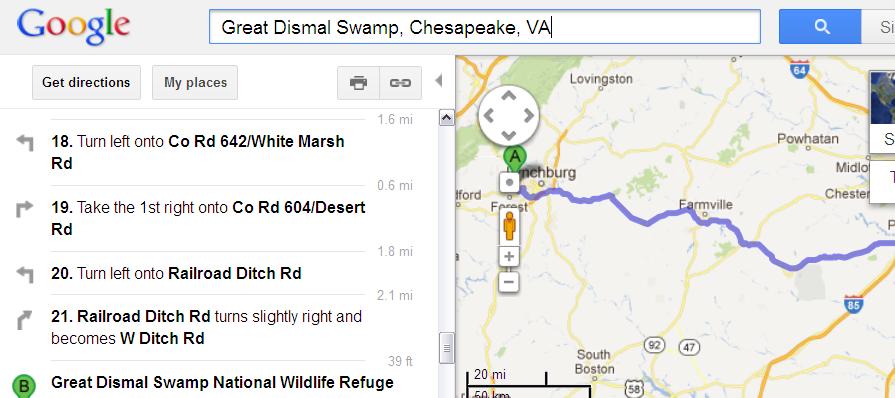
MARSH RD, DESERT RD, DITCH RD, Hmmm
There are some advantages of sinking into the quagmire. No worries about getting lost if you’re already there. No wrong turns to make if you can’t move. No real expectations to fail if there are no goals. If it’s God’s move; all I can do is wait… and trust. That’s always the tough part, especially for us hard-working, self-reliant types. “Be still and know that I am God” is a much deeper concept than I realized–not simply self control in quieting myself, but learning to patiently accept God’s time-outs for my soul, letting something work which I cannot see or measure and over which I have no control. Who knew being out of control was a sign of spiritual progress?

Embracing the Cactus Leave a comment
Today I ran across this video from 2011. It is a vignette of two famous actors who have been in the gutter more than once, but prop each other up with forgiveness and acceptance as they stumble along. Hollywood films portray beautiful truths, but Hollywood lives rarely do. Here is a two minute “acceptance speech” by Walter Downey Jr. that is a message of hope for those of us who are recovering sinners

EMBRACING THE FALLEN
Sharing Life Leave a comment
From one of my new favorite blogs:
What’s that in the Pool?
Parts of the Rocky Mountains look like
algae bloom out in the Indian Ocean.
Parts of me look like parts of you
and here we go with oneness
being nothing more than
pattern recognition and optical illusion;
though I hope there is more to it than that.
My hurt might not be your hurt,
but I have a sense of it.
Likewise your hope may not resemble mine,
but it cheers you just the same
and we are all the better for it.
We needn’t replicate each other
or attempt imitation,
but recognition is a kind thing
and art is what we all have to share.
Look Who’s Talking Now 2 comments
 “Is it God’s voice I hear in my heart or my own voice mimicking God? How can I tell the difference?” I asked Kimberly tonight as we stared at the candle flames. It was more a doubt than a question. “Even if it IS God talking to me, I may hear it all wrong, just like I do with you,” I continued. God’s voice may be in my head, but it is hardly the only voice there. In fact, as a boy I assumed dad was God’s mouthpiece. I still have trouble telling apart their voices inside me, not because they sound so much alike, but because the mix-up was so long standing. Over the years I have internalized more inflections–preachers, authors, teachers, Christians. So who’s talking now? I am learning to distrust those messages that do not harmonize with grace. God’s heart-songs are always the cadence of love–even if it is a hard scrabble love.
 When I have a friend with me, it colors all that I do, how I do it, and how I feel about it. If he is critical by nature, I will be cautious and inhibited, tense and doubtful. If my daily companion is God, what kind of God is he? If my hours are spent with a God who is focused on fixing my flaws, I will live out of fear and shame. I will be worse off for all my spiritual intent. It is crucial for me that the God I chat with over the dishes and in my car is the God of all grace. It is not only his presence I need, but his compassionate presence. I have enough harsh voices in my brain without adding Sinai to the cacophony. “Perfect love casts out fear.” May we all drink from that stream of redemption.

 Janathan Grace Reflections