Archive for the ‘feelings’ Tag
I woke up this morning with spare change on the clock to get to church on time, but my soul was out of sorts, so I lay still, sensing its pulse instead of pushing myself out of bed. For the last decade I’ve honed the skill of listening to my feelings without judging them, but I’m only gradually learning to then respond with compassion, a crucial second step. Since I spent most of my life judging my feelings and driving them out with shame–calling them stupid or weak or petty–it was a giant step for me to learn to accept them as legitimate and meaningful, and it took years of stiff work.
That tenacious acceptance opened a huge cache of information about myself, a way to sort through my junk and set the furniture back on its feet. But with my cognitive bent, I’m slow on intuition, a key conduit to feelings. I often get stuck in my head, my thoughts going in circles like bugs around a rim, emotionally trapped, unable to move forward until I understand it.
I failed to realize that understanding someone and embracing him are quite distinct, and I don’t need to diagnose him in order to love him. Empathy can be profoundly healing even without an emotional biopsy. When I focus on fixing a “problem,” I default to analytics, but I can’t support the feelings when I treat them as the problem, a roadblock instead of a signpost. A hug is often better than a flow chart, not just for my wife, but surprisingly for me, the thinker.
When I’m busy dissecting feelings, I can forget compassion, especially for myself. Love seems a distraction from analyzing and engineering a solution… unless love IS the solution. “1+2 = love” does not make sense because feelings cannot be reduced to equations or formulas. But if love is not the answer, then perhaps I’m asking the wrong question, and if I’m not ending up at compassion, then I’m really off track. How would it shape my experience of life if I lived for love, not just for others, but for myself?
I know how to be a good friend to others: to listen, love, be gentle and patient, kind and thoughtful. But I don’t treat myself that way. I bully myself. I push and prod, roll my eyes, belittle pain, ignore my needs, devalue my efforts. I’m a really bad friend to myself.
So this morning I lay in bed, fully present to God and myself, ignoring the clock, being patient and gentle and sympathetic to my struggles like a good friend should. I took a feel-good shower instead of skipping it and rushing to church, and I discovered that being a better friend to myself made me a better friend to those I met. I’ve found a new buddy, and I think I’m going to really like him.
This morning I was cruising down Lakeside Drive when a pokey car from a side street turned in front of me. That’s one of my pet peeves. If a driver feels some aggressive need to pull in front of me, fine, just go fast enough to stay out of my way. I stepped on my brakes and would have forgotten it, except the guy slowed down even more, creeping into a gas station. “REALLY!?” I ranted to my dashboard, “You had to cut me off ’cause you were in a hurry to… STOP?”
I can self-justify with the best, but I’m not so far gone as to equate my petty irritations with righteous indignation. I knew I wasn’t channeling Jesus with my defensive driving.
This also suggests a serious limitation to that great advice to “be in the moment.” Oh, I was in the moment, all right, totally in the moment, that scowling, growling, hand-clenching moment. Sometimes you need to get out of the moment, be a little less present, to grasp the bigger picture.
So I tried to talk myself down. I noticed that he was a geezer, and they do everything slower, everything. But I’ve played that chess game with myself before, so I know all the moves. I responded with, “Hey, driving faster takes no extra strength. Retirement ain’t gonna slow me down. That’s no excuse.” “Ah,” said my mental opponent, “And how many wrecks will your age-diminished reactions cause before you slacken your speed?” Okay, that was a surprise, a new argument that sounded suspiciously like my wife. How did she get in my head? That’s totally unfair–two against one.
But her voice is the one I really want to hear, not because it is right, making me wrong and bad, but because it is gracious. She wants to find peace through mutual acceptance of our weaknesses. In contrast, I find that when everyone follows the rules, we all get along. Legalistic happiness. It’s pretty common in church.
The problem is when we screw up… and we all screw up. The law has no margin for error, so it makes us all losers, and we scramble to escape that weight of condemnation. Each time others break our rules, rules that ensure our safety, we feel slighted, devalued, and disrespected, and even small slights cut deeply because we already agree with them, we believe we deserve no respect. When someone cuts me off in traffic, I feel less of a person, so I get defensive. In my relationships I push others to change, to conform, to live in a way that does not tear open my self doubt. Everyone, follow the rules!
The voice of grace sounds so small and useless against such visceral drives, and it calls me to abandon the very thing that is protecting my fragile sense of well-being: my ragged record of good, which is my only justification for squeezing others into line. Grace whispers that we are loved regardless of our record, that we are valued fully even in our failures. But I find it hard to trust. Grace is like oxygen–once you let it in, it is available to everyone in the room. If you allow grace to cover you as a loser, then it necessarily covers all losers, and then you have to drop your legalistic demands. But their flawed conformity to rules is the only thing keeping me protected. For all its defects and failures, the legal system looks pretty safe, and grace looks pretty risky. No wonder faith is the only way into grace.
Some days I just ache. I can feel my mouth pulled into the lines of a half-grimace, like someone trying to cover up an irrepressible agony. The very question of hope versus hopelessness grows distant as the present pain blocks out any future. There is just this moment… which stretches on hour after hour. I can distract myself, but it seems so futile–like playing peek-a-boo with a feverish baby. At least if I had some huge loss, say of a loved-one, I would have clarity about the reason for my pain, a direction to focus my feelings, and hope that over time some healing would come. It would make sense. And others would understand. What is there even to share or cry over if the misery is nameless?
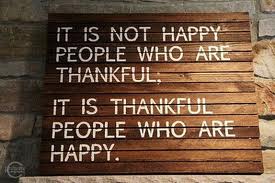
As Christian fads go, “30 days of thanks” seems to have some potential for good. If you’ve missed it, it’s the practice of giving thanks for something each day of November (often posted on social media). Hopefully it makes us all happier. Gratitude is seen in church as well as in our society at large as a foundation stone of mental health. On a TED talk last week the positive psychology guru Shawn Achor listed thanksgiving as his first choice to improve life’s outlook: find 3 things daily for which to be grateful. On the surface, I think this is a good idea. On the surface. But like most things, the real story is under the surface.

My first question is about motivation, which can sour so many good practices. I remember as a child being ordered to write thank-you notes for gifts I hated. It did not improve my life’s outlook! Legislating gratitude spoils it. But following cultural norms, my parents shamed my “ungrateful attitude” as a child… and it seemed to fix my attitude, but it damaged my spirit. In compliance, I trained myself to “feel” grateful, not as a natural response of delight, but as a way to avoid shame. On the surface, it’s hard to tell the difference, but natural gratitude gives life and forced gratitude suffocates life and relationships. Based on how I react to ungrateful people, I’d say I need more of the natural kind. When I choose thanksgiving as a “discipline,” my spiritual growth may only be in pride or resentment.
But even if my motivation is healthy, I can still misuse thankfulness. Both pop psychology and pop Christianity suppose we can fix hard events and feelings with positive thinking (often labeled “faith”). On the surface, that might be a good idea. On the surface. That is to say, if the bad feelings are superficial, then I can easily “shake it off” with some uplifting thoughts. But for anything deeper, positive thinking will only mask the problem, like taking ibuprofen for a ruptured appendix. The real solution for difficult feelings is to recognize and accept them in a spirit of compassion, try to understand them and find a means to truly support the needs that my soul is expressing. Using thankfulness to resolve significant pain just minimizes and belittles our true feelings and fosters false lives and relationships.
If you are lonely, for instance, not just this particular evening, but in life generally, you cannot rectify it by reminding yourself of all the people who love you and so talk yourself into being okay. If you are hurt by rejection, by loss, by trauma, you cannot find healing by “counter-balancing” it with happy thoughts or smothering it with praise music. Massages are nice, but they don’t cure ear infections. Paul tells us in Romans to “weep with those who weep,” not “cheer up those who weep.” Some of us need to learn to weep for ourselves in compassion. I never use thanksgiving to shout down my feelings. Joy is most truly experienced when I genuinely embrace my sorrows. So any takers for “30 days of pain”?

Today was a mildly good day emotionally, and I thought it should be noted since I haven’t been on the positive side of the ledger in a long time. It was not exciting or fulfilling or memorable, but pleasant in a blue-hazy way. In the past I tried desperately to decode the secret of a day like this–what did I do right or avoid doing wrong? How can I keep this going? Like a capsize-victim scrambling to straddle a rolling barrel, I soon tipped over again, even more tired and discouraged from all my scraping and clawing.
Now I have a better appreciation for the staid Buddhists who let the feelings pass through like vapors across a room. If God or the universe or my beleaguered soul is sending a message, it needs to be less cryptic. I keep my eyes open, but when fog settles in, patience is the better part of wisdom. Insight often takes the slow train, and pacing the platform doesn’t get it here any faster. As Erwin Schrodinger says, “In an honest search for knowledge, you quite often have to abide by ignorance for an indefinite period” (a quantum physicist validating my confusion!). I have learned to enjoy the good while it lingers, not weighing it down with questions or trying to finagle an extension. It is what it is for as long as it is, and when it smiles, I am grateful.
Forgiveness 4: Seeking Understanding

When I get whacked by the blunt end of a relationship, I first need to assess the bruising and salve it with compassion. From this haven of acceptance and support, I can draw enough grace to respond in a healthier way to the bruiser. But before forgiveness is even an option, I need to piece the story together: why did he act that way? Easy forgiveness brushes aside this opportunity of better understanding. What are his heart sores and life hurdles? How did he see and experience our social fumble? We also need a better grasp of the relationship. Every interpersonal dynamic is involved here: truth-seeking, communication, perception, relational history, roles, expectations, and a hundred other facets. Forgiveness is only part of this complex relational feng shui, so if it is my only consideration, I turn a vivid social mosaic into a black/white toggle switch of blame.


Quick forgiveness looks so gracious, and long discussion seems so dramatic. Both of us may want a quick fix, and perhaps it’s the right choice for now, but we should remember that this tables the issue, it doesn’t resolve it. The same conflict will pop up again and again until we sort it out. Deferring until later may feel better in the short run, and may be a necessary strategic move, but it does not enrich our bond. And slowly over time little resentments will build up like barnacles on a boat or relational callouses will form to deaden the pain and with it the vibrant connection.
So I begin to unfold the map of who he is. I’m not looking for evidence to accuse him. I simply want to understand him, see things from his perspective. Since resolution requires mutuality, I share with him in turn my struggles, without implying fault. Just as my own heart hides when I am gruff and suspicious with it, he cannot be honest and forthcoming about his genuine feelings and thoughts if I don’t invite him with gentleness and love. I can accept him without approving of or excusing his behavior. He is precious regardless of what he does or doesn’t do. I want to know what he feels about our scrape and why he feels this way. If he is dismissive or defensive as I probe, then he’s not at a safe place with me. He may not even feel safe with himself because of the shaming voices in his head. When he closes the gate on this part of our relationship, I must honor it—I cannot force him to share. In response, I may also need to stake down a boundary marker to protect my heart. Perhaps a better time will come if I stay open and gracious.

DO YOU SPEAK RABBIT?
If we can break through into deeper mutual insight, we will then want to reflect also on our relationship. This will spark memories of past conflicts, a rich resource to ponder if we don’t use it as ammunition but as sutures. Why do we react to one another in this way in these situations? What are we feeling and thinking? Do we respond to others in similar ways? Why or why not? What patterns does this reveal about our interactions? Since honesty and openness depend on our sense of safety, the one issue we overlook at this point is blame. It may be that neither of us is guilty or both are guilty or that the problem lies in a completely different direction. But once we are sharing, the issue of fault and forgiveness often becomes moot.

Forgiveness 3: Postponing Blame
“Why can’t we learn our spiritual lessons over a box of chocolates instead of through suffering?” a friend once asked me. Unfortunately this fallen world is thick with pain, especially relational pain, but there’s a flower in the nettles: it’s the hard stuff that grows me personally in patience and courage, and it’s the tough stuff that deepens and strengthens my friendships. When we brush up against others, our tender nerves jangle us alert to something in our interaction that needs tending.
If I feel the arrows, I snatch up my shield to defend myself, which is natural and healthy—self-protection by flight or fight—but it hurts me if I use that to dodge rather than pursue growth in myself and my relationships. My emotions yelp when some wound needs my compassionate attention, a wound that may be decades old. My friend (or enemy) may be the occasion for my pain without being the cause of it. Her soft words may strike against a sharp emotional edge in my past. On the other hand, her innocence does not invalidate my pain. My feelings are what they are regardless of her role. They carry within them their own legitimacy and don’t need outside validation. They speak the truth, not about her but about me, about the cuts and bruises on my soul.

When I am hurt in some interaction, I need to slow down and pay attention to the ache, and I need to provide enough emotional space to tend to my injury. Sometimes, at least initially, this may get messy for the relationship. I may withdraw for a time or push back, but the goal in padding my emotions is not to avoid, but to embrace this opportunity of self-discovery. So when I have cleared enough emotional room, I slowly disentangle my pain from her actions and take ownership of my pain. I do not mean that I blame myself for my pain! If I barge accusingly into my soul, it will duck for cover. The wounded need compassion, not condemnation. By taking ownership I mean identifying the agitating source inside me and not outside me (so I can take charge of the healing process). The diagnosis starts with a caring “Why?” Why do I feel bad, especially if my feelings are more intense than others would be in this situation. If I try to fix the relationship before I understand my own heart, things are apt to get more twisted.

I am slowly learning, but I still habitually jump past this necessary groundwork when I feel stung. I quickly assume blame—either he’s at fault for hurting me or I’m at fault for feeling hurt. But if I blacken the other guy in order to justify my feelings or in order to get him to take responsibility, I overlook what my wincing heart is telling me about my own wounds and need for support, compassion, and healing. I’m not suggesting that we should deny our feelings about the other person. That anger, doubt, and fear is the very emotion I must identify, feel, and discern, but I make sense of my feelings by listening to them with gentle care, not by blaming the other fellow.
When I make the other person’s behavior the focus of my attention, I undermine my own self-support, even when he is clearly at fault. He has leveraged power against me by his hurtful acts, but if I continue to focus on what he’s done, I keep myself his prisoner. Even if I induce him to apologize and make amends so that I feel better, I will be worse off for it because my good feelings are still dependent on his response, and so I am still under his power. Whenever I make someone else responsible for my feelings, I lose control of my own emotional life.
I don’t mean to suggest that I have to sort out my own stuff by myself. We often need the help of a friend who knows us well and accepts us as we are… not someone to “side” with us against the other, but someone who helps us understand ourselves better. If the issue is not a powder keg, then I may be able to talk it through with the person who upset me, but the focus should really be on discerning my own wounds and needs, not on venting or “correcting” the other person. The apology I want so much to hear may dull the sting but will not heal the lesions in my heart. My heart needs comfort, acceptance, embrace—love that is enduring, unquenchable, unconditional, inescapable, unbridled, and passionate.

Last night Kimberly and I watched Beyond the Gates, a movie about the Rwandan genocide when 800,000 men, women, and children were hacked to death as the world looked on and did nothing. It was terrible. It was real. It was a small window onto the depths of human depravity which ravage our world daily. If you keep your peace of mind by sweeping darker parts of reality into a seldom-used corner of your mind, perhaps you buy happiness at too great a cost. If the evil filling this earth does not burn in your heart and shape your daily decisions, you may be living in a fantasy world of your own making.
Frederick Buechner tells of his professor, James Mullenberg:
“‘Every morning when you wake up,’ he used to say, ‘before you reaffirm your faith in the majesty of a loving God, before you say I believe for another day, read the Daily News with its record of the latest crimes and tragedies of mankind and then see if you can honestly say it again.’
He was a fool in the sense that he didn’t or wouldn’t or couldn’t resolve, intellectualize, evade, the tensions of his faith but lived those tensions out, torn almost in two by them at times. His faith was not a seamless garment but a ragged garment with the seams showing, the tears showing, a garment that he clutched about him like a man in a storm.
To love a hurting world is to suffer with it. Do you see this world as God sees it? There is a reason the prophets of old, the seers, were mostly melancholy men and why the Messiah was called the Man of Sorrows. Some of us by nature are more touched by the shadows. It is not only the deep fissures in the ghettos and war-crushed countries, but the cracks in my own heart that torment me. My own little hatreds and conspiracies, defensive moves and fear-driven words awake in me an understanding of and identification with history’s villains.
If only there were evil people somewhere insidiously committing evil deeds, and it were necessary only to separate them from the rest of us and destroy them. But the line dividing good and evil cuts through the heart of every human being.― Aleksandr Solzhenitsyn
But I realized something today. I am not big enough to absorb all that pain. I can’t handle that much truth… I have to shut some of it out so that it does not capsize my little boat. I want the brokenness of the world to inform my outlook, but not to cripple it. I instinctively have known this all along and have protected myself from those things that have pulled me too far down, especially when my emotional reserves are low, but I felt cowardly. When I dropped Facebook friends because their posts or comments were too disturbing or I avoided confrontation with family, my love seemed limited and weak. Well, since I am not God, my love certainly is limited and weak, and I cannot demand of it more than I am able to give. I must live within my means not only financially, but emotionally, because if I have too many overdrafts, I will crash. My heart will always be touched more profoundly by the tragedies around me–it is how I was designed–so I need to soak my bruised soul more deeply, more often in the pools of grace away from the harsher sides of reality.
 Kimberly and I had a tiff yesterday on our way home from the screening of a documentary at Lynchburg College. In the middle of the film I had left to use the bathroom, and when I returned they were concluding a segment on Ruth Gruber’s role in bringing WWII refugees to America. So in the car afterwards I said, “Tell me about the refugees.” Kimberly responded, “Well, Ruth was in Alaska–” I interrupted, “I was there for the part about Alaska, what happened in Europe?” She started over, “I was telling you that. Ruth was in Alaska working with soldiers. She was sent there under the auspices of the U. S. Government–” I broke in again, showing irritation, “I was there for the segment on Alaska. Tell me about the refugees.” She told me and then grew quiet, upset by my sharpness.
 I was raised on impatience. I’m not sure why my family was so anxious to get to the point. We were in a hurry about everything, and when someone seemed to be dragging their feet, we poked them to pick up the pace. None of us took this personally since efficiency was a shared family value–if I were going too slowly, I expected a shove. Whether getting dressed, sweeping the kitchen, learning to bike, or figuring out the road map, we allowed no one to dally. Efficiency and patience are not bosom buddies. Kimberly, however, was raised to value being considerate of others– if you feel frustrated, keep it to yourself and let the other person take the time they need.
 In other words, to keep the group together, I want the plodders to speed up and Kimberly wants the brisk to slow down. Conversely, I feel it is rude when others hold back my progress, and Kimberly feels it is rude when others push her to go quicker. On the highway, I react to dawdlers in the fast lane and Kimberly reacts to tailgaters in the slow lane… okay, I admit it, I react to everyone. I say we “feel” it is rude because I’m talking about our emotional reaction to someone else. I may feel disrespect even when the other person intends none, and my feelings are affected far more by early family values than by present-day interactions.
Just now I have laid it all out even-handedly, but I don’t find Scripture so balanced. Patience is a huge emphasis in the Bible, and efficiency is… well… um… there must be a verse here somewhere. I know my father, a preacher, would categorize it under “stewardship,” but examples of wise use of resources in Scripture are focused almost exclusively on money and possessions. I am hard put to find time-efficiency as a biblical recommendation. God’s scales of morality seem to be stacked heavily on the side of waiting. I don’t mean to suggest that slowness or inefficiency is a virtue–it can certainly create real problems–but I think our emphasis on it comes less from our faith and more from our culture’s priorities. So I’m learning the value of patience. Of course, 50 years of my ingrained habit is not going to change overnight, so Kimberly will have to learn patience as well.

PATIENCE IS SELF-REWARDING
I have been listening to my George Winston channel on Pandora this morning. Music has such power to affect my feelings. It can help me connect more deeply with myself and my experiences emotionally, but its influence is so strong it can also hijack my emotions. This can be profoundly disturbing when I want to experience my emotions, but it can be a drug of preference to escape unwanted feelings. Sometimes we need this medication to provide a rest from our life struggles, but it can easily become an addiction, helping us avoid the unhappy truth our hearts are speaking to us, a truth we must work through if we are to heal.
 It is not only music which can be the escape hatch. Many folks use television, sports, hobbies, internet, and even friends for this purpose. Still more dangerously, I can use meditation, spiritual reading, ministry, and church as a powerful narcotic to avoid rather than connect to my soul… so that I not only feel good, but feel right for feeling good. When we pick and choose Bible verses to provide quick, simple solutions to deep heart issues, we may be using the Bible itself as the great escape, “talking” ourselves into different surface feelings and missing the chance to experience fundamental transformation. Often these pat answers we offer one another are simply unconscious reflections of our culture’s values which have shaped our view of Scripture. Instead of using the Bible to reveal and heal our hearts, we can use it to wall off our hearts. I know this was a huge block to my own spiritual growth–(mis)using God’s word against my true self. (more on this later)




 Janathan Grace Reflections