Archive for the ‘grace’ Tag
Following the great literary tradition of Dr. Seuss, someone coined the phrase “Fake it till you make it,” meaning that if you can’t do something good from the heart, do it without the heart until the heart catches up. If you hate someone, smile and be nice anyway. If you are frightened, affect a bold, unflinching attitude. If you are upset, act as though you are calm. Fake it.
Pretense never appealed to me. I take the honest approach. If I hate someone or think he’s stupid, I let him know it, scowl at him across four lanes of traffic or shake my head in pity. There’s a reason I don’t have any Jesus bumper stickers on my car–it would be false advertising. “Receive Jesus and you can be just like me” has some major shortcomings as a marketing strategy. To be honest (I’ll try to stick with that), I’ve noticed that when I force a smile through clenched teeth, and he smiles back, good happens, a sliver of peace accidentally slips down into my heart and relaxes my jaw.
Or not. When I try to stuff the bad feelings and force myself to be virtuous, it doesn’t work so well. I wrestle down my aggravation over this lane-hogging driver… and the one who dilly-dallied till I missed the green light… and this guy who parked so crooked I can’t pull in, and each time I push down the bubbling anger, it comes back up hotter. Putting a lid on it can make things boil over.
So which is it–does it help or hurt to act good when I don’t feel good? Why does positive behavior sometimes pull my reluctant heart along and at other times trip it up?
For me, it depends on the impetus. When I choose to do good in a way that seems to devalue and override my feelings, it turns radioactive. When I give grace to others by denying it to myself, it poisons me. In fact, I don’t think it’s real grace. Picture grace as electricity–I am the cable, and God is the generator, and when I cut myself off from grace, I also cut off those who receive it from me. Being only the wire, I can’t crank grace out on my own, especially not from legalism (which is the impetus if I am moved purely by obligation). Or to say it without wires and sparks: I cannot shame and fight my feelings and then hope to be accepting and generous towards others.
Here is how it plays out for me in two traffic scenarios. First, under law. I try to clamp down on my irritation by “shoulding” on myself, forcing down my feelings. Legalism makes me very conscientious as a driver–I don’t tail-gate, I let others merge in front of me (one car only, thank you), I don’t hold people up at traffic lights as I text on my phone. I work hard at it because my self-worth is tested daily, and I have to pass every section, even the driving part, to get my human license re-validated. If God’s keeping a scorecard, I can’t afford to make mistakes, and If I can’t have excuses, neither can you. It’s a tense way to be a driver… and a husband… and an employee… and a neighbor… and a human.
Grace only has room to flow in when I change the game from whack-a-mole to save-a-mole. I decide to accept myself and others with our mistakes instead of trying to beat out the faults till we deserve acceptance. Instead of saying in my head, I drive right, so you must drive right, I say, I make mistakes, so you may make mistakes. Now this is not a new equation of fairness on a different standard as though I am saying I will allow you as many mistakes as I allow myself, but if you cross the limit, I’ll whack you. Grace is unlimited. It is no longer based on fairness. Whatever I need I get and whatever you need you get.
But what if it goes past mistakes into meanness–she is deliberately unkind. Then grace takes the form of forgiveness, and since I need a lot of that too, I want forgiveness to be woven into the ambiance of grace in my relational world. I’m not suggesting a world without boundaries, leaving us defenseless. But walls are not weapons, so personal boundaries are not a conflict with grace, but a concession to our limitations. In fact, boundaries are a form of grace to myself, providing support for my weaknesses and security for my fears, and only then will I have the resources to offer grace to others, even to trolls, who are no less deserving. None of us have merit badges–that’s why we need grace.

Some of my flaws are more fundamental than others, more pervasive and enmeshed, more demanding and persistent, more hidden and stubborn, like my deep rooted legalism. If I voiced my intentions, I would say I’m a recovering legalist, but my progress seems so glacial that that might be unfairly congratulatory, like a daily drinker claiming to be a recovering alcoholic. As I think about it more, I really have improved a great deal over the years, but all that thrust has not lifted me above its gravitational drag. Legalism remains my default in so many situations, a judgmental sinkhole out of which I must crawl, talking down my critical reaction to others. Trying to be gracious is a very long way from actually being gracious.
My soul is resistant to giving grace because it makes me feel so vulnerable. In a disagreement, if I can dismiss them as being stupid or unbiblical or biased, then I don’t have to give any weight to their idea, which threatens my own perspective, a perspective around which I have built a safe world for myself. If I label them untrustworthy, I can justify my suspicions of them and guard my heart against their potential betrayal. If I mark them as selfish, I can depend wholly on myself… for fear they will refuse my request for help and so prove I am not worth helping. It threatens me at my core. As C. S. Lewis wrote, “To love at all is to be vulnerable. Love anything, and your heart will certainly be wrung and possibly be broken. If you want to make sure of keeping it intact, you must give your heart to no one, not even to an animal.” A closed heart is a safe heart. Thinking generously of others, trusting them, and opening my heart to them is dangerous. Giving grace opens me up to assault from every quarter.
 Living in a world full of potential aggressors is frightening and lonely, so I am drawn to nice people, safe people, people like my wife. They have helped me slowly build trust, creep towards vulnerability, discover genuine connection. Once I develop a close relationship, I find that grace flows naturally… until I feel threatened. That is when my grace muscle is stretched as I claim grace firmly enough to support myself and then extend it to the one challenging me. Berly has been the perfect companion for this journey into fear and grace.
Matthew 1:6 and Jesse fathered David the King–
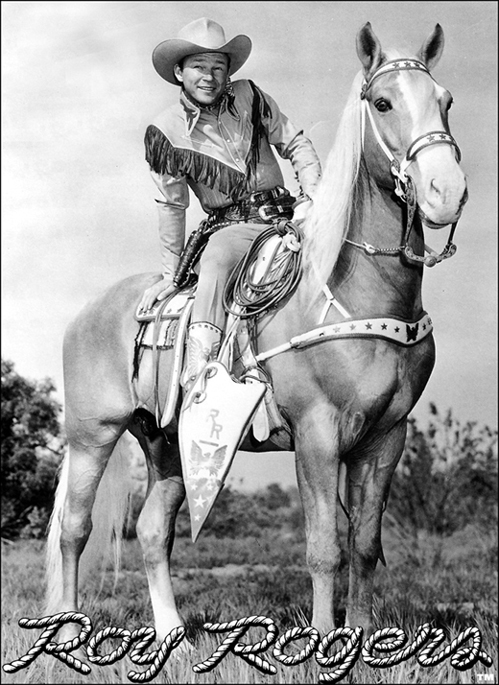
 As a schoolboy, I refused to sleep late Saturday mornings because the Roy Rogers Show came on at 7:30. Dressed in white from his stetson to his boots, my hero galloped in on his white horse Trigger. He stood for all that was good. But every villain rode in on a charcoal horse with an outfit as black as his heart. I was raised on stereotypes, and perhaps little kids need that kind of over-simplification, though I’m not so sure. All kinds of bad come from boxing people into categories, even favorable categories. The girl whose identity is built on her reputed good-looks is just as bound and broken as the one whose essence is shaped around her reputed bad-looks. The jock is as vulnerable as the geek to being squeezed into expectations and assumptions that suffocate his true self.
Weighing down others with our expectations or stooping under theirs deflects the flow of grace in our lives because we can never fully predict where God is taking us and who he is shaping us to be. Wise counsel is always a support for self-discovery, not a substitute for it.
 But Jesse has clear notions of his sons’ abilities and roles, so he sends his youngest, David, into the fields to shepherd and marches his big brothers off to soldier. After all, an older, larger, stronger man is clearly more fit to fight. Just ask Goliath. When the prophet Samuel came to look among his sons for the next leader of Israel, Jesse did not even deign to bring his youngest in from tending the sheep. He clearly did not qualify. Samuel himself, the very mouthpiece of God, looked at the oldest, tallest son and thought he’d found God’s choice. They expected the storyline: “Jesse fathered Eliab the King,” and that would have been as messed up for Eliab as for David… not to mention Israel. His own father, who knew him from a babe, and God’s anointed spokesman both missed who David really was.
Expectations and norms can blind us to the best gifts of grace. God’s valuations are so often different from ours. When our assumptions determine our direction, we are quite likely to miss the way. Even wise, godly folks have blind-spots and spiritual myopia, but if we stay open to the surprising and unexpected appearances of grace, God has freedom to bring out our internal wonder and unique capacity. Grace is always on the loose, hawk-eyed for every chance to draw out our inimitable beauty.
This morning I was cruising down Lakeside Drive when a pokey car from a side street turned in front of me. That’s one of my pet peeves. If a driver feels some aggressive need to pull in front of me, fine, just go fast enough to stay out of my way. I stepped on my brakes and would have forgotten it, except the guy slowed down even more, creeping into a gas station. “REALLY!?” I ranted to my dashboard, “You had to cut me off ’cause you were in a hurry to… STOP?”
I can self-justify with the best, but I’m not so far gone as to equate my petty irritations with righteous indignation. I knew I wasn’t channeling Jesus with my defensive driving.
This also suggests a serious limitation to that great advice to “be in the moment.” Oh, I was in the moment, all right, totally in the moment, that scowling, growling, hand-clenching moment. Sometimes you need to get out of the moment, be a little less present, to grasp the bigger picture.
So I tried to talk myself down. I noticed that he was a geezer, and they do everything slower, everything. But I’ve played that chess game with myself before, so I know all the moves. I responded with, “Hey, driving faster takes no extra strength. Retirement ain’t gonna slow me down. That’s no excuse.” “Ah,” said my mental opponent, “And how many wrecks will your age-diminished reactions cause before you slacken your speed?” Okay, that was a surprise, a new argument that sounded suspiciously like my wife. How did she get in my head? That’s totally unfair–two against one.
But her voice is the one I really want to hear, not because it is right, making me wrong and bad, but because it is gracious. She wants to find peace through mutual acceptance of our weaknesses. In contrast, I find that when everyone follows the rules, we all get along. Legalistic happiness. It’s pretty common in church.
The problem is when we screw up… and we all screw up. The law has no margin for error, so it makes us all losers, and we scramble to escape that weight of condemnation. Each time others break our rules, rules that ensure our safety, we feel slighted, devalued, and disrespected, and even small slights cut deeply because we already agree with them, we believe we deserve no respect. When someone cuts me off in traffic, I feel less of a person, so I get defensive. In my relationships I push others to change, to conform, to live in a way that does not tear open my self doubt. Everyone, follow the rules!
The voice of grace sounds so small and useless against such visceral drives, and it calls me to abandon the very thing that is protecting my fragile sense of well-being: my ragged record of good, which is my only justification for squeezing others into line. Grace whispers that we are loved regardless of our record, that we are valued fully even in our failures. But I find it hard to trust. Grace is like oxygen–once you let it in, it is available to everyone in the room. If you allow grace to cover you as a loser, then it necessarily covers all losers, and then you have to drop your legalistic demands. But their flawed conformity to rules is the only thing keeping me protected. For all its defects and failures, the legal system looks pretty safe, and grace looks pretty risky. No wonder faith is the only way into grace.
Grace is truly a mystery. I understand how justice works to set things back to rights, but how exactly does forgiveness work? Isn’t it bound to set things more out of whack? Fair trade makes great sense–everything adds up at the end of the day in the universe’s great balance sheets–but giving things away willy-nilly is going to ruin the bottom line. How will we know who owes what to whom? If you fling the doors of grace wide open isn’t there going to be a run on the bank? And if grace were as common as pebbles, there’d be no market for it–you’d have to give it away without charge. Imagine that: free grace. Who can predict where that would end: the collapse of the world as we know it.
 By this afternoon the snow had mostly melted at our house, and it didn’t feel that cold, so I pulled on my tattered loafers sans socks and drove to the park with Mazie to walk. The asphalt path was mostly free of snow, but by the time I reached the end, my toes were stinging. When I turned onto the wooded dirt trail, I found half an inch of unmelted snow, and I started waddling with my feet splayed to keep from scooping snow into the gaping holes on the out-sides of my shoes. As I walked, something strange happened–my toes began to warm. I was surprised enough to pull out one foot and check that it wasn’t just going numb. It was cool to the touch, but not icy, in spite of the snow that was clinging to the edge of the open splits. Even on cold days my bare feet in loose shoes rub themselves warm against the leather as I walk, and now the broken trail made my feet slide around even more, increasing the friction. There is an upside to friction… even in relationships.
Berly uses her lunch break to stretch her legs, and since I walk Mazie at the same time, we phone-walk together. Today we chatted about yesterday’s blog post and how grace plays such a big role in our relationship. My sketch was true in its broad strokes, but don’t suppose that Berly is always trusting and I am never selfish. We screw up regularly. But we make room for that in our relationship. Our family values are framed by grace–we structure our lives to make space for one another’s weaknesses, fears, needs and the like. Grace designs the principles by which we live but also the manner in which we live these principles, or rather fail to live these principles. In other words, we give ourselves grace for failing to live by grace.
In my last post I said Berly trusts “that I am doing all that I can within the sphere of my emotional strength.” But sometimes I shortchange Kimberly by doing less than I can, intentionally or not (that is, sometimes I am lazy and at other times I simply underestimate my own energy level). We are deeply committed to one another, to mutual understanding, acceptance, and support and we live this consistently, but not perfectly. We have expectations… our expectations are that we will fall short of our ideals on a fairly regular basis. We trust one another not because we live flawlessly, but because we live in grace towards one another’s flaws.
In other words, we live with friction, and we think that’s good. It’s possible to smooth over all interactions, but the cost of such a tightly controlled “peace” is shallow and inauthentic relationships. Nothing is more lonely than a friendship where we cannot be ourselves. If we are unique individuals with our own histories, views, personalities, and preferences, then doing real life together at any depth is going to bring tension. Real life and growth comes from rubbing up against the rough grain of those we love and discovering that our flaws are the basis for our bonding. It is not fixing faults but embracing grace that strengthens relationships and deepens trust.
My achievement demon was finally beaten (as I posted), but it was a double-team effort, not a solo act. Berly deserves special praise for her unusual trust and courage to stand with me in this battle as she lived out our fundamental commitment to support one another’s personal struggles. It is a long story, a good story, one well worth telling, but too big for a blog. The only way for me to escape my work-driven value system was to resist its demands, which meant choosing a job which was good for my soul but bad for my pocket. I have been employed part-time and seasonally for 40 months as our savings slowly dwindled. I have looked for other employment, but not aggressively, taking it at the pace my spirit has needed.
Imagine how much trust and courage this has required of Kimberly and how badly I needed this trust when struggling with my own self doubt. She has said many times, “we may lose our home, but we must not lose our souls,” and so we have continued to make the hard choice of trusting God to keep us afloat financially while we take the steps we have both needed to make room for our weary hearts. Think how much Kimberly must trust me not to be selfish, not to take the easy way, not to use my struggle as an excuse to slack off, and to instead accept that I am doing all that I can within the sphere of my emotional strength, making the best choices I know how in harmony with my spirit. We have built this mutual trust by sharing honestly, often, about our deepest heart issues. We trust one another not to use our neediness to get an advantage over the other.
My win over this perverse accomplishment-based value system is not full or final. I cannot suddenly begin to live as though I’m now free of its influence. as though this lifelong weight can no longer distort my self perception. Don’t look for miracles here or you will be disappointed. I am in recovery mode, and it will be a long, slow rehabilitation. It will take whatever time it takes, and trying to hurry it would undermine the process. But you can be sure that Kimberly and I will stay faithful to the path before us.
Matthew 1:5 and Obed fathered Jesse
Obed is to me a sign of hope when hope has breathed its last, CPR hope. For some of us, like Naomi, life seems like a ragged march of crippled dreams, and we wish for it all to be over. After Naomi and her family were driven to destitution by a famine, they fled as refugees to a foreign country where her husband and both sons died. She returned in old age to her homeland with a widowed and childless daughter-in-law Ruth, and they survived as beggars. Naomi was not only at the end of her own fruitless life, but with no offspring, she was at the end of her whole family’s history. She began life full of promise–Naomi means pleasant–but all those hopes were dashed along the way, and she was tottering towards a pauper’s grave. She told everyone to stop calling her Pleasant and instead to call her “Bitter.” Her hope had burned out. Then hope lit up her darkness. In the last extreme something happened, something unexpected and outrageous–a wholesale redemption. Ruth married Boaz and gave birth to Obed.

According to Old Testament law, Obed, the son born to her daughter-in-law, was Naomi’s own grandson. In one moment her life was transformed from penniless, meaningless, and future-less into the bloodline of the Son of God. Her friends called Obed her “redeemer, restorer of life and sustainer of your old age” (Ruth 4:14,15). Grace, even last minute grace, rewrites our whole history. It does not simply counterbalance the negative, but transforms it into something great and good. That is the meaning of redemption. Take all the zeros of our life strung together, and add this one element of grace and it changes 000000 into 1,000,000. However empty and broken our lives seem, the message of Obed is that grace sweeps us into the grand scheme of God’s redemptive purposes. “Why are you cast down, O my soul? Hope thou in God.” (Ps. 42:11)
I have never called someone the ‘N’ word or turned someone down for a job interview because they’re black. I would happily sit under a black pastor or live next to a black family, in fact I would welcome it. I am open to being friends with someone of any skin color. I don’t think I am better in anyway from someone simply because of the tint of their pigment. So how can I be racist? In fact, I don’t think I could be friends with a real racist, someone who sticks a confederate flag on the back window of their pickup and tells Little Sambo jokes. If you called me a racist, I’d fight you. I hate racism! So how can I be a racist?
When I paint racism in its bold colors, it’s easy to exonerate myself. Every sin has its blatant face–a conscious, intentional, flagrant show. Pride has braggarts, anger has shouters and name-callers, impatience has shovers and elbowers. Compared to those folks, I am a saint of humility and gentleness and patience. Pride has a thousand faces, and most of them are so well-hidden that I don’t even see my own, but failing to recognize it does not make it small or harmless. If anything it is more dangerous.
Like other sins, racism comes in two types: open and hidden, conscious and unconscious, and the unconscious variety is no less dangerous. The racism I hate I find in myself when I look closely enough. I don’t want to be, I don’t intend to be, and I’m usually blind to it, but I am a racist. Racism means to privilege my own perspective with reference to race, a cultural narcissism or self-centeredness, whether consciously or unconsciously done, and I fail regularly. There are many ways of privileging my own view, and the most common is simply a lack of initiative or interest to understand and make room for the other’s view. I have also discovered in myself racial paternalism, elitism, stereotyping, disinterest, criticism, pride, antagonism, disregard, suspicion, disrespect. I have been defensive to their criticisms, dismissive of their difficulties, arrogant about my own (racially advantaged) progress, unaware of their pain and powerlessness. Forgive me. I have sinned against you my brothers and sisters.
I have come a long way in growing out of this racism, but I still have a long way to go. To be a better brother to the African American community, here are some things I would like to develop. Learn to listen more carefully and humbly to what they say, especially when I have an instinctive reaction against it. Understand their perspective more deeply and fully within its historical context. Accept their criticism of my race, taking every occasion as an opportunity for serious self-reflection and evaluation. Sensitize myself to their issues, concerns, struggles, perspectives, and values and let these inform my daily choices. Identify and appreciate their unique contributions to our world.
Forgiveness part 6: Grace-infused relationships
(I found my flash drive with my notes on forgiveness, so I’ll continue sharing my thoughts. So far I discussed the need for mutual understanding and self-support in relational conflicts.)
Forgiveness seems like such a wonderful resolution to any conflict… until you forgive me for a lie I did not tell or a missing wallet I did not steal. Here is the downside of forgiveness–it starts with blame. I was raised in a family that believed every conflict or pain in relationship was someone’s fault. If I feel hurt, it’s your fault or if you’re innocent, then I’m wrong to feel hurt. Someone’s always guilty. Every conflict was resolved by making the wrongdoer confess and apologize, a power struggle with a winner and loser (really no one wins, and the relationship suffers). Forced apologies are a stipend of American families: “Tell your brother you’re sorry!”

Genuine forgiveness is only one part of a whole gracious worldview with which I perceive others and relate to them. What others consider an issue of forgiveness is often simply an issue of acceptance for Kimberly and me. We offer grace to one another (patience, understanding, benefit of the doubt) without making it a question of someone being right and someone being wrong–we are both flawed and we want to create an environment where we are accepted with our shortcomings. We do this all the time in facing mild irritations—when she slams kitchen cupboards or I forget to empty the vacuum cleaner canister. But even with big issues, I have learned from Kimberly that the path of blame and forgiveness is usually a misguided diversion from sorting out our problems with grace.
Using my family’s approach, I tried in our first few years of marriage to help her see her faults and correct them (shame her into goodness), but she would have none of it–it was not her deeds but my perceptions that were faulty. She was right, we needed better understanding and acceptance, not better behavior. Love certainly inspires us to change for one another, but it is the result of acceptance, not the basis for it. She and I have unique personalities and values, fears and pleasures, histories and perspectives, so we experience the same things quite differently. This does not make one of us right and the other wrong, one better and one worse. We are learning to appreciate our differences.

JUST ‘CAUSE WE’RE DIFFER’NT DON’T MEAN WE CAN’T GET ALONG
It’s true that Kimberly doesn’t tell me lies or steal my wallet, but neither do my colleagues or neighbors usually… not even most strangers I meet. Certainly there is plenty of real wrong in the world, evil that needs to be identified, confronted, and forgiven. But to me, that is the relational ER. For most of my daily interactions I want to foster a spirit of humble and loving acceptance and understanding. Blessed are the merciful, for they shall obtain mercy, and Lord knows I need a lot of it.







 Janathan Grace Reflections