Author Archive
Matthew 1:5: Boaz fathered Obed by Ruth
 April 17 is the feast day of Benedict Joseph Labre who was called “a patron saint for failures.” He was rejected as unsuitable by all the monastic orders to which he applied, several of them suspecting him of mental illness. He became a mendicant holy man, sleeping in corners of abandoned buildings, dressed in rags, covered in lice, living on alms, and eventually dying of malnutrition. It took another century for him to be sainted. This is somebody I can relate to… except for the sainthood, although considering his credentials, maybe I’d have a shot at that too! Many more of God’s followers look like bums than Hollywood stars. After all, it is the bitter life of the marginalized that drives them to grace. But there are exceptions like Boaz.
Boaz was rich and powerful, with lots of land and plenty of servants. He was also godly, generous, and humble. He had it all. The patron saint of bankers and CEOs, perhaps, except that he lived for the benefit of others. On top of all that, he had royalty in his veins as great-grandfather to King David and through him the King of Kings. It’s unusual for someone with such heavy credentials to welcome grace, for someone who has it all to realize they have nothing with which to recommend them to God. The more you have, the more you have to lose when you’re stripped down to nothing but your bare soul. Boaz had to admit he was no better than the likes of a dirty, tattered B. J. Labre.
 Unlike caste in India or aristocracy in Europe, egalitarianism is the American way, but we have our own homegrown pecking order, and we know our place. We defer to those with more money, status, education, looks or what have you, and on the other side we expect to be treated better than “a common bum.” When people are smelly, unkempt, crude, or slow they get treated differently… I’m ashamed to say that I too react as though they are less deserving. Tragically, human hierarchy destroys grace, no matter where you rank yourself. Wonderfully, the gospel knocks off all the rungs of our social ladder. We are all penniless. We come to God with empty pockets.
At first glance, it seems sad that we are all bankrupt, until we realize that an empty account is the one prerequisite to receiving grace. When we come to the end of ourselves–our efforts, our pedigrees, our abilities–the gospel finally makes sense. If we are full of ourselves, we cannot be full of God. For those of us who feel we are near the bottom rung, there is no sweeter sound than the tintinnabulation of grace. I am on equal footing with Boaz, Bono, and Billy Graham. The canonized saints have nothing on me when it comes to the love of God. I am just as much His favorite. The more screwed up I am, the more He loves me. That’s amazing enough to make a pig sing the Hallelujah chorus!
For 5 months now my long-term depression has been worse than usual. The last two weeks have been especially black. Sometimes it hurts so much I find it hard to breathe. There are moments of being okay on the surface… when I snuggle with Kimberly or cuddle with our dog Mazie, but it is like gasping for air before getting sucked under again. At other times I can distract myself just enough to keep the wolves at bay… I’m not getting bitten, but I still hear the howls, so it is far from a place of peace or renewing energy. I’m not suicidal–life is miserable, not intolerable–but for years now I have wished for my life to end. I feel crippled, lost, broken.
My heart goes out to those of you who struggle as I do. May you find some touch of peace from God today.

Forgiveness 5: Sorting Out My Feelings
When I am insulted or slighted, abused or betrayed and the offender won’t discuss it, at least not honestly, I try to decipher her on my own so I can better shape my response. In every conflict I want to be as gracious as I’m able, starting with grace to myself so that I will have the resources to be gracious to the offender, genuinely gracious—out of freedom, not obligation. Self-acceptance, not shame or duty, is the soil from which true forgiveness springs. When I am wounded, it may take time to recover my own sense of grace (that is, to settle into God’s grace). It takes as long as it takes. It is crucial that I not sacrifice my own well-being by rushing to work through emotional issues. I do not nurse my hurt, but I should not belittle my hurt either. Neither of these is an honest and healthy approach. Doing a quick patch-up job is disrespectful of and harmful to myself as well as our relationship.
Again, my focus is on my own pain, not on blaming the other person, but since I have been hurt, I no longer feel safe with her. Until I have found some personal resolution, our relationship will also lack resolution. I may need a break from our usual level of interaction… whatever I need to stay emotionally safe long enough to work through my own stuff. I should tell her clearly that I am not punishing her, that this is about me and what I need and not an effort to manipulate her into feeling bad or changing her behavior. (And I need to be sure this is true.)
Ultimately I want to somehow get to the point that I feel no ill will towards her. Whether I reach this through exonerating her or through forgiving her is not crucial as long as I am respectful towards myself (my perspective and feelings) in the process. I may decide that this is primarily my own issue and not hers. I may determine that she is at fault, and that I will need to forgive her. I am not her final judge, so I may fault her wrongly, but forgiveness still works: it frees me from suffocating on my own anger and bile.
Since I work till 2 a.m., Kimberly and I keep different sleep schedules, even on the weekend. Being the only one awake late at night can be very lonely, and feeling a bit lost tonight, I flipped through some TV shows—a little basketball, a bit of news, the tale end of 48 Hours, a CSPAN symposium of legal experts pontificating on Dr. Seuss (the ethics of Whoville, surprisingly interesting)… channel-surfing to try to ride out my negative energy. I wandered into the kitchen, looking in the frig and cupboards for something to fill my soul. But I came up empty.
Then I took a desperate measure… I opened Anne Lamott. For me, reading without a smidgen of positive energy is like trying to get a plane off the runway at 30 mph. Apparently God puffed a tail-wind, a penny miracle to aid my shaky effort to break free of gravity. This one time my sputtering spirit settled into a quiet purr of reflection. My life seems to be more stagger and flop than gliding, but I’m grateful for tonight. May each of you find a little breeze of grace today.
Forgiveness 4: Seeking Understanding

When I get whacked by the blunt end of a relationship, I first need to assess the bruising and salve it with compassion. From this haven of acceptance and support, I can draw enough grace to respond in a healthier way to the bruiser. But before forgiveness is even an option, I need to piece the story together: why did he act that way? Easy forgiveness brushes aside this opportunity of better understanding. What are his heart sores and life hurdles? How did he see and experience our social fumble? We also need a better grasp of the relationship. Every interpersonal dynamic is involved here: truth-seeking, communication, perception, relational history, roles, expectations, and a hundred other facets. Forgiveness is only part of this complex relational feng shui, so if it is my only consideration, I turn a vivid social mosaic into a black/white toggle switch of blame.


Quick forgiveness looks so gracious, and long discussion seems so dramatic. Both of us may want a quick fix, and perhaps it’s the right choice for now, but we should remember that this tables the issue, it doesn’t resolve it. The same conflict will pop up again and again until we sort it out. Deferring until later may feel better in the short run, and may be a necessary strategic move, but it does not enrich our bond. And slowly over time little resentments will build up like barnacles on a boat or relational callouses will form to deaden the pain and with it the vibrant connection.
So I begin to unfold the map of who he is. I’m not looking for evidence to accuse him. I simply want to understand him, see things from his perspective. Since resolution requires mutuality, I share with him in turn my struggles, without implying fault. Just as my own heart hides when I am gruff and suspicious with it, he cannot be honest and forthcoming about his genuine feelings and thoughts if I don’t invite him with gentleness and love. I can accept him without approving of or excusing his behavior. He is precious regardless of what he does or doesn’t do. I want to know what he feels about our scrape and why he feels this way. If he is dismissive or defensive as I probe, then he’s not at a safe place with me. He may not even feel safe with himself because of the shaming voices in his head. When he closes the gate on this part of our relationship, I must honor it—I cannot force him to share. In response, I may also need to stake down a boundary marker to protect my heart. Perhaps a better time will come if I stay open and gracious.

DO YOU SPEAK RABBIT?
If we can break through into deeper mutual insight, we will then want to reflect also on our relationship. This will spark memories of past conflicts, a rich resource to ponder if we don’t use it as ammunition but as sutures. Why do we react to one another in this way in these situations? What are we feeling and thinking? Do we respond to others in similar ways? Why or why not? What patterns does this reveal about our interactions? Since honesty and openness depend on our sense of safety, the one issue we overlook at this point is blame. It may be that neither of us is guilty or both are guilty or that the problem lies in a completely different direction. But once we are sharing, the issue of fault and forgiveness often becomes moot.

Forgiveness 3: Postponing Blame
“Why can’t we learn our spiritual lessons over a box of chocolates instead of through suffering?” a friend once asked me. Unfortunately this fallen world is thick with pain, especially relational pain, but there’s a flower in the nettles: it’s the hard stuff that grows me personally in patience and courage, and it’s the tough stuff that deepens and strengthens my friendships. When we brush up against others, our tender nerves jangle us alert to something in our interaction that needs tending.
If I feel the arrows, I snatch up my shield to defend myself, which is natural and healthy—self-protection by flight or fight—but it hurts me if I use that to dodge rather than pursue growth in myself and my relationships. My emotions yelp when some wound needs my compassionate attention, a wound that may be decades old. My friend (or enemy) may be the occasion for my pain without being the cause of it. Her soft words may strike against a sharp emotional edge in my past. On the other hand, her innocence does not invalidate my pain. My feelings are what they are regardless of her role. They carry within them their own legitimacy and don’t need outside validation. They speak the truth, not about her but about me, about the cuts and bruises on my soul.

When I am hurt in some interaction, I need to slow down and pay attention to the ache, and I need to provide enough emotional space to tend to my injury. Sometimes, at least initially, this may get messy for the relationship. I may withdraw for a time or push back, but the goal in padding my emotions is not to avoid, but to embrace this opportunity of self-discovery. So when I have cleared enough emotional room, I slowly disentangle my pain from her actions and take ownership of my pain. I do not mean that I blame myself for my pain! If I barge accusingly into my soul, it will duck for cover. The wounded need compassion, not condemnation. By taking ownership I mean identifying the agitating source inside me and not outside me (so I can take charge of the healing process). The diagnosis starts with a caring “Why?” Why do I feel bad, especially if my feelings are more intense than others would be in this situation. If I try to fix the relationship before I understand my own heart, things are apt to get more twisted.

I am slowly learning, but I still habitually jump past this necessary groundwork when I feel stung. I quickly assume blame—either he’s at fault for hurting me or I’m at fault for feeling hurt. But if I blacken the other guy in order to justify my feelings or in order to get him to take responsibility, I overlook what my wincing heart is telling me about my own wounds and need for support, compassion, and healing. I’m not suggesting that we should deny our feelings about the other person. That anger, doubt, and fear is the very emotion I must identify, feel, and discern, but I make sense of my feelings by listening to them with gentle care, not by blaming the other fellow.
When I make the other person’s behavior the focus of my attention, I undermine my own self-support, even when he is clearly at fault. He has leveraged power against me by his hurtful acts, but if I continue to focus on what he’s done, I keep myself his prisoner. Even if I induce him to apologize and make amends so that I feel better, I will be worse off for it because my good feelings are still dependent on his response, and so I am still under his power. Whenever I make someone else responsible for my feelings, I lose control of my own emotional life.
I don’t mean to suggest that I have to sort out my own stuff by myself. We often need the help of a friend who knows us well and accepts us as we are… not someone to “side” with us against the other, but someone who helps us understand ourselves better. If the issue is not a powder keg, then I may be able to talk it through with the person who upset me, but the focus should really be on discerning my own wounds and needs, not on venting or “correcting” the other person. The apology I want so much to hear may dull the sting but will not heal the lesions in my heart. My heart needs comfort, acceptance, embrace—love that is enduring, unquenchable, unconditional, inescapable, unbridled, and passionate.

Forgiveness II: Other options
My friendships are sprinkled with boredom and surprise, tinged with ambivalence and enthusiasm, stuffed with doubts and hopes, fears and triumphs. They wander through gardening and coffee and politics, with rants and laughs and confusion. Relationships are so rich and complex and rewarding. And they are painful. That’s the part we’d like to cut out like a tumor. We commonly assume that pain in friendship is a bad thing, a sign that something has gone wrong, a malignancy. It certainly feels bad, and so we naturally want to avoid it or resolve it as quickly as possible. I know I do. Berly quietly mentions my lateness or messiness and it feels like a bee sting. My emotions jump, swatting and dodging to protect the softer parts of my soul, sometimes with clenched words, sometimes in the silent safety of my mind, working out feverishly a plan to escape future critiques.

In spite of my fears and doubts, I’ve come to realize that the hard patches in our togetherness are quite often the most vital for our well-being and richest for our relationship. They uncover something important about me, about her, and about us. They open the way to deeper understanding, connection, and love, greater trust and security with one another. But this path requires the courage to face into the storm and work through the feelings together, not find ways to side-step the mess or slap up quick fixes.
Pain in relationships can come from so many sources–differences of perspective, personality, priorities, or preferences, unavoidable circumstances and pressures, misunderstandings, bad timing, sensitivity, stupidity. Notice that none of these things are culpable offenses, not even stupidity, so forgiveness is not the answer. Close neighbors to forgiveness come into play—patience, humility, acceptance, and benefit of the doubt when the behavior is irritating or problematic or inconvenient to us. But I think forgiveness uniquely addresses the issue of wrongdoing. There is a big difference between excusing or making room for someone’s behavior and forgiving them.

Forgiveness is only relevant when someone is to blame, and such a turn must be taken with care since that exit for dealing with relational pain bypasses other options, perhaps better options. For instance, if the major problem is miscommunication, we prefer seeking clarity rather than blame, at least in our calmer moments.
When one of us feels hurt, it’s best to slow down, breathe, get some emotional space, and try to sort through the feelings, seeking mutual understanding. This is far easier if we can leave aside blame for the moment. A rush to judgment sets one against the other, obscures the truth, and slows progress personally and relationally. I know how hard it is for me to move in a healthy direction when I feel defensive. In the end, if one of us needs to choose a better course of action (repent), why not start from a place of insight and love rather than coercion and shame? In our marriage, when seeking understanding is the goal instead of deciding fault, we find that forgiveness plays a much smaller role.

Forgiveness Part I: Framework
 Forgiveness is a small portion of how I respond to others when I am hurt, and this in turn is a small part of the much bigger framework of human relationships. To understand any piece of this jigsaw puzzle requires me to know its connection to the other pieces and to have a general grasp of the whole. So let’s peek at the box top.
This is a profoundly social cosmos. A pro�foundly conversational cosmos. In a social cosmos, a talking cosmos, a muttering, whispering, singing, wooing, and order-shouting cosmos, relationships count. Things can’t exist without each other. And the ways things relate to each other can make them radically different from their fellow things. –Howard Bloom, The God Problem
Everything from the dance of electrons and protons to the gravitational pull of the Milky Way finds its place in the universe by its connection to other things. As part of this social cosmos, we humans are profoundly shaped by our relationships–our families and communities and cultures. We largely understand ourselves and our place in this world based on the input we get from others. This is both wonderful and awful, for our greatest joys come from love and belonging but our worst wounds come from separation and rejection.

We don’t really have much choice about this fundamental social reality. We can’t invent our own language and still hope for connection. We speak our mother’s tongue or stay mute. In the same way, our thoughts and actions are channeled by the perspectives of our families and cultures. Our whole world is organized and explained to us from one specific vantage point so that even to argue with it, we have to speak from that context. We can’t disagree with our English-speaking mom in Hindi. We are inextricably tied to our relational ecosystem. We may be able to switch contexts, but we always have a context, and we always crate our past along with us (ask any married couple).
 Life is a web of relationships, and so to discover who I am in distinction from others, I must understand them and how I relate to them. I soon realize that although there are individual strands in this system, they’re all interconnected. When I put my hand on any one relational dynamic all the rest vibrate. Anger is connected to shame and fear, shame impacts perspective and motivation, motivation informs decisions, focus, resources, and a hundred other elements. It is not only that I am connected to my brother, but that I am tied to him in a thousand complex ways. Each interaction sets the web twitching, and before I respond, it is best to understand myself and my brother and the relational dynamics between us. I should not have a default response, not even forgiveness. Trying to fix every problem with forgiveness is like repairing a house with just a saw.
On my way to work tonight I turned from our winding, unlit street onto Hawkins Mill Rd, and an oncoming car flashed its brights. I looked down, saw the blue square on my dash, and flicked off my high-beams while responding with a surprised, “Oh, thanks!” to no one in particular. My mind flipped back two nights to our drive home from a school play. The guy behind me had on his brights, too intense even for the night-time position of my rear-view mirror, so I shoved it up against the roof and leaned right to avoid the glare in my side mirror. In less than a mile I was so irritated I wanted to pull off, get behind him, and power up my highs… just to teach him a lesson. I didn’t mention this to Kimberly.


My grace period for dumb driving is short. If the nuisance behind me had dropped his floods within a few blocks, I would have been grateful; within a quarter-mile, my “thank you” would have been sarcastic; after that, the dumb stamp would stick fast. Notice that I am even-handed. If I had kept my highs on tonight for another 15 seconds or a second flicker-reminder, I would have said, “Oh, sorry!” instead of “Oh, thanks!” And if I accidentally went a mile as a high-beam tailgater, I would have slapped my forehead with an idiot label. My good Christian conscience insists that I treat everyone equal before the law. It’s the golden rule in reverse: I only disparage others to the extent I disparage myself. Perhaps we could call it the iron rule.
Kimberly likes to keep things fair too, but her scales are those of grace rather than justice. She sees mistakes as a daily, inevitable occurrence and wants us all to live in acceptance of one another’s shortcomings. Wow, I think, no societal norms, no expectations, no standards? Ignore the stop signs and traffic lights; it’s every man for himself. I’m going to need an SUV. No, she says, just lowered expectations… sometimes people are late for meetings or forget to return a phone call or leave their high beams on, and that is okay. No one shoots 100% of their free-throws (she didn’t actually use the b-ball analogy). I agree with her. So how do I reach this new high standard of grace? After all, a 50-year rut is not overcome quickly, even by a perfectionist… especially by a perfectionist… or maybe ever by a perfectionist. Now that I think about it, perfectionism seems to have a Teflon grip on grace–the harder I squeeze, the quicker it squirts away. Grace falls into the open hand of acceptance It’s a gift, not a conquest.
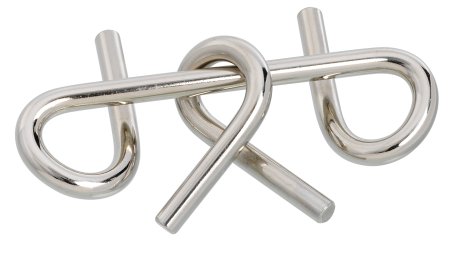
 Such wise sounding words, but what do they mean? Like those twisted metal puzzles I got as a kid–it looks simple, but I don’t see how to solve it. I can either work at being more gracious or not work at being gracious. So I set goals and standards and work hard to be nice and patient and accepting. Now I have a new standard by which to judge myself and others–instead of criticizing the late and forgetful, I criticize the impatient and demanding. Wait, something went wrong. So I stop working at it and just keep living as I’ve always lived, as a curmudgeon… hmm. Why can’t my spiritual journey be as uncomplicated as everyone else’s seems to be? I’ve sorted out this grace puzzle before, but it seems I have to re-learn it every time I stumble on another facet of my deep-seated legalism. So here we go again.
It is night after a long day.
What has been done has been done;
What has not been done has not been done;
Let it be.


 April 17 is the feast day of Benedict Joseph Labre who was called “a patron saint for failures.” He was rejected as unsuitable by all the monastic orders to which he applied, several of them suspecting him of mental illness. He became a mendicant holy man, sleeping in corners of abandoned buildings, dressed in rags, covered in lice, living on alms, and eventually dying of malnutrition. It took another century for him to be sainted. This is somebody I can relate to… except for the sainthood, although considering his credentials, maybe I’d have a shot at that too! Many more of God’s followers look like bums than Hollywood stars. After all, it is the bitter life of the marginalized that drives them to grace. But there are exceptions like Boaz.
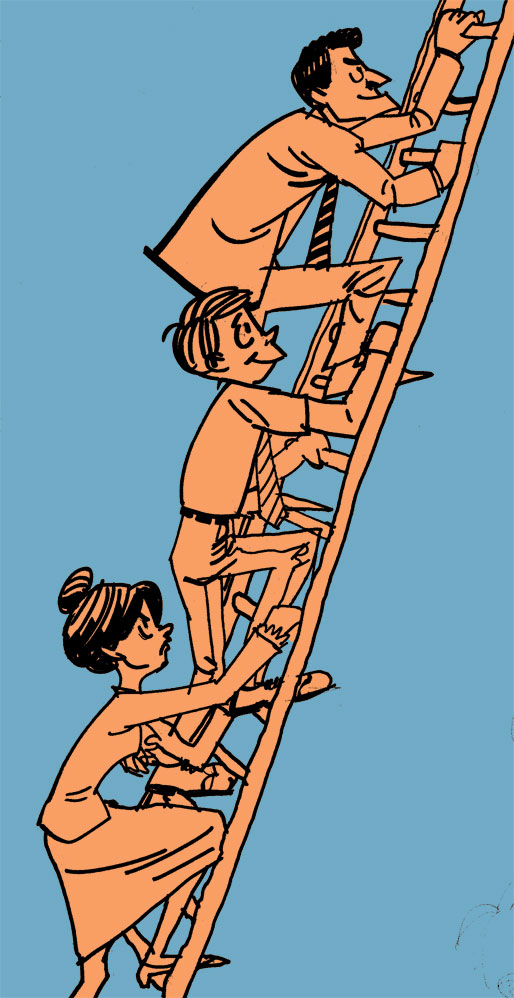 Unlike caste in India or aristocracy in Europe, egalitarianism is the American way, but we have our own homegrown pecking order, and we know our place. We defer to those with more money, status, education, looks or what have you, and on the other side we expect to be treated better than “a common bum.” When people are smelly, unkempt, crude, or slow they get treated differently… I’m ashamed to say that I too react as though they are less deserving. Tragically, human hierarchy destroys grace, no matter where you rank yourself. Wonderfully, the gospel knocks off all the rungs of our social ladder. We are all penniless. We come to God with empty pockets.









 Janathan Grace Reflections