Archive for the ‘depression’ Tag
 I have been soul-sick for several months now. But today I feel okay. Both the pain and the relief are inexplicable. I accept mystery… as long as it stays theoretical. But I find practical mysteries at best annoying: where are my glasses, which street do I take, why is the car making that noise? When not knowing is costing me money or making me late or (more profoundly) hurting my relationships or my heart, I become agitated. For me, ignorance is not bliss, it is often agony. My method for coping with a scary, unpredictable world is to figure it out, experiment till I get it working, find new configurations for the parts lying on the floor. As long as I have untried options, I can keep hope alive.

TRY THIS IN THE DARK
But I seem to have run out of options. I don’t know why I am depressed and I can do nothing to change it. It is a mystery of the worst kind. Mystery is just a highfalutin word for confusion, and being lost and blind does not make me happy, especially when I bash my shins every other step. Kimberly is struggling in the same way, and it has driven us to our new year’s resolution or annual theme of life: be okay with not being okay. It is our stumbling way of embracing faith. It doesn’t light our path or clear away the rubble, but it is our way of handing back the situation to God: “We’ve tried everything, and it doesn’t work, so we’ll try to adjust ourselves to whatever might come.”
I commented to Kimberly in our prayer time two nights ago that I’m stuck with God. If I thought I could find more peace with the devil, I’d look up his address, but I know leaving God would make me even more miserable. I can make no sense of what God does, but I trust who He is, and for now that has to be enough.
 I am an artist and poet at heart. I’m not referring to my abilities, but to my perspective and energy. I have powerful visceral responses to all things creative, whether by God or fellow humans, and my mind bursts into a flurry of thought shooting out in all directions like a fireworks display. Within minutes, each separate thought has branches and sub-branches like a cauliflower head bursting into bloom in my mind. It is exciting, invigorating, delicious.
 But when my spirit is tamped down by depression, I stumble along with just enough energy to lift one foot at a time between long halts to rest. Everything around me is dusted with dullness like the shoulders of a dirt road. I can see and appreciate beauty, but it does not sink into my heart to awaken life. As a young man I was so full of energy and purpose and hope, but I spent it all on “virtuous” sacrifices that broke down my spirit rather than building it up. I did not live out of the spontaneous delight of who I was but out of the driven obligation of who I should be. I did not live from the joy of God’s love, but from the fear of his frown. I lived out of the law and not out of the gospel.
Emotional energy is much like a sponge–once dried out, it loses its powers of absorption. Without some emotional reserve to start, I cannot soak up the encouragements around me. I see them, but cannot feel them at any deep level. They do not renew me. Because it takes time for the good to soften my soul, I need an oasis in which to rest, an environment rich with living waters, but in my experience those spots are rare and brief, and so the desert winds parch away the rain that falls. I catch and hoard my little cupful, but it does not last long. Had I lived from the start out of my true self and in the riches of God’s grace, the energy I used for good would have been a renewable resource. But I feel as though my forest is chopped down, and I must start over, scratching out life from the dust. I see hopeful saplings of emotional growth, but the full rewards seem still a long way off.

 Most evenings before supper Kimberly and I light some candles, listen to a word of grace, and invite God into conversation with us. Tonight I told him frankly I don’t know how to include him in the quagmire of my life. All through the day I talk to him and wait on him, but hear no answers for my doubts, feel no healing for my pain, see no clarity for my path, find no energy for my tasks. When I bring God my suffering and weakness and lostness, why do I find no comfort or strength or direction? Why does he leave me sunken in misery? Faith grows haggard without tokens of hope.
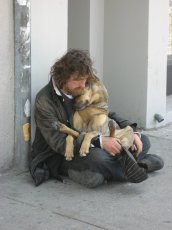 I wrote that paragraph last night and sat thinking for a long time. If God is not in my life to fix me, then why is he here? Somehow, all my theology seems to circle back to relationship… where it should start in the first place. It took me years to learn this with Kimberly–what we both need from the other in our brokenness is compassionate presence, not problem-solving. But God is different from Kimberly–she can’t fix me but he can. He knows exactly what I need and how to provide it. So why doesn’t he?! oh… maybe he does… maybe what I truly need is his compassionate presence.
This is so counter-intuitive for me. If he loves me, doesn’t he want to remove my pain? If he can heal me and doesn’t, is he not callous and unloving? Imagine a doctor with wonderful bedside manners who refuses to cure his suffering patient. And perhaps here is the answer to my riddle. When I treat God as my doctor, I forget he is my friend, my dearest friend who holds my broken heart in his tender hands. My focus locks on my disease instead of our friendship.
I woke up this morning with a nameless dread which slowly distilled into a sense of the pointlessness of my life, and a fear that nothing will change. What did I do this week? I stained the wooden borders around our yard, but in a couple of years I will have to do it again… and to what end? I exercise, clean, shop, cook… a meaningless round of repetition. I enjoy my job in the library, but what difference does it make in the world? Well, it provides me a salary so that I can repair appliances, buy groceries, pay bills… and then do it all over again. When will I find real purpose and direction for my life, something meaningful? As I lay in bed, the thoughts of last night drifted into my mind. So instead of asking God for a fix, I simply shared with him my anxiety. In the end, what if the great purpose of my life is not something, but Someone?

 Usually when I am absent from this blog for a while it indicates that I’m fighting to keep my head above the water. For the last several weeks, melancholy has been dragging down my spirit. I think I am beginning to understand the cycle. Many folks suppose that depression comes from current external circumstances. Certainly there are trigger situations that fire up an emotion, but if the emotion is more than brief and reactive, if it hangs on for some time, then something else is at work. The feelings were awakened by the situation, but they are being powered by old, deep wounds of the heart. A pinprick will make little effect on a flat balloon; it is the balloon packed with the tension of air pressure which the needle will explode. The power is from the balloon, not from the needle. My melancholy comes from within, not from without. It is my soul purging the muck from within.

The balloon analogy would suggest that all melancholy is from a single source, a single wound, but I have discovered countless wounds in my own soul, a multilayered mosaic of pain. It is a web of entanglements, and I can only work on a bit of it at a time. Thankfully, life seems to bring these to my attention consecutively, activating the same emotional struggle repeatedly and so giving me plenty of opportunity to work through the issue involved before moving on to the next concern. I say “life” because it is the stimulating events that activate the feelings, but I am realizing now it is my own soul that directs the progress. I cannot reach the feelings below and behind until I have unpacked the ones above and in front of them. My issues seem to come in layers, and a fear cannot be identified (for instance) until the anger or defensiveness covering it has been understood and worked through.
Unfortunately, I can’t figure out the basis of my current melancholy. It has been very disheartening. But even as I write, I am realizing a pattern. When a new emotionally charged issue crops up, I cannot sort it out easily. It has been silenced for so long that it takes time for it to develop a clear voice… or I could say that because the sound is new, my soul does not recognize the language yet. The melancholy feels so repetitive, the same old misery cropping up again, stuck in an endless repeat cycle.
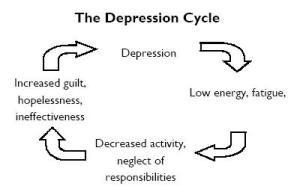
But the truth is quite different–as I work through each issue, it really does slowly heal and the next wave of depression arises from a different wound that also needs the healing touch of grace. Perhaps I will never reach the end of this progressive redemption, in which case my depression will be life-long, but it is a great encouragement to know that I am on a path of hope and healing and not trapped in an inescapable morass.
That thought gives me the patience and hope to deal with my present depression. It is not my failure or stupidity that blocks me from quickly identifying the source of my depression, and it is not a meaningless melancholy, suffering without purpose or benefit. My soul is doing its vital work, and it will just take time to come to more clarity and resolution. I have hope again. Thanks for being there to listen!
This morning NPR interviewed a man with catalepsy, a cousin of narcolepsy. During REM sleep, our bodies release a certain chemical which tells all our muscles to relax (so we don’t literally act out our dreams). Unfortunately for a few folks, this chemical is released while they are awake, causing all their muscles to let go and thus paralyzing them. The release mechanism for this chemical is the person’s emotional response, and for the man on NPR (Walter?), it was especially triggered by his pleasurable emotions: excitement, happiness, love. 
You can imagine the impact this would make on relationships, especially family relationships. With his wife, think of not only sex, but kissing, holding hands, talking about the children… engaging in any emotional connection. Walter described collapsing at a grandchild’s birthday party and on phonecalls with his children. He spent the whole time at his daughter’s wedding propped up like a bag of potatoes against the wall. Not just happy events themselves, but simply looking at photos of happy events can paralyze him. There is no cure, but he takes a medication which slows the attacks, so it now comes on at a pace which he can recognize and respond to.
On the radio he spoke slowly and with no inflection in his voice, trying to speak of emotional things while blocking out the natural emotions. His speech became slower, with more pauses, he remarked that his eyelids were feeling heavy, and then the NPR interviewer told the audience that Walter had to go lie down because he was slipping into paralysis. The show host went on to describe how Walter could only function in life by avoiding happy occasions, turning himself more and more into an unemotional machine. For Walter, happiness is not a good thing nor is connecting with others emotionally. Such a heavy burden to bear through life.

My struggles in life are much smaller than his, but his experiences had an echo in my own. Those things that once gave me pleasure in the first half of my life–whether great or moderate, exciting or fulfilling–are beyond my reach now. I am always tired, so tired that doing something enjoyable feels like a burden rather than blessing. When I have emotional energy I get great pleasure in so many things–reading, writing, conversing, celebrating, creating. Those are mostly a dim memory now, and I only eke out small, brief pleasures. The more taxed I am, the less ability I have to experience the good.
For the last few weeks, my heart is starting to recover from its latest downspike. The telltale sign of my recovery is that imagining the joys of life feels good rather than painful. Merely the thought of blogging, for instance, has been lead to my heart, but imagining it these days feels more like a little red balloon… even if I still have little energy for actually doing it.

I have not visited my own site since I last posted. When I sink too far down, I just work each day on breathing. Sickness of soul has many comparisons with physical illness, and in both cases healing requires rest, the kind of rest and as much of it as a soul and body need. Most of my life I put my body and soul on strict rations, telling them what they needed and giving only that. I now realize my body and soul are a good bit smarter than my brain in knowing what they lack. I now see my brain is called to support those needs and not contradict and fight them. What I need, I need. There is no shame in needing.

THE TOUCH OF GENTLE HANDS
It is true that being “needy” is considered socially ugly in America. Some of this springs from a reaction to manipulators, folks who take advantage of others’ sympathy–and as a healthy boundary this caution may be good–but I suspect much of it springs from a sense of prideful independence… at least I know how powerfully this has worked in my life. And the natural partner to pride is shame (recognized or not), so I have also been ashamed for my need of others, as well as fearful of their resentment in helping me. I have discovered that the more I try to deny my needs, the more I close off grace from my life. Openly acknowledged need is the entry point for grace, though such vulnerability must be exercised with wisdom since letting down the defenses not only allows for more personal healing and deepened relationship, but may also open the way for much harsher wounding, depending on the response of the one we trust. I thank God often for my trustworthy wife.
I feel so very tired, weary of life, confused about how to respond in a healthy, soul-affirming way. I’ve tried ineffectively to look for the root of my current depression so that I could apply grace to the wound, but it eludes me. It seems that all I can do is learn to accept my condition with patience.
For the last two months or so I have awakened each morning with a great heaviness of spirit that nothing seems to lift, a feeling of exhaustion and unhappiness. The only thing that seems to help is going back to sleep, which I have regularly done (since I work nights, I can do that). Just lying down, even without sleep, seems to help a good deal. It is my way of giving my soul a rest, removing all demands and expectations for the moment. The weight gradually lifts during the day on most days to the point that I can do something “productive” without cost to my soul. I have no energy for the creativity, vulnerability, and/or interpersonal connection that social media involves. My sister Mardi finds that she is pushed to express her feelings in art when she is depressed, but the opposite happens to me. So I stop blogging.
Some folks have suggested that I suffer from seasonal affective disorder, which comes out in the winter. But my struggles come out indiscriminately throughout the seasons, probably more affected by my life circumstances. Environment does impact my feelings significantly, cloudy days often cloud my spirit… in fact, when I can enjoy an overcast day it is a good indication that my soul is at rest.
Kimberly and I just had a week’s vacation at the beach, and it was very refreshing. Each day was quiet, slow, soothing. We slept in, read from a favorite author, and then talked about our thoughts and feelings; we had lunch, went for a long walk on the beach or in the woods with our dog Mazie and settled into a relaxed evening. We take great comfort in one another’s company and our sweet Mazie is a constant delight to us (Mazie is short for Amazing, so with our surname, Amazing Grace). I was hoping that calm would carry over into our days at home, but the personal gravity pulled me down as I rose from bed today, our first morning back. Reminds me of John Mayer
To all those who face this: my understanding and empathy are with you. May you find little landings of peace on the long climb, short embraces of sunlight piercing through, unexpected touches of gentleness for your battered soul… and when you need it, take a nap!
This is a powerful picture by a poet/author of the struggle of depression.
It’s the other pole of life, the negation that lives beneath the yes; the fierce chilly gust of silence that lies at the core of music, the hard precision of the skull beneath the lover’s face. the cold little metallic bit of winter in the mouth. One is not complete, it seems, without a taste of that darkness; the self lacks gravity without the downward pull of the void, the barren ground, the empty field from which being springs.
But then, the problem of the depressive isn’t the absence of that gravity, it’s the inability to see–and, eventually, to feel–anything else. Each loss seems to add a kind of weight to the body, as if we wore a sort of body harness into which the exigencies of circumstance slip first one weight and then another: my mother, my lover, this house, that garden, a town as I knew it, my own fresh and hopeful aspect in the mirror, a beloved teacher, a chestnut tree in the courtyard of the Universalist Meeting House. They are not, of course, of equal weight; there are losses at home and losses that occur at some distance; their weight is not rationally apportioned.
My grandfather, whom I loathed, weighs less to me in death than does, I am embarrassed to admit, my first real garden, which was hard-won, scratched out of Vermont soil thick with chunks of granite, and a kind of initial proof of the possibility of what love could make, just what sort of blossoming the work of home-keeping might engender. Sometimes I seem to clank with my appended losses, as if I wear an ill-fitting, grievous suit of armor.
There was a time when such weight was strengthening, it kept me from being too light on my feet; carting it about and managing to function at once requred the development of muscle, of new strength. But there is a point as which the suit becomes an encumbrance, somthing that keeps one from scaling stairs or leaping to greet a friend; one becomes increasinglly conscious of the plain fact of heaviness.
And then, at some point, there is the thing, the dreadful thing, which might, in fact, be the smallest of losses: of a particular sort of hope, of the belief that one might, in some fundamental way, change. Of the belief that a new place or a new job will freshen one’s spirit; of the belief that the new work you’re doing is the best work, the most alive and true. And that loss, whatever it is, its power determined not by its particular awfulness but merely by its placement in the sequence of losses that any life is, becomes the one that makes the weighted suit untenable. It’s the final piece of the suit of armor, the plate clamped over the face, the helmet through which one can hardly see the daylight, nor catch a full breath of air….
After years and years of resisting, of reaching toward affirmation, of figuring that there must always be a findable path, a possible means of negotiating against despair, my heart failed. Or, to change the metaphor, we could say what quit was my nerve, or my pluck, or my tenacity, or my capacity for self-deception.
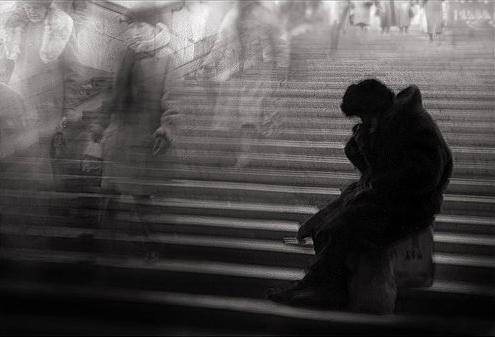
Mark’s beloved dog Arden, a lab mix, is sick with perhaps a terminal illness. One option, says the vet, is to keep an eye on him and hope for the best. Mark writes about himself and his friend Paul:
“Emily Dickinson says that hope, that thing with feathers—That perches in the soul, cannot be silenced; it never stops–at all–but because she is a great poet, in a little while she will say a completely contradictory thing. She who felt a funeral in her brain, the underlying planks of sense giving way, most certainly understood depression and despair. Perhaps even in her famous poem figuring hope as a bird, she hints at the possibility of hope’s absence, since if hope has feathers, it is most likely capable of flying away.
“Paul has a bracingly Slavic attitude toward hope. His ancestors starved in the fields outside of Bratislava, between plagues and invasions, and their notion that hoping for a better future would have been a costly act of self-delusion seems practically written into his genes. He would agree with Virgil, who says in his Georgics, “All things by nature are ready to get worse.”
“But this is ultimately something of a pose, a psychic costume for a sensibility no less vulnerable than my own. He believes that low expectations about the future will protect him—whereas I, six years older and thus a child of the sixties, can’t stop myself from thinking, perhaps magically, that our expectations shape what’s to come.
Though it’s true that I, who am more likely to hope overtly, publicly, am also more likely to crash the harder when that hope is voided.” Mark Doty in Dog Years.
Stoicism and hope can each be coping mechanisms in the face of potential disappointment. Conservative Christians tend to blame the stoics for having no faith before the disappointment and blame the hopeful for having no faith after the disappointment. That seems unfortunate to me because I believe neither perspective is inherently godly or ungodly, that belief or unbelief can be just as certainly present in both views. There are advantages and disadvantages to either outlook, differences in personality that can be embraced as each valuable in its own right. Our American society has a strong commitment to happiness as a value, even a fundamental right… it is written into the preamble of our founding document as a nation, so optimists are consistently lauded in every niche of our society (except art, where it is often seen as disingenuous).
A January 17, 2005 Time article reports a revealing psychological study “In the late 1970s… most therapists took the Freudian view that depressed people–and by extension, pessimists–were out of touch with reality. It made sense, since depression was considered an aberrant mental state… In carefully designed [seminal] experiments, psychologists Lauren Alloy and Lyn Abramson sat students in front of a panel featuring a green light and a button that they were told would activate the light when pressed. In fact, the amount of control students had over the light varied from 0% to 100%, with many points in between. When they were asked how much control they thought they had over the light, the answers surprised the psychologists. Optimistic types (who scored low on tests for depressive symptoms) consistently overestimated their influence. By a lot. On average they believed they had 60% control even in sessions in which their button pressing had purely random effects. ‘The nondepressed had an illusion of control when in fact they had none,’ says Alloy. By contrast, more pessimistic students (those who had more depressive symptoms) judged their performance more accurately. The finding that depressive types were ‘sadder but wiser,’ as the researchers put it, rocked conventional thinking in psychology.”
The article goes on to explain that optimists showed a more accurate estimate of other folks than did pessimists (who thought others were more in control than they themselves were). I expect that the presence of faith plays out in different ways in each personality type and is not simply present in the one and not the other. Hope may come from many sources other than faith and may be a coping mechanism to stifle insecurities. Stoicism, even pessimism (expecting negatives), may be the result of faith in openly acknowledging one’s insecurities (which takes a great deal of courage). May we all find ways of appreciating and benefiting from one another’s differences.

EMBRACING DIFFERENCES

 I have been soul-sick for several months now. But today I feel okay. Both the pain and the relief are inexplicable. I accept mystery… as long as it stays theoretical. But I find practical mysteries at best annoying: where are my glasses, which street do I take, why is the car making that noise? When not knowing is costing me money or making me late or (more profoundly) hurting my relationships or my heart, I become agitated. For me, ignorance is not bliss, it is often agony. My method for coping with a scary, unpredictable world is to figure it out, experiment till I get it working, find new configurations for the parts lying on the floor. As long as I have untried options, I can keep hope alive.






 Janathan Grace Reflections