Archive for the ‘grace’ Tag
Matthew 1:1 The record of the genealogy of Jesus the Messiah the son of David, the son of Abraham:
 Both Abraham and David understood God’s plan as universal rather than solely Jewish (as the calling of each clearly states). Therefore, this is the history, salvation history, of the world, not just of one small nation. Both men are seen here primarily as avenues of salvation rather than centers of political control. Jesus, being the denouement, becomes the lens of interpretation for all of history. He gives to both Abraham and David their historical and spiritual meaning, so, as the first verse states, this family tree is about Jesus, not just (for example) a rehearsing of Jewish history. The history of the world (and of Israel) can only be understood by seeing all through the person and work of Jesus. He is the defining point of history.
Even though the focus is entirely on Jesus, it is not “the record of Jesus,” unconnected to history, as though God let the world wander on its own and then finally sent a Savior. The whole history is part of a closely laid plan from the beginning of time, the beginning of man and his fall, the beginning of Israel. It is the record of the genealogy of Jesus. History—factual events that really occurred—is fundamental to the Christian faith. Existentialism, much as I like it, tries to de-contextualize Jesus and personal faith, but faith must always be firmly rooted in our reality and past. Theology, as much as each individual life, cannot begin in the middle in dismissal of the past.

IF ONLY
We are not controlled by our past, but we are at every point a direct outgrowth of our past (though every present moment is an opportunity for re-directing our future history). Every step of a journey takes you to a very specific location. You can change direction at any point, even radically, but you cannot change the previous steps taken which have brought you to this place. If you have walked to Central Park, you cannot take your next step from Times Square, you can only take your next step in that direction. Even the greatest redirection in life, spiritual regeneration, does not suddenly change your personality, biology, total sum of a lifetime of thoughts, family and friends, skills and talents, likes and dislikes, or even your character. It gives the power to change in ways never before possible, and it begins to change everything, but we all start that journey with the first step.
It is because every present moment is so weighted by our past that it takes a lifetime and more to be restored to the persons we are meant to be. You cannot wake up tomorrow and live as though you had no past or precedent… even if you had amnesia. Who you are is a continuous flow, not disconnected states of being. Some truths can have profound impact on the flow of our lives, but being transformed by a given truth is a process. This is very frustrating for many of us. It all seems to take so long, especially when the embedded lies are still wounding us and our relationships. But this forces us to fall back on grace for ourselves as well as for one another. The quality of our relationships is not determined by our goodness (thankfully), or even our maturity, but by grace to us, in us, through us. And the source of this grace is Jesus who is just as much a part of our life’s history as he was of Jewish history.

I love this photo. The truths most crucial for my transformation are inevitably the truths that awaken me to my own personal terrors. I find I cannot grow in freedom, understanding, acceptance, relationship and other facets of genuine spirituality without facing my fears. To rescue me from my fears, grace leads me into them, or as John Newton sang, “‘Twas grace that taught my heart to fear, And grace my fears relieved.” Courage is gained slowly, one step at a time, and if I brave too much, more than my soul is ready to bear, I get knocked back a few paces. We must be gentle with ourselves, have compassion for our quaking spirits, take things slowly and with as much patience for ourselves as the God of all grace has towards us. Yet I must also find a way to pacify my tremulous soul, to discover the power of that truth which is embraced, trusted, fought for… truth about my wounded self and my infinite worth in God’s eyes.
When I step towards my fears, uncover them and open myself to feel them, to understand their deep hold on me, they increase and seem to gain strength. I try to face them with a spirit of self-compassion and faith in God’s love, but I can only take so much stress before my courage wavers, and I need to take a break from the battlefield, withdrawing for a time from people and situations that provoke my fears–fears of rejection, inadequacy, shame. I keep whispering the truth to myself and my trusted others until my faith is renewed enough to speak truth once more where it is unwelcome, resisted. It is my truth. You do not have to agree with me or consider this the right way to live your life (or even that it is the right way for me), but if you cannot trust me with my own life, then at least trust God with my life, in spite of my wavering steps, to draw me by grace along the way of growing integrity and harmony.
About 10 years ago my oldest sister Mardi gave me a peace plant from her home. For the first couple of years it had several blooms, but with my haphazard watering and giving it sunlight, it soon stopped blossoming. When it drooped, I would water it… if I were around and noticed. I think it has more roots than dirt since I have never repotted it, not wanting it to get bigger. A less hardy plant would have just given up (as many of mine have!), but this one persevered. It put out nice green leaves, usually with brown shriveled tips from over-watering or under-watering (I still can’t tell the difference).

After 8 long years of barrenness!
This winter, Kimberly brought home an even more pathetic small peace plant. She had left it in the care of a colleague while she was out of town, and he had forgotten to water it. The leaves were mostly curled brown and crumbling to the touch. We cut off all the dead leaves which made it look less scorched, but more pathetic, and started to water it. And here in the middle of winter and struggle, we have been delighted with both plants deciding to bloom! The flower on my plant lasted a whole month before I burnt it with incorrect watering of some sort. Kimberly’s flower is just starting.
On good days, I think of it as a parable of our lives, a promise of what is to come, a hoped for sweetness and beauty from a long gestation of suffering and pain. I wish for you, friends, a glimpse of this beauty which is developing in you as well.

first glimmer of life and beauty
This is the last post of a defunct blog called “Rising to Grace” by Aditi:

Tomorrow I Plan to Make Better Mistakes
When I started this blog almost two years ago in the orange –amber days of fall, I didn’t really have an agenda – all I had was words. And I had this sense – of looking, searching – of trying to find grace. So for those of you who’ve wondered what the title is all about – this is it. Most literally, it is a biblical term that means divine love and protection… but for me it is that place where “everything’s ok.” We live in a world that is fraught with disillusionment, heartbreak, and pain, and through it all, grace knows that no matter what – it’s ok. Typically, we humans tend to fall from grace because of our stupidity and silliness, but I believe that through all our mistakes and failures – we actually find it. As we go through life and stumble and fall, we rise to grace.
“Grace is that force that infuses our lives, that keeps letting us off the hook. It is unearned and gratuitous love; the love that goes before, that greets us on the way. It’s the help you receive when you have no bright ideas left, when you are empty and desperate and have discovered that your best thinking and most charming charm have failed you; grace is the light or electricity or juice or breeze that takes you from that isolated place and puts you with others who are as startled and embarrassed and eventually grateful as you are to be there. “
These aren’t my words but something that I read in this book – Plan B… “Everything feels crazy,” writes Lamott, adding, “But on small patches of earth all over, I can see just as much messy grace as ever…’It meets us where we are but does not leave us where it found us.’”
 The thing is that in life things don’t always work out the way you plan. But there’s grace. Grace that lets us know that even if things aren’t working exactly according to plan – it will still be OK. Because if Plan A isn’t working out, there is a Plan B. And Plan B doesn’t really require that much planning – all it asks is that we just show up. That we make ourselves get up in the morning and breathe.
So that’s what I am going to do. Breathe. There’s been so much of grace in my life. I had been looking for it – only to find that I had it all along.
And that’s why I feel it’s time. And even though like the characters in my stories, I am still looking and searching – I have a feeling that we all will be ok.
I have not visited my own site since I last posted. When I sink too far down, I just work each day on breathing. Sickness of soul has many comparisons with physical illness, and in both cases healing requires rest, the kind of rest and as much of it as a soul and body need. Most of my life I put my body and soul on strict rations, telling them what they needed and giving only that. I now realize my body and soul are a good bit smarter than my brain in knowing what they lack. I now see my brain is called to support those needs and not contradict and fight them. What I need, I need. There is no shame in needing.

THE TOUCH OF GENTLE HANDS
It is true that being “needy” is considered socially ugly in America. Some of this springs from a reaction to manipulators, folks who take advantage of others’ sympathy–and as a healthy boundary this caution may be good–but I suspect much of it springs from a sense of prideful independence… at least I know how powerfully this has worked in my life. And the natural partner to pride is shame (recognized or not), so I have also been ashamed for my need of others, as well as fearful of their resentment in helping me. I have discovered that the more I try to deny my needs, the more I close off grace from my life. Openly acknowledged need is the entry point for grace, though such vulnerability must be exercised with wisdom since letting down the defenses not only allows for more personal healing and deepened relationship, but may also open the way for much harsher wounding, depending on the response of the one we trust. I thank God often for my trustworthy wife.
I have so often misconstrued Scripture, oblivious to the grace that created each thought, that I found I could not read the Bible without feeling condemned. My legalistic filter poisoned the Bible for me. I studied it so diligently and thoroughly from this skewed perspective, that every re-reading of its pages undermined my hold on grace. I have gone several years now without any regular reading of Scripture. It has been just me and God (with Kimberly’s help) working to free me from this darkness. I think I have gotten enough grounding in grace that I can return to the Word to discover freshly its life-giving power. I’d like to share with others the grace I discover in these pages.
Matthew 1:1 This is the genealogy of Jesus the Messiah the son of David, the son of Abraham:

Matthew’s genealogy was written for the Jews, and so we assume he wrote it as he did (beginning with Abraham instead of Adam, for instance) to tap into the Jewish sense of identity and even pride in their ancestry. I was beguiled by Jewish veneration of David and Abraham into forgetting their great failures, which the Bible intimately describes. When Matthew highlights the marred women in Jesus’ ancestry, I see a wink from God, as though he took as much pleasure with the seedy side of his Son’s family line as the royal side. Israeli ancestry was passed down through the father, so Matthew carefully traces Jesus genealogy from Abraham through David straight down to Joseph… but at the last moment seems to dismiss its relevance by remarking that Joseph was not Jesus’ father anyway (biologically speaking). Even the greatest heroes, anointed prophets and kings, passed on nothing of their character, authority, power, or greatness through their bloodlines to Jesus. Rather all flowed the other way, from Christ to them. Jesus is not presented here as the greatest of a long line of great men. He is juxtaposed against all others—all others are sinners and he the only Savior; all others receive grace, he alone is the source of grace.

So when Matthew begins by calling Jesus the Son of David and of Abraham, he does not only want us to call to mind their greatness, but also their failures. THEY TOO needed a Savior. The story of God’s grace is so profound in both these men’s lives. Abraham, as Paul repeatedly reminds us, was declared righteous not by his goodness, but by faith. This justification and life he received was not the reward of faith, as though faith is such a wonderful thing that it calls for the reward of eternal life. Faith was merely the access point for grace, like a receiver for radio signals or a solar panel to absorb the sunrays, or an open hand to accept a gift offered. Abraham did not earn anything by some virtue of faith, for faith itself is a gift. In his natural self he was rather characterized by unbelief, not only regarding Ishmael, but even Isaac’s birth.
David was also deeply flawed, a murderer and adulterer (both capital crimes). The Psalms pour out his acknowledgment of his sinfulness and need for God’s grace. I have seen David as a hero to emulate, a man responsible for his own goodness and greatness, as though his title, “man after God’s own heart,” was about David replicating God’s virtues rather than God’s own heart being infused into David. Abraham and David were two of our greatest, but both knew they needed a Savior–that is what I want to emulate: a conviction of my neediness. I am on spiritual par with the holiest and greatest saints in history: the ground is all level at the foot of the cross, and we not only start our spiritual journey there but end it there as well. We all come from the gutter and end up in the palace, crowned as royalty, and the only bridge from that beginning to that ending is grace.

God built the bridge; we walk over it.
 I have hinted at the positive direction that Kimberly and I are headed, but some might wonder if it is really worth all the pain and struggle. Believe me, we asked ourselves the same question many times, and for the first year or two of marriage I regularly wondered in the middle of a conflict if we had made a mistake in getting married. But we couldn’t help ourselves. Neither of us felt there was much benefit in a shallow relationship, and the only alternative we knew was to keep going deeper in honest understanding, acceptance, and respect for ourselves and one another.
As we worked through the foundational issues in our conflicting worldviews, some pretty amazing things happened within each of us and in our relationship.

UM... UH... SO ABOUT MY ISSUES.
Nothing has ever affected me so powerfully as being accepted for who I really am right now in all my brokenness (not for what I do, who I project I am, or who I one day will be). It did not come easy for either of us, but I cannot remember a single major conflict in the last two years and Kimberly has difficulty even remembering the hard times. Of course we were on the fast track, often talking 3, 4, even 5 hours a day trying to understand our fear, pain and depression, and each of us had already spent many years working through our own issues.
I could say that it was the best thing to happen to me since I heard the good news of Christ, but that would make it sound like a different thing than the gospel, and Berly is just my clearest experience of the gospel. I discovered God’s grace through her in ways I had never known it before. I want to encourage you with snapshots of my personal healing and growth as a result of our relationship (the changes in Berly are her own story to tell).

You Did WHAT?!
Let me start with my anger. I had been taught in youth that anger was either good (“righteous indignation”) or bad (“the wrath of man”). The difference lay in whether or not the one who exasperated me was truly wrong or guilty. If he was, then my anger was justified, if he was not, then my anger was aberrant. When I got mad, it was someone’s fault–me for illegitimate vexation or him for illegitimate behavior. The most important thing was to discover who was at fault and have them repent. The matter was thus fixed and the relational conflict resolved. If I thought he was at fault, and he refused to admit it, then I would forgive him. To avoid condemnation, I worked hard at justifying my temper and blaming the other person. I was good and he was bad. Being “right” became very important… it was the only way I could save myself from the shame of sinful anger.
Kimberly was afraid of my anger, and given my perspective, when she shared her discomfort, I only heard this as judgment of my anger and reacted defensively. But she did not have my take on anger: She was not blaming me, wanting me to agree with her, or asking me to change. She just wanted to share her feelings with me (which I could only hear as a demand for change). Because she respected me, wanted to understand and accept me, she kept affirming my feelings, even though they scared her, and I gradually came to trust that she really did accept me when I was cross, that she thought my anger was always “legitimate” because it was revealing to me my heart, not the guilt of the other person. As she accepted my defensive feelings in this way, she wanted to understand me better, so when she asked about my aggravation, it was not to correct me, “fix” my rage, or gain ammunition for shaming me out of it. She had compassion for me and my experience of anger.
In this harbor of safety where I slowly grew less defensive about my temper, with less need to use it to protect myself, learning to have compassion for myself, I started to discover what lay beneath my frown. From what was my temper guarding me? To hear these deeper throbs of my heart, I had to embrace my feelings with compassion . If I had to protect myself, it meant that I was afraid. With Kimberly’s help, I learned to have compassion for the fear behind my anger instead of shaming myself for it. Only with this gentleness could I feel safe enough to explore my anxieties. Berly always justified my fears, affirming that they always had a very good reason, I just had to uncover it. Discovering the roots of my fear (which often was a long process) led me to find the substructure, the actual beliefs on which I lived my life, and often they conflicted in some way with my stated theology.
 Again, Kimberly’s grace and acceptance gave me the support I needed not to shame myself for these faulty beliefs, but to see myself as the victim of these legalistic lies and to be led by grace into believing grace for myself, to discover that God’s grace was the healing for my fears. My fears were not the enemy. They were doors into grace: “‘Twas grace that taught my heart to fear, and grace my fears relieved,” in the words of John Newton. I had always thought this was a one time event brought about by the amazing grace of the gospel… as though I didn’t need the gospel of grace all through every day. I think working through my fears is a life long process of growth in grace, applying the gospel to each wound as I need it, believing each day more fully that God loves me completely, always, and without any strings attached.
Kimberly and I are enjoying a sci-fi series called “Haven.” Last night they ended the show with a short dialogue I thought was profound. Chris is hugely popular, and he uses his popularity to manipulate others, though he knows he is not being his genuine self in doing so. He can only be himself when he is with Audrey, his “love” interest.
Chris: I want to be with you Audrey. I need to be with you.
Audrey: You once told me, ‘I want you because you’re you.’ Wanting me and needing me are two different things. I can’t be the person that keeps you you. You have to do that on your own. You’d eventually start resenting me for it.

THAT WAY!
God often uses us as his channels of grace, and we can support others in their efforts to heal and grow. But if we take responsibility for their change, it will prevent them from truly growing. They lack the courage or desire or understanding to move forward, and eventually they will resent us for obstructing their default path. We must all choose for ourselves the path of life and growth and the pace we take on the journey, and then others may support our will rather than substituting for it.
I’ve discovered that all the support in the world is of no use to me if I cannot receive it. No amount of compliments or empathy or affection can heal my heart unless I am somehow able to open to it. But opening to love makes me vulnerable… I can be hurt much more deeply by those I trust (and all humans fail). Kimberly and I have each discovered that unless we can find a means to value ourselves, external validation will make little impact. Grace knocks at our door but is also on the inside encouraging us to open. Grace is on the giving side, but also on the receiving side, supporting us with the courage and faith to accept. But we must acquiesce, for grace forces itself on no one.
This is where my story gets hard and healing, frightening and amazing. First the mess. My needs displayed themselves in a hundred ways that were threatening to Kimberly and her needs. For instance,  I have often used anger and blame to protect myself from looming danger, but Kimberly was raised by a mother who screamed and shouted, so when I honestly expressed my feelings, her alarm tripped.
Early in our dating we sat for lunch in a restaurant booth in Arlington, Virginia where I was living. The man in the booth behind us, apparently a construction foreman, was carrying on a loud conversation on his two-way radio. I muttered to Kimberly how rude this was, which she feared he could overhear, and then I swiveled around and gave him a “dirty look” hoping to shame him quiet. When I turned back around, she was visibly shaken and said she did not know whether she could stay in relationship with someone with anger issues. So began the saga of conflicting needs in the area of self-defense, specifically anger.
The machinations of the mind are complicated, so unless this is your experience, you may not understand the root of my anger. Anger is the result of feeling disrespected, having my boundaries crossed. As I grew up, my sense of worth grew dependent on the value others placed on me. If they seemed to devalue me, I was threatened at my core. There are many ways folks can protect themselves from this, and one of mine was anger and blame. When the crew chief raised his voice, I felt disrespected, and in my insecurity, I reacted to protect myself against this threat.

Is This Going to Work?
From childhood, Kimberly has taken the opposite approach of protecting herself by accommodating every one so that she is liked. When threatened, I bared my teeth and Kimberly wagged her tail. She was quite successful in acting in such a way that no one would ever get angry with her. Underneath was her terror of rage and denial of her own anger. Both of us were living out of fears that we did not recognize, incompatible anxieties, each person’s defense mechanism triggering the other’s fear. I thought I needed a mate who would be okay with my anger and Kimberly thought she needed a mate that never got angry. This did not look like a match made in heaven!
But what we wanted was not what we needed. Let me put it plainly–we each wanted to marry someone who would help us escape our deepest fears. Our coping mechanisms were not “working” (protecting us from pain), so we wanted a spouse that would reinforce our defenses, not so we could face our underlying issues, but so we could avoid them successfully. We were both blessed to have a very supportive and accepting relationship… except when it wasn’t. She was not trying to expose my denial (the anger that hid my fear), but in simply being herself with me, and I with her, the truth was forced to come out, and it was very painful. After all, there were quite good reasons why we developed these protective patterns early in life. Let me relate a very common interchange
 Me: “That jerk just cut me off and then slowed down to turn into Sheetz. That’s really considerate!” My insecurity is shouting at me that I have been disrespected. I don’t realize that I feel threatened and fearful because my anger jumps in so quickly to protect me and blame the other driver. I think my aggravation is his fault.
Kimberly: “Maybe he was running low on gas and saw the gas station at the last minute.” Kimberly feels her fear rising at my heat, and she jumps in to protect the person I am attacking. I feel unsupported and shamed.
Me: “He could have easily slowed down and pulled in behind me.” My coping mechanism is being threatened. If you take away my anger, I have no protection from being devalued. I still don’t realize that my true, underlying feeling that needs addressing is fear.
Kimberly: “Maybe he didn’t have time to think of that.” I feel the legitimacy of her argument. I really should not be mad. I begin to feel shame for my temper instead of sympathy, which would give me the safety to look deeper into the roots of my fear. I shame my anger away, closing the one door to my true heart’s need, and I no longer feel safe sharing my feelings with Kimberly.
Me: “Whatever!” an irritated dismissal. Kimberly senses my disapproval of her responses. She is deeply hurt by my unspoken criticism that she is not supportive and caring, that she is not enough. I am challenging her one shelter against shame, her remarkable ability to be supportive and empathic. Her solution for the world’s problems is “Life is so hard, let’s all just get along.” To feel safe, she needs me to be nice to everyone, especially her.
This dynamic played out scores of times. We were committed to honesty in sharing our feelings and in accepting one another “as is,” and this characterized our relationship, so we grew more trusting and secure with each other. The problems came when our needs conflicted, when supporting her meant denying my own needs. But our commitment to love and understanding in the other parts of our lives slowly began to soften these areas of conflict. Kimberly moved from “your anger is bad” to “your anger is hard for me” to “your anger is understandable” to “I see how your anger is a vital protection.” I moved from “you are not enough” to “I feel hurt by you” to “I see why anger is a problem for you” to “wow, you have every reason to fight anger.” This was only possible by understanding ourselves and one another better. We had to face into our fears and trust one another to listen, understand, and accept us. We often failed. It was messy.

OKAY, LET'S TAKE THIS SLOW
This interaction occurred several days ago on Facebook with a friend who got a brief response from me after she posted a quote. You can see she is very gracious and open. I have changed the names for privacy’s sake. Our FB interaction is followed by a personal message I wrote to her.
Jennifer: “You either pass on your fears or your faith” to think about…
Janathan: sometimes how I express my faith stirs up your fears and my fears expressed calm your fears. to think about.
Jennifer: good point Kent, still reflecting on your comment. My initial thoughts on the area of fears … sometimes expressing or admitting our fears ‘demystifies’ them, & I can see value in that,.. also hearing others admit their own fears helps me realize i’m not the only one… I think what I appreciate about the above quote is the thought of being able to ‘transform’ a paralyzing fear into a faith action. Rather than being immobilized by fear, moving towards trusting God with it. Fear does not come from Him… whatcha think??

FAITH CAN MAKE YOU SMILE!
Janathan:I think I’m wary of what seems over-simplification to me, assuming solutions when I haven’t taken sufficient time to fully understand the emotional dynamics at work (a definition of “pat” answers). We might say ‘love’ and ‘faith’ are simple, clear, easy to identify… until we start realizing how common misconceptions are, confusing love with lust, possessiveness, admiration, etc. I think we have to agree that all emotions were created by God and of high worth. God created fear in us, and the Bible regularly commands us to fear. My biggest fears tell me something really important about my own woundedness, and if I try to simply control this fear with ‘faith” and not understand my deeper heart issues, I think it causes real personal and relational problems. What is your perspective?
Janathan: On the other hand, one can be equally disrespectful of one’s own feelings by exacerbating them rather than listening to them (though I think conservative Christians tend to err on the former side… as one well-known writer titled a book “Emotions, the Believer’s Greatest Enemy.”
Jennifer: hmmm i don’t like simplistic answers either.. and will often ‘chew’ on a thought for a long time (including your quote 🙂 but at the same time, I’ve had to face some of my biggest fears,… and in the midst of those fears have often found myself unable to do anything else with but transfer them to God. “perfect love casts out all fear” is a concept i don’t fully understand yet it seems to involve trusting the Source of Love to such an extent that we have nothing that’s too big for us to face. The kind of ‘fear’ you refer to,.. i would associate with a respectful fear.. and not an immobilizing fear. appreciate your thoughts..
HIDDEN UNDERGROUND
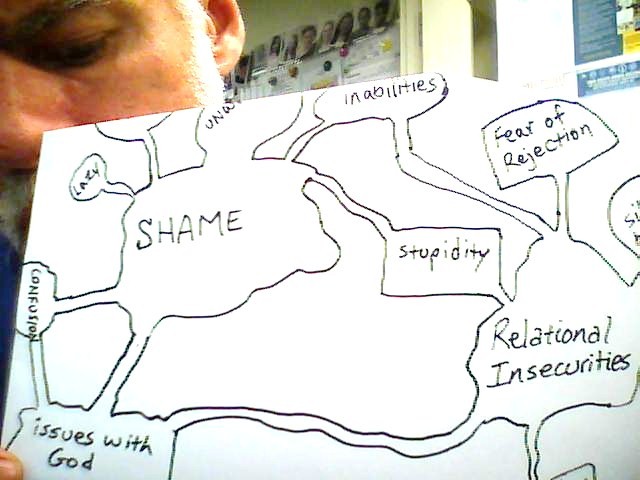
Janathan: I agree, Jennifer, sometimes fears are so intense we have to find a means of calming them before we can begin to understand them. I think there are many ways of doing this, such as adding a safety net or sharing our fears with someone who is safe for us (this is an act of faith as well). I know I have had numerous misconceptions of faith in my past, misconceptions I still struggle with. One of the biggest ones was to use “faith” to shame my feelings, in which case my feelings went underground, seeming to be conquered, but simply adding another layer of distance between myself and my heart.
Jennifer: hmmm good points. I’ve had to work through ‘fear of admitting fears’…. because as I looked back on my life i realized that the fears i ‘verbalized’ (admitted out loud) were exactly the ones that i ended up having to face in reality. 😦 Still working thru that one, but I think one of the lessons I’ve come away with, was that God wanted me to experience His peace even in the midst of my biggest fears (and I did,… for the most part! 🙂 From what I can tell, fear doesn’t GO AWAY.. we just learn to manage it. I’ve prayed endlessly for God to take away my fear of flying.. but it’s still there. What I had to face was my fear of dying instead.. With cancer, I had to face my fear that His plans weren’t good ones (from my perspective),.. but as I look back,.. so much GOOD came from having it.
Beth: Such thought-provoking comments. You’ve both alluded to the idea that fears have a variety of sources. Yes, fear can be emotionally based, but it can also be based on objective facts and truth. Jesus said “… I am the truth…”. Truth is his very essence and thus he also knows all. I’ve learned that I can trust my God more than I can trust myself. We can all be easily manipulated (emotionally) and we can also manipulate others and we can even manipulate ourselves. But God can not be manipulated. Thus I choose to put my trust in Him who is truth, and pray that he gives me the wisdom to discern the source of my fears and take control of all my thoughts. (2 Cor 10:5 “…destroy arguments and every lofty opinion raised against the knowledge of God, and take every thought captive to obey Christ.”)
Jennifer: thanks for your input Beth… i like the verse about ‘taking your thoughts captive’ … i think it fits the discussion. Though I have to admit.. i’m a very practical person… and as much as I understand the ‘exercise’ of doing that,.. i still don’t understand what are the practical, tangible results.? In other words,.. what actually changes in relationship to our fears?
Beth: Making our thoughts “captive and obedient” to Christ is definitely practical, with tangible & transformational results. Emotionally based fears are often reinforced by our thought life. “For God has not given us a spirit of fear, but of power and of love and of a sound mind” (2 Tim 1:7). It seems that fear and faith can not co-exist. Paul repeatedly tells his readers we have real power to control our thought-life, leading to transformational living. “Do not be conformed to this world, but be transformed by the renewal of your mind, that by testing you may discern what is the will of God, what is good and acceptable and perfect.” (Rom 12:2). As we renew/change our thinking, our emotions and behaviour will realign accordingly. When our focus is Christ and his attributes, it will result in our minds being filled with his presence and peace (Phil 4:8-9). Faith and fear do not co-exist.
Kent McQuilkin: Ah, Beth, what a very different view you and I have on emotions and faith!
Jennifer: Will need to reflect on your thoughts Beth… Sometimes it just takes time for a truth/principle to move from my head to my heart,.. and then into action. 🙂 Curious about your view on emotions and faith, Kent. 🙂
Wow, Jennifer, where do I even begin? I understand Beth’s view, I was raised with that view. There are good and bad emotions and we must choose the good and refuse the bad. The good emotions are telling us the truth about the world and God, and the bad emotions are telling us lies. We encourage the good emotions and discourage the bad emotions by thinking the right thoughts about each, often using Scripture as the basis. We talk ourselves out of the bad emotions and into the good ones. This is how faith works to free us from bad emotions–I keep telling myself the truth until I believe it (and truth comes from propositions, not from feelings, which can’t be trusted), and as I slowly believe more, my bad emotions dissolve.
 In a sense I believe and follow this approach for superficial matters. As everyone knows, emotions can be very changeable and fleeting (which makes us reluctant to trust them). If Kimberly does something that slightly irritates me, I throw some “truth” at my feelings (“she also has to forgive me for my irritating behavior” or “she’s just tired”) and let it go. I can do this because I am secure in our relationship—I know she cares deeply for me and respects me and my feelings. It is just an emotional hiccough I feel. However, if the feeling persists, I know it is telling me something I need to hear.
To suppose that emotions are fickle and unreliable because they constantly fluctuate is a serious misunderstanding I think. What I see with my eyes constantly changes—I see a chair, then a table, then you, then my book… does this mean my visual perception is unreliable? On the other hand, if I kept staring at the chair and it turned into a cat and then into a pecan pie, I would have major doubts about my visual perception. Just like my eyes, my emotions are “reading” constantly changing situations, so that to be consistent, they must constantly fluctuate, but when that situation returns, that emotion returns. Emotions are remarkably consistent and reliable measures of how our situations are impacting us. We realize this when we use all our reasoning powers to change our feelings about someone, and one look from them brings those feelings flooding back. In other words, our emotions are telling us something profoundly true and accurate, stubbornly so, though we may misinterpret them easily if we have been raised in a culture that teaches us to doubt them.
I think that is where we get thrown off the track. We assume that our emotions are measuring the facts about the current situation, and this consistently proves false. But that is like blaming the gas gauge for giving the wrong mileage. Our emotions can tell us things about the current situation that our minds cannot (we call it intuition), just like our gas gauge can help us estimate how many miles we have driven. But that is not their purpose. Emotions primarily tell us about our own hearts, not about external situations. This was very hard for me to grasp at first. I thought my anger against a friend measured his guilt. It doesn’t. It simply says something is going on in my heart that I need to figure out. Whether he is guilty or not is a very different issue, related but different.
If my emotions are given to me by God, they are all good and valuable when treated as they were designed. But if I suppose some are bad, then I will refuse to listen to them, perhaps quite effectively drowning out their voice, the voice of truth. I may credit Biblical thinking and faith for this result, but I feel strongly that such an approach ultimately hurts rather than helps me. If anything, I have discovered that faith can do the opposite—it can give me the safety and courage to identify and listen to my unwanted emotions instead of pushing them away. I think that blaming and fixing my emotions is much like using my finger to push the gas gauge needle to “full”.
 It is true that I want to be free of those feelings of fear, anger, sadness (and even joy and peace) that are harmful for me and my relationships, but after failing in a life long effort at using the typical “biblical” approach I described above, I learned that listening to my emotions with compassion and understanding was the only way to discover my true brokenness and needs and take the long term, deep approach for transformation. I put “biblical” in quotes since I find myself now with quite different understandings of verses like “take every thought captive” (ones that do not involve pitting my reasoning against my emotions—wouldn’t it be wonderful if our emotions and intellect could work as partners instead of competitors?)
I’d be interested to hear your thoughts.
Janathan

 Both Abraham and David understood God’s plan as universal rather than solely Jewish (as the calling of each clearly states). Therefore, this is the history, salvation history, of the world, not just of one small nation. Both men are seen here primarily as avenues of salvation rather than centers of political control. Jesus, being the denouement, becomes the lens of interpretation for all of history. He gives to both Abraham and David their historical and spiritual meaning, so, as the first verse states, this family tree is about Jesus, not just (for example) a rehearsing of Jewish history. The history of the world (and of Israel) can only be understood by seeing all through the person and work of Jesus. He is the defining point of history.
 for many of us. It all seems to take so long, especially when the embedded lies are still wounding us and our relationships. But this forces us to fall back on grace for ourselves as well as for one another. The quality of our relationships is not determined by our goodness (thankfully), or even our maturity, but by grace to us, in us, through us. And the source of this grace is Jesus who is just as much a part of our life’s history as he was of Jewish history.











 Janathan Grace Reflections